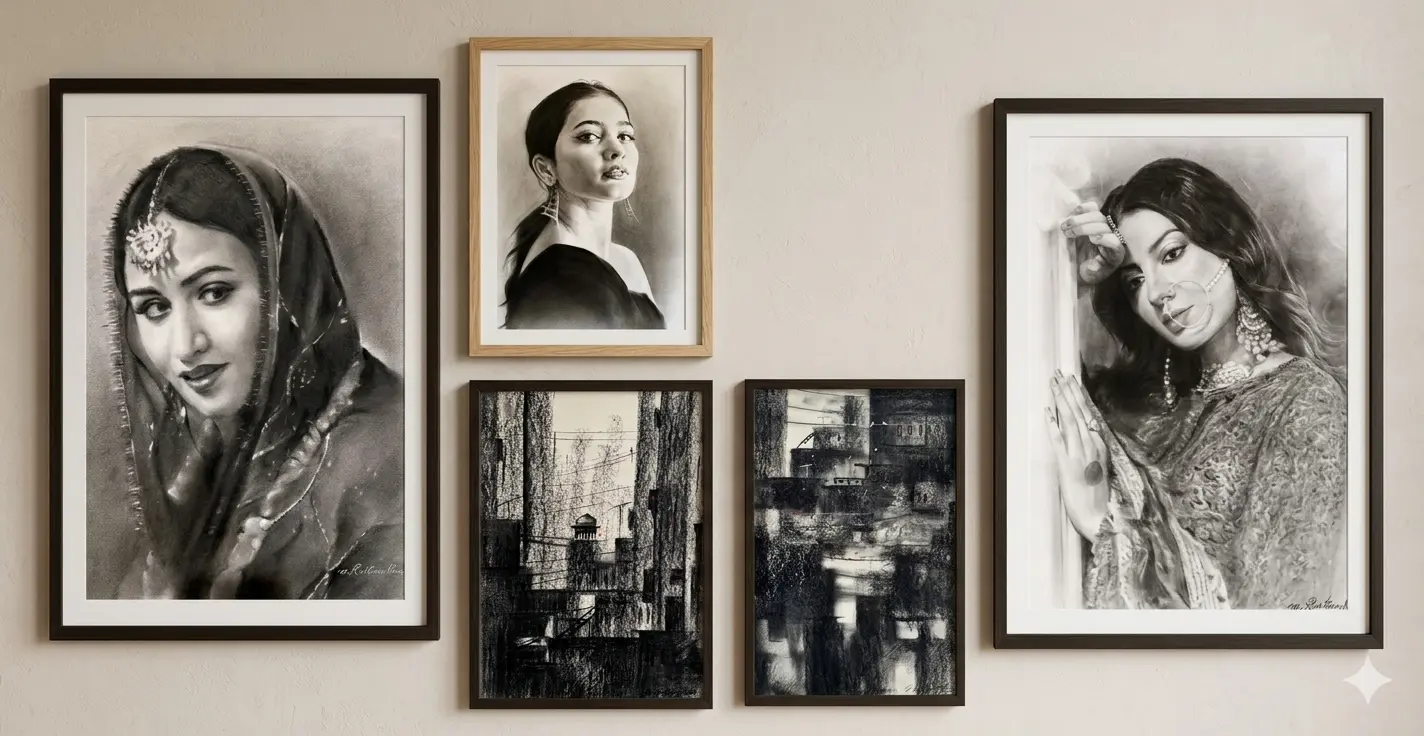

Some of the most emotionally powerful works in art history were made with nothing more than a pencil and paper. No paint, no canvas, no expensive materials. Just a pencil moving across a surface with skill and intention. Pencil art has been part of human creative expression for centuries, and it continues to hold serious value among collectors, gallery professionals, and interior decor audiences today. In this blog we will explore the different themes pencil art covers, what those themes mean visually and emotionally, how different styles within pencil work create different experiences, and why this medium deserves far more recognition than it typically receives.
What Pencil Art Really Means as a Serious Art Form
Many people think of pencil as a tool for rough sketches or quick notes. But pencil art is a complete fine art medium with its own history, techniques, and collecting market. The difference between casual doodling and serious pencil artwork comes down to motive. A finished pencil work is fully composed, tonally resolved, and made with the same level of artistic thinking that goes into an oil painting.
Galleries and collectors around the world take pencil artwork seriously because the medium demands exceptional control. There is no washing over a mistake the way you can in watercolor. Every mark stays. That kind of commitment to each line and tone is what separates pencil art as a discipline from casual drawing.
What Is Pencil Drawing in Art and How Is It Classified?
In formal art settings, pencil art drawing refers to works created with graphite or colored pencils as the principal medium on paper or board. In galleries, these works are typically classified under “works on paper” or “drawing,” which sits alongside painting and printmaking as a core fine art category.
The term Pencil Sketch Art can have two different meanings depending on the context. A sketch as a study or preparatory draft is loose and exploratory. But a finished pencil sketch piece of art offered as a stand alone piece is entirely purposeful and complete. To the collector, this is a major difference, because finished works are worth a great deal more, artistically and in the market, than studies.
Pencil Shading Art: Where Light and Shadow Come Alive
Pencil shading art is one of the most technically demanding aspects of pencil work. Through shading alone, an artist can build three-dimensional form, create atmosphere, and give a flat surface genuine emotional weight. The way each pencil stroke is directed, how hard it is pressed, and how the layers are built up all contribute to if a surface reads as soft skin, rough stone or smooth fabric.
When pencil art is done with a high skill in shading, it is truly respected by collectors and gallery folks. A well shaded pencil drawing can be as rich and complete as a painting, with a full tonal range from bright highlights to deep shadows, all done with only graphite.
How Pencil Shading Art Creates Mood in Portrait and Figure Work
Pencil shading art is seen at its best most commonly in portrait and figure drawing. How tonal gradation is handled in pencil art determines not only if a face looks like the subject but the emotional life of the face. The weight of shadow around the eyes, the softness of light falling on a cheek, the subtle transition from forehead to temple: all of this is built entirely through shading.
Graphite works are in demand among portrait collectors as an alternative to painted portraits. There is a kind of quiet familiarity about a good pencil portrait that paint does not always have. And because it is such a precise medium, every detail is present and visible.
Colored Pencil Art: A Medium That Earns Its Own Recognition
Colored pencil art is one of the most underestimated fine art mediums. Some people think this kind of drawing belongs more to kids’ coloring books instead of being called a true art. Yet, colored pencil art can create shiny look, deep layers of the color, and effects almost like photos similar even to oil or watercolor paintings.
Pencil colour painting is a term many collectors and buyers use when searching for works in this style, and it is an accurate description of what skilled colored pencil work actually looks like. The medium is technically demanding because color is built slowly through dry layering. There is no lifting color the way watercolor allows. Every layer is permanent, which means the artist must plan each stage carefully from the beginning.
What Pencil Colour Painting Looks Like in Different Subjects
Pencil colour painting produces strikingly different results depending on the subject. In floral compositions, the layered tones of the petals add a soft depth that appears almost painted. The landscape is done in colored pencil, with subtle gradations of atmosphere and distance in the sky. The use of layered colored pencil art to blend skin tones can produce effects in portraiture that seem more like painting than drawing.
Floral pencil colour paintings are a great choice for interior decoration in living rooms and bedrooms. Landscapes work well in hallways and study areas. The warm, rich colors possible with skilled colored pencil work make it a natural choice for rooms with neutral or earthy tones.
Abstract Pencil Art and the Meaning Behind Non-Representational Work
Abstract pencil art is a category that many people overlook, but it is one of the most intellectually rich areas within pencil work. It includes geometric repetition, fields of gestural marks, compositions based on texture and tonal arrangements that suggest form and feeling, but do not show any particular subject.
Pencil art painting is a term that fits well here because the best abstract pencil works blur the line between drawing and painting through their tonal richness and layered complexity. For collectors who prefer monochrome interiors and contemporary spaces, abstract pencil work is often the most natural choice. It brings visual depth to a wall without introducing color or subject matter that might compete with the room’s overall design.
How Abstract Pencil Art Works as a Statement Piece in Modern Interiors
Abstract pencil art fits very naturally into today’s Pakistani homes and apartments which tend to have neutral walls and minimal furniture. A large monochrome pencil artwork on a white wall does not fill the space. Instead it adds a focused point of visual interest that rewards anyone who takes a moment to look closely.
For framing, slim black or dark metal frames suit abstract pencil works best. Deep-set frames with generous matting give the work breathing room and make even a medium-sized piece feel substantial on the wall. Expert Framing Art Gallery in Karachi provides custom framing advice for abstract and contemporary pencil works so that each piece is displayed at its best.
Nature Pencil Art: Capturing the Organic World Through Graphite
Nature pencil art is one of the oldest and most beloved themes in pencil drawing. What makes pencil art drawing in nature subjects so rewarding is the level of detail graphite allows. Pencil captures the organic world with a precision that many other mediums struggle to match, and it does this across a wide range of subjects:
- Botanical studies of every petal edge and leaf vein with studied attention
- Landscape compositions that capture distance, light, and atmosphere through subtle tonal shifts
- Animal portraits where fur direction, eye detail, and muscle form come alive through shading
- Seascapes where the surface of moving water is suggested only by markings
Nature subjects in pencil also feel grounding and calming in interior spaces. There is something inherently peaceful about a carefully observed natural subject rendered in quiet graphite tones, and that quality makes nature pencil art a popular choice for bedrooms, reading rooms, and study spaces.
Pencil Miniature Art: Nature and Detail at the Smallest Scale
Pencil miniature art takes all the things that make nature pencil art impressive and shrinks them down to a tiny size. Whole landscapes or botanical arrangements are shown on only a few square inches, and all detail is perfectly clear and sharp. The level of control this demands from an artist is extraordinary, and the best miniature pencil works are genuinely breathtaking when viewed up close.
Displaying pencil miniature art requires careful framing. Deep-set frames with UV-protective glass and wide matting give small works the visual presence they need on a wall. Without generous matting, a miniature piece can feel lost against a large surface. Expert Framing Art Gallery specializes in conservation framing for miniature works and can advise collectors on exactly how to present these pieces effectively.
Calligraphy Pencil Art: Where Written Form Meets Visual Composition
Calligraphy pencil art is a less commonly discussed style but visually one of the most striking. It refers to the use of pencil to create calligraphic letterforms as visual compositions, where the written form is also the artistic subject. Pencil sketch art in a calligraphic style sits in an interesting space between writing and drawing, where the beauty of the mark itself carries as much meaning as the words it forms.
For Pakistani collectors, this style carries particular cultural resonance. Calligraphy is already deeply valued as an art form in Pakistan and across the broader Islamic artistic tradition. Seeing that tradition rendered in pencil brings a fresh visual quality to a familiar subject. It works well in interior spaces alongside more traditional calligraphy wall art, adding tonal variation and a different material quality to a curated collection.
Frequently Asked Questions About Pencil Art
Q: What is pencil drawing in art?
Pencil drawing in art refers to works created using graphite or colored pencils as the primary medium on paper or board. It covers a wide range of styles from precise realism to loose gestural abstraction and is fully recognized as a complete fine art medium in its own right.
Q: What is pencil art called?
Pencil art is referred to by several names depending on context: graphite drawing, works on paper, pencil sketch art, or pencil artwork. In gallery and collecting contexts it falls under the broader category of drawing, which sits alongside painting and printmaking as a primary fine art discipline.
Q: Is pencil drawing fine art?
Yes, pencil drawing is absolutely fine art. Major museums and galleries worldwide collect and exhibit pencil artwork alongside oil paintings and sculptures. The medium demands real technical skill and artistic vision. Artists like Leonardo da Vinci and Albrecht Durer are as celebrated for their pencil drawings as for any other work.
Q: What is the difference between pencil sketch art and finished pencil artwork?
A pencil sketch art made as study is more about exploring ideas and is usually less strict with way it is drawn. When a pencil artwork is completely finished, it means all the composition and tones are solved and it is shown as whole artwork. Finished ones are considered to have much higher artistic or market value for the collectors in comparison to those study sketches.
Q: What makes colored pencil art different from other painting mediums?
Colored pencil art builds color with dry pigment rather than wet paint, giving a unique transparent depth. Pencil colour painting at its finest is as rich as oil and watercolour. The medium is also very archival, meaning well-made colored pencil works will not fade for generations when properly framed.
Q: What subjects work best for nature pencil art?
Nature pencil art works exceptionally well with botanical subjects, animal portraits, landscapes, and seascapes. Pencil art drawing in nature themes rewards close viewing because graphite captures fine organic detail like leaf veins, feather texture, and bark grain with a precision that many painted mediums find difficult to achieve.
Q: What is abstract pencil art and who collects it?
Abstract pencil art use markings, tonal fields, and geometric or organic compositions to create visual meaning without representational imagery. Collectors who like an interiors with lot of monochrome and focus on the modern design are interested for it. It fits especially in places where people draw, in offices at the home and also in bedrooms that are kept simple.
Q: What is pencil miniature art and how is it displayed?
Pencil miniature art refers to highly detailed pencil drawings created within a very small format, often just a few inches across. Display requires deep-set frames with UV-protective glass and generous matting to give the small work proper visual presence on the wall. Expert Framing Art Gallery specializes in conservation framing for miniature works.
Q: How should pencil artwork be framed and preserved?
Pencil artwork on paper should always be framed with UV-protective glass to prevent graphite oxidation and paper yellowing. Acid-free matting protects the paper edges. Avoid direct sunlight and high humidity. Expert Framing Art Gallery recommends conservation framing for all original pencil art to ensure long-term museum-quality condition.
Q: Where can I buy original pencil art in Pakistan?
Expert Framing Art Gallery in Karachi offers a curated selection of original pencil art and pencil artwork by Pakistani artists across multiple styles including shading, nature, abstract, and miniature work. Custom conservation framing is also available. Browse online or visit the gallery. Delivery is available across Pakistan.
Why Pencil Art Belongs in Every Serious Art Collection
Pencil art covers more ground than most people realize. From detailed shading studies to rich colored pencil art, from tiny pencil miniature art to large abstract compositions, from calligraphic forms to carefully observed nature subjects, this medium offers genuine depth and variety for collectors at every level. Pencil is not a lesser medium. It is a complete one with its own long history, demanding techniques, and a growing collecting market that recognizes its value. Owning a piece of original pencil art means owning something where every single mark was made by hand with full intention and no room for error. That level of commitment shows in the work, and it is something that prints and reproductions simply cannot replicate. For original pencil artwork and professional conservation framing in Pakistan, Expert Framing Art Gallery in Karachi is a trusted name among collectors and art lovers.