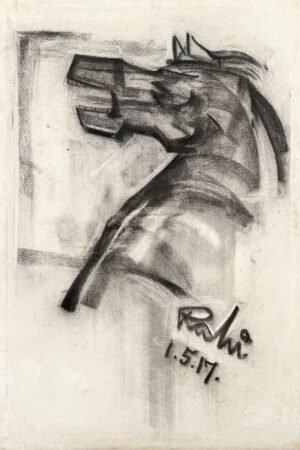
The Cubism Art Tradition in Mansoor Rahi’s Work
Cubism art was one of the most radical departures in 20th century painting. Picasso and Braque deconstructed subjects into fractured geometric shapes, showed multiple perspectives together, and abandoned the single fixed viewpoint point that defined Western painting for centuries.
Mansoor Rahi was exposed to this tradition through serious formal training and mastered it. His cubism paintings do not copy the European originals. They draw on the same structural logic while addressing very different subject matter. His training under Mohammed Kibria and Abdul Razzaq made him technically equipped to go deep into cubism instead of reading the surface.
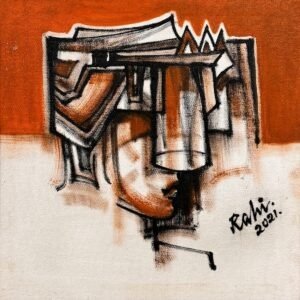
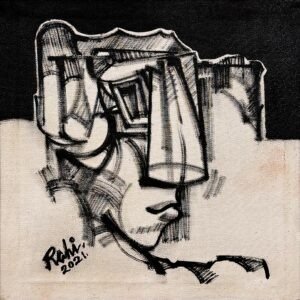
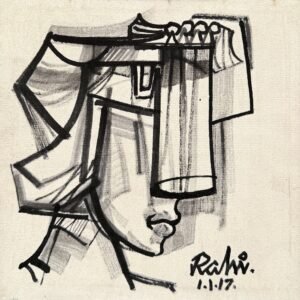
As a cubist artist his visual language is based on fragmented form and rhythmic geometry applied to social and human themes derived from Pakistani and South Asian experience. It is this combination of Western structural method and local subject matter that makes his contribution to cubism a truly different one.
Explore available cubism paintings in this collection.
Modern Cubism Art and the South Asian Reinterpretation
His modern cubism art is beyond a direct remake of Western cubism to something more clearly rooted. Zainul Abedin’s early influences equipped him with a sensitivity for socially conscious and regionally rooted art that remained with him throughout his career.
The broken shapes and rhythmic geometry in his works are not of Parisian Cafe scenes or European landscapes, but mirror Pakistani and South Asian social and human conditions. It is that originality, within the South Asian context, that makes him a cubist artist of real historical consequence.
Abstract Art and the Emotional Depth of Mansoor Rahi’s Compositions
Mansoor Rahi’s practice comes from the exploration of the emotional and structural depth of human experience through abstraction and cubist language. His practice converts real life social, political and human conditions into dynamic visual compositions in which fragmented forms, rhythmic geometry and expressive colour fields merge.
Rahi moves beyond conventional representation to craft a visual language that is familiar with both personal observation and collective memory. His paintings have a strong sense of movement and tension about them, as figures and forms dissolve into layered structures suggesting struggle, resilience and transformation.
He believes that art should not merely copy reality, but re-interpret it, revealing its emotional essence. This is at the core of his practice. In this way, Rahi creates pieces that combine intellectual structure with emotional impact that give audiences an immersive visual experience that is at once reflective and engaging.
This foundation is used in his abstract art practice to build compositions that work on many levels in turn. The surface is visually striking. But beneath all that, the broken structures and expressive colour fields are doing a heavy lift, recording social conditions, human struggle and the weight of collective experience.
His abstract paintings have as much intellectual structure as emotional intensity. It is a balance that makes his paintings truly engaging, not just aesthetic objects.
His contemporary abstract painting practice places him within the ongoing tradition of serious abstract art, but specific to his own cultural and historical context.
Abstract Art Paintings and the Language of Fragmented Form
His abstract art paintings mean through fragmented forms, rhythmic geometry and expressive colour fields that cross the canvas. The figures and forms dissolve into layered structures suggestive of struggle, resilience and transformation without being literally described.
His abstract wall art pieces work powerfully in spaces where the visual language of serious abstraction is understood and appreciated. These aren’t decorative abstractions. Pieces weighted with conceptual and emotional heft in every compositional choice.
Mansoor Rahi as a Pioneering Pakistani Abstract Artist
Mansoor Rahi started his professional career in the 1960s and made his mark in Karachi when Pakistan’s modern art movement was still in search of identity. As a painter and teacher he had a lot to do with that movement.
As pakistani artist mansoor rahi, his international exhibition record reflects the reach of his practice. He has shown work across Pakistan, Bangladesh, Japan, Iran, Turkey, India, China, Europe, and the United States over the course of several decades. This is not an occasional or regional presence. It is a sustained engagement with the international art world over a long career.
The Government of Pakistan’s Pride of Performance Award is an official recognition of what the art community has known for years. As a mansoor rahi artist, his contribution to Pakistani modern art is not only important in local terms. It matters in the larger history of South Asian modern art.
As a contemporary artist working from the 1960s onwards, he helped define what Pakistani abstract and cubist painting could be.
The Rahi School and His Legacy as a Teacher
Mansoor Rahi’s impact reaches far beyond his canvases. He has affected generations of artists in Pakistan who came after him, for decades of continued teaching.
This legacy of teaching and its impact on the development of modern contemporary art in Pakistan has come to be known as the “Rahi School”. It reflects what happens when a serious painter with genuine intellectual depth also takes teaching seriously.
A contemporary artist and teacher, he belongs to that class of Pakistani painters whose importance lies as much in what they built as in what they painted.
Original Mansoor Rahi Paintings for Sale in Pakistan
Works by mansoor rahi paintings for sale in this collection represent an opportunity to acquire a piece of Pakistani modern art history. Each work is an original. There are no reproductions or prints.
The mansoor rahi paintings price is a pointer to the quality of the individual piece of work but also to the historical value of his body of work in the context of Pakistani and South Asian modern art. Expert Framing Art Gallery provides full origin and authenticity information on each piece available.
The main categories available are his cubist and abstract compositions. Each captures the structural and emotional heft of his practice.
View original paintings in this collection.
Collecting Cubist and Abstract Art with Historical Significance
The purchase of a work from this collection is a thoughtful choice. His works of abstract art and cubism paintings are not only visually pleasing objects. They are important historical works by a painter who influenced the development of modern Pakistani art.
His work is for serious collectors, cultural institutions and museum-quality private collections. It is obvious and can be documented that owning a painting by a Pride of Performance Award recipient who has such an exhibition record has intellectual and aesthetic value.
Buy Mansoor Rahi Paintings Online in Pakistan
Expert Framing Art Gallery offers safe delivery of mansoor rahi paintings across Pakistan, with packaging appropriate for original abstract and cubist canvas paintings.
This collection of mansoor rahi paintings for sale is available to overseas pakistani buyers and international collectors with full international shipping support. The gallery provides complete documentation on each work before purchase, and the team is available to answer qu estions about specific pieces.
Why Collect Works by Mansoor Rahi?
- A pioneering Pakistani cubist and abstract artist trained at the Government College of Art and Crafts in Dhaka under Mohammed Kibria and Abdul Razzaq.
- Original works with deep historical and intellectual significance within Pakistan’s modern art movement.
- A distinctive visual language that reinterprets the cubism of Picasso and Braque through South Asian sensibility and social concern.
- National and international exhibitions spanning Pakistan, Bangladesh, Japan, Iran, Turkey, India, China, Europe, and the United States.
- Recipient of the Pride of Performance Award from the Government of Pakistan.
- A respected teacher whose influence shaped the “Rahi School” and generations of Pakistani artists.
- A meaningful investment in the history of Pakistani modern art by a mansoor rahi artist of foundational and lasting significance.
Choosing the Right Mansoor Rahi Painting for Your Collection
Start with the visual language that speaks to you. His cubist compositions are more ordered, more geometrically composed. His more abstract works are emotionally freer and more expressive in their colour and gesture. Both address the same intellectual and cultural concerns but in different ways.
Take context into account. His works are best suited for serious collector spaces where the historical and conceptual weight of the painting can be properly understood. A big cubist composition has real authority in an institutional or formal domestic setting.
His compositions are both structural and expressive, fitting for contemporary and classic interiors. His work is founded on true artistic belief and not decorative calculation, so it has a visual quality that works in different environments.
Frequently Asked Questions
Q: Who is Mansoor Rahi and what is he known for?
Mansoor Rahi is a famous Pakistani painter. He is famous for his contribution in modern abstraction and cubist art. Born in 1939, he trained at the Government College of Art and Crafts, Dhaka, and later settled in Karachi. He is recognised both as a painter and as an influential teacher within Pakistan’s modern art movement.
Q: What is Mansoor Rahi’s connection to Cubism?
His work is heavily influenced by cubism art and especially by the structural approaches of Pablo Picasso and Georges Braque. He redefines this tradition using fragmented forms and rhythmic geometry, engaging with social, political and human themes specific to his cultural context through a South Asian visual sensibility.
Q: What is the “Rahi School” of painting?
The “Rahi School” refers to the teaching legacy and artistic influence of Mansoor Rahi, who mentored generations of Pakistani artists throughout his career. The term also refers to his significant role as an educator and his studio practice in the development of discourses on contemporary modern art in Pakistan.
Q: Where has Mansoor Rahi exhibited his work?
He has exhibited a broad range in Pakistan, Bangladesh, Japan, Iran, Turkey, India, China, Europe and the United States. This is an international exhibition record that speaks of his importance in Pakistani and South Asian modern art history.
Q: What awards has Mansoor Rahi received?
He has also received many prestigious awards including the Pride of Performance Award from the Government of Pakistan. The recognition is a testimony to his major contribution to the art of Pakistan as a painter and a teacher.
Q: What themes appear in Mansoor Rahi’s paintings?
His mansoor rahi paintings explore social, political and human conditions through abstraction and cubist structure. Fragmented forms and layered compositions speak to both personal observation and collective memory, exploring themes of struggle, resilience, and transformation.
Q: Are these original works?
Yes. Expert Framing Art Gallery provides complete source and authenticity information for all of its works. The gallery offers an authenticity guarantee before purchase and each piece represents the historical and artistic meaning of mansoor rahi paintings.
Q: Do you deliver paintings across Pakistan?
Yes. Expert Framing Art Gallery provides safe delivery throughout Pakistan with careful packaging for safe transit. Overseas Pakistani collectors and buyers abroad can also avail international shipping.
Q: What influenced Mansoor Rahi’s early artistic development?
He studied with Mohammed Kibria and Abdul Razzaq at the Government College of Art and Crafts in Dhaka. He was also deeply influenced by visionary educator Zainul Abedin who influenced his early sensitivity towards socially conscious art.
Q: Are his paintings suitable for serious collectors and institutions?
Yes. His works are especially well-suited for serious private collectors, cultural institutions and museum quality collections that appreciate cubist art and abstract painting with real historical depth given his historical importance in the art of Pakistan in modern art.
Explore Mansoor Rahi Paintings with Historical Depth and Cubist Vision
Mansoor Rahi paintings carry the weight of a career built on serious artistic purpose. His cubist language, his abstract compositions and his long history in teaching all point to a painter of importance in Pakistani modern art, a value that is documented and lasting.
Browse the collection and discover the work that shows the belief and depth behind his practice.