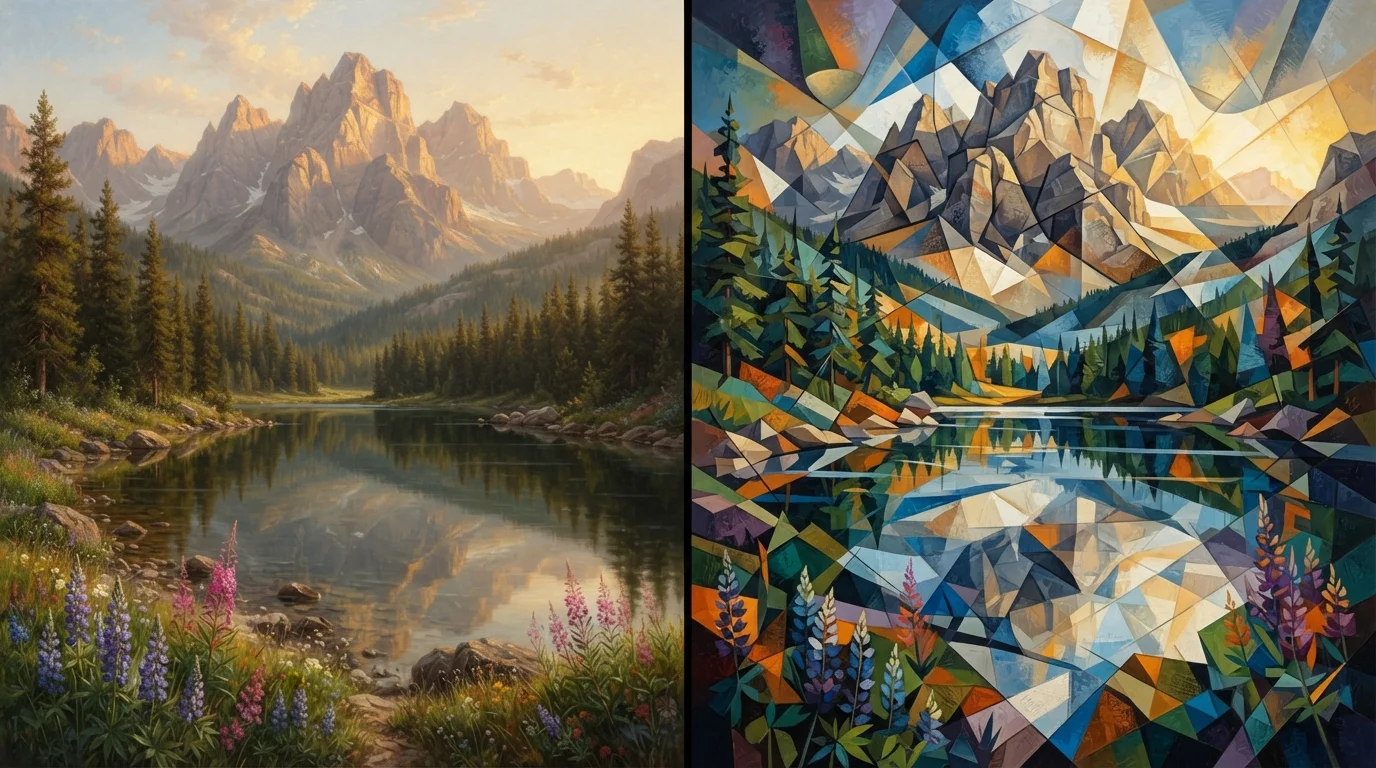

You can put two landscape paintings together and they can feel like they are from different worlds. One shows a mountain valley in soft natural light with believable depth and familiar detail. The other breaks that same mountain into angular planes, fragmented viewpoints, and bold colour blocks that no camera could ever capture. Both are landscape paintings but the experience of looking at them is very different. If you have ever wondered why cubist landscape paintings feel so bold and unsettling compared to their realistic counterparts, this blog breaks it all down clearly.
What Are Realistic Landscape Paintings?
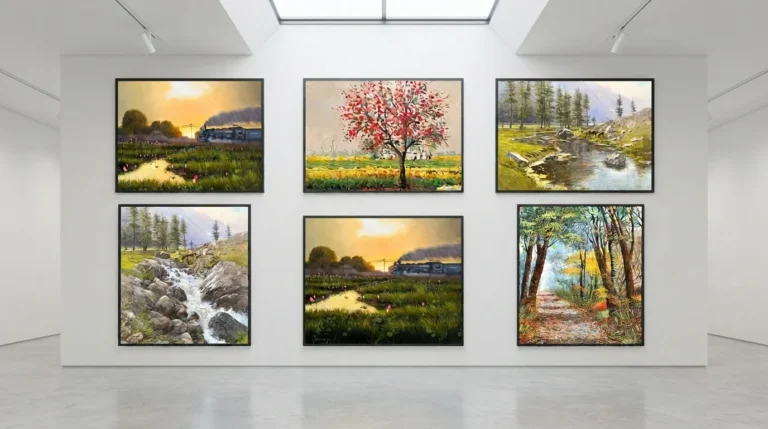
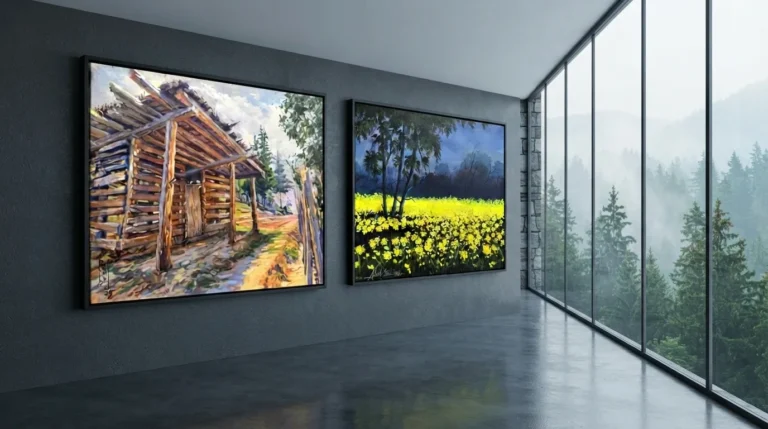
Realistic landscape paintings aim to capture the natural world as closely as possible to the way the human eye sees it. These works employ accurate proportions, natural colour relationships and careful rendering of light and shadow to produce a convincing representation of an outdoor scene. The goal is always visual truth, showing a place in a way the viewer immediately recognises and believes.
In realistic landscape painting, the subject matter is taken directly from the visible world. Classic subjects are snow-capped mountain peaks, rivers winding through valleys, open countryside with shifting skies and coastal scenes with believable water and light. The painter observes carefully and paints what he sees. What results is a window, a canvas opening to a real world.
What Makes a Landscape Painting Realistic?
A realistic landscape painting has correct perspective, natural blended colour, consistent light direction and convincing spatial depth. The viewer should be able to recognize the scene as something that could be in the real world. It’s that quality of belief that comes from detail and tonal gradation and proportion.
What Are Cubist Landscape Paintings?
Cubist landscape paintings are Cubist art landscape tradition applied to natural scenery. Instead of drawing a mountain or a forest from one fixed point of view, the cubist artist breaks the scene up into a series of geometric planes and presents multiple angles together on one canvas. The outcome is a visually complex and highly charged landscape that is not calm and observational.
A cubism landscape does not try to recreate the visual experience of being in nature. Instead it breaks down that setting into its basic structural components. Trees become angular forms. Horizons break into overlapping planes. Blocks of contrasting colour suggest light, rather than gradual transitions in tone. The cubist approach treats the landscape as something to be analysed and reconstructed rather than observed and recorded.
How Is a Cubist Landscape Different From a Traditional One?
A cubist landscape breaks up the natural forms into geometric shapes, showing multiple views at the same time, while a traditional landscape shows one entire scene from a single viewpoint. The cubist version prioritizes structural analysis and visual energy rather than atmospheric calm and faithful representation.
Key Differences Between Realistic and Cubist Landscape Styles
The most fundamental difference between the two styles is their relationship to visual reality. Realistic landscape paintings honour what the eye sees and tries to recreate it convincingly. Cubist landscape paintings challenge that single viewpoint and replace it with a fragmented, multi-perspective reconstruction that the eye would never naturally produce.
This difference in intent yields very different visual results. A realistic landscape draws the viewer in to the scene so that they feel like they are there. A cubist landscape painting confronts the viewer with the surface of the painting itself, making the act of looking and interpreting part of the experience rather than something that disappears into the illusion.
Main differences between realistic and cubist landscape paintings:
- Realistic paintings use natural proportion and accurate scale, while cubist paintings aim to break these apart
- Realistic art uses soft blended color to describe light whereas cubist art often uses bold, flat color blocks
- Realistic scenes have a single, consistent point of view while cubist scenes have several at the same time
- Cubist depth from flattened geometric layers and realistic depth from tonal shading and aerial perspective
- Realistic works create a feeling of calm and grounding, while cubist works create a feeling of activity and visual energy
Color and Composition Differences
Both traditions have colorful landscape paintings, but the role of color in the two is quite different. In the realistic landscape painting, colour is used in a descriptive way. All the greens of a forest, the blues of a distant sky, the warm ochres of a sunlit field are selected to match what the artist sees. The colours blend into each other gently to produce the smooth gradations of natural light.
Cubist and modern art landscape painting takes a very different approach to colour. In a cubist landscape colour is often structural and expressive and not descriptive. Bold blocks of contrasting colour define geometric planes, not naturalistic form. The palette can be unexpectedly vibrant or very muted, but in either case the choice of colours is dictated by compositional logic rather than observed reality.
Key colour traits of each style:
- Gentle, graduated tones are used in realistic landscapes to match natural lighting conditions
- Cubist landscapes emphasize structural fragmentation with strong, separate areas of colour
- Realistic colour moves forward and back to give depth; cubist colour flattens and contrasts
- Realistic palettes follow seasonal and atmospheric logic, cubist palettes are about visual impact
Visual Appeal and Interior Styling Differences
A realistic landscape painting offers calm, familiarity and a visual getaway in any room. Realistic landscape paintings are a good fit in traditional, classic and transitional interiors where art is expected to complement existing decor and create a grounded, welcoming atmosphere. They are easy to live with and ask little of the eye beyond gentle engagement and so are welcome.
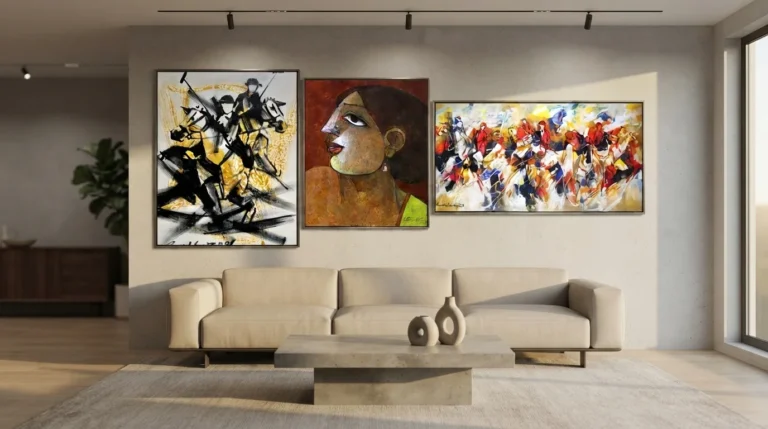
Cubist landscape painting in the modern art tradition gives an entirely different energy. The bold geometric fragmentation and contrast of colour create visual tension that lends itself to contemporary and modern spaces where the artwork is expected to make a statement rather than blend quietly into the background. A cubist landscape can adorn a plain wall in a minimalist room and thus become the whole visual personality of the room.
Styling suggestions for each style:
- Realistic landscapes look good in living rooms, reading corners and classically furnished bedrooms
- Cubist landscapes are a striking centerpiece in modern, open-plan or contemporary interiors
- Pair realistic landscape pieces with warm natural tones in furniture and layered fabrics
- Frame cubist paintings with neutral or monochrome pieces. You want the painting to win on energy
Which Style Should You Choose for Your Space?
The best choice between a realistic and a cubist landscape depends on the atmosphere you wish the room to give off and the visual connection you want between the art and the space around it. A realistic landscape painting will tie together a room decorated in warm traditional tones with layered rugs and classic furniture. A room with white walls, clean-lined furniture and minimal decoration will carry a cubist landscape with confidence.
Also, a matter of personal preference. Some buyers like to see the calm, familiar feel of realistic work. Others are deeply influenced by the visual energy and intellectual challenge of cubist art. Neither preference is more sophisticated than the other. They simply respond to different things in a painting. Expert Framing Art Gallery can help guide this choice and provide professional framing that suits whichever style you choose, ensuring the final display looks considered and complete.
Key Takeaways
Cubist landscape paintings and realistic landscape paintings are two truly different ways of engaging with the natural world through art. Realistic landscapes are visual truths, emotional calm through accurate observation, natural colour and loyal spatial depth. Cubist landscapes create visual energy and intellectual interest through fragmentation, multiple viewpoints, and strong color relationships.
Both styles have a real artistic value for the interior of the house. The choice between them is mostly about which visual experience suits your space and connects most directly with your own taste. A realistic landscape invites quiet reflection. The cubist landscape calls for active looking, a new way of seeing. The Expert Framing Art Gallery includes original art from both traditions, and the expert framing advice is to display them beautifully.
Frequently Asked Questions
Q. What Is the Main Difference Between Realistic and Cubist Landscape Paintings?
Realistic landscape paintings depict natural scenery in natural colour and spatial depth, accurately from one viewpoint. Cubist landscape paintings are divided into geometric planes, show several perspectives at once, and use strong blocks of colour instead of naturalistic tonal blending.
Q. What Defines a Realistic Landscape Painting?
Realistic landscape painting requires correct proportion, natural colour, consistent light direction and convincing spatial depth. The eye renders the subject as it would naturally see it. This gives an attractive and visually familiar image of an outdoor natural setting.
Q. What Defines a Cubist Landscape Painting?
Cubist landscape painting can be defined by broken geometric shapes, multiple different perspectives, flattened space and vivid contrasting colour. Instead of showing what the eye sees from one position, it reconstructs the landscape analytically by means of overlapping planes and angular shapes.
Q. Why Do Cubist Landscapes Look Fragmented?
Cubist landscapes appear fractured because the artist purposefully breaks up the natural scene into geometric planes and offers multiple viewpoints at once. This fragmentation is an expression of the cubist belief that no one viewpoint can tell the whole truth about a subject, so that many angles must be shown together.
Q. Are Cubist Landscape Paintings More Colorful Than Realistic Ones?
Cubist landscapes are not always, but they are likely to be painted in bolder, more contrasting blocks of colour. Not the soft, blended tones of realistic work. In realistic landscapes color is used descriptively to represent natural light. In cubist paintings color is used structurally to define geometric planes and compositional relationships.
Q. Which Style Suits Modern Interiors Better?
Cubist landscape paintings are considered to work better in modern and contemporary interiors because their visual energy and geometric boldness are more in keeping with clean, minimal design aesthetics. Realistic landscapes are ideal for traditional and transitional interiors where serene, familiar visuals create a grounded and welcoming environment.
Q. Can Realistic and Cubist Landscapes Be Displayed Together?
Yes, but it requires fine tuning of scale, colour and wall placement. The two styles have very different visual energies, so side-by-side work is best when one piece holds the composition, and the other is chosen to complement rather than compete directly.
Q. How Should a Cubist Landscape Painting Be Framed?
A cubist landscape painting does not need a frame that competes with the geometric detail of the composition; a clean, minimal frame works best. Plain natural or dark wood (thin black) frames are fine. Skip ornate or heavy frames that take away from the painting’s bold visual language.
Q. Do Realistic Landscape Paintings Suit Traditional Homes?
Yes. Realistic landscape paintings are a natural fit for traditional homes. Their natural colour palettes, familiar subject matter and calm visual character complement with classic furniture, warm textiles and heritage interior tones without creating visual tension or stylistic conflict.
Q. Is One Style More Valuable Than the Other?
There is no true worth in Cubist landscape paintings or realistic landscape paintings. Value depends on the reputation of the artist, quality of execution, provenance of the work and demand among collectors. Both traditions include works of incredible artistic and financial value at the highest levels of the fine art market.