
One bold piece of art can change the entire mood of a room. It can change the energy, ground the space, and give the whole room a unique artistic identity. For most homeowners, the hardest part is figuring out how to style abstract or geometric art so it doesn’t look out of place or dominate everything else around it. Cubism art is one of the most visually striking styles in the history of painting, and it deserves thoughtful placement instead of guesswork. In this blog we will discuss what cubism is and the different types of cubist works available and how to style with confidence in modern interiors.
What Is Cubism Art? A Quick Look at the Movement
Cubism art, which was pioneered by Pablo Picasso and Georges Braque in Paris around 1907, appeared in the early twentieth century. It was a deliberate break from centuries of realistic representation. Cubist artists didn’t show a subject as the eye sees it from one point of view. They broke up that perspective and put it back together again to show many perspectives at the same time.
The cubism art movement was radical for its time. It called into question the assumption that a painting must replicate what the eye sees from one view point. The Cubists destroyed form and overlapped perspectives to create a completely new visual language that would go on to influence almost every modern art movement that followed.
What Is the Meaning of Cubism Art?
Cubism art is the representation of an object fragmented into geometric shapes and showing multiple perspectives at once within the same composition. Cubist works are not copies of visual reality; they reconstruct it. The viewer sees a more complete picture of the subject, but it is visually complex.
Key Characteristics That Define Cubist Art
Cubist art is visually unique. When you understand what it is, you see it immediately and you understand why some works have the energy they do. The style is somewhere between geometric art and analytical representation, using shape and angle rather than smooth naturalistic form.
The fracturing of the subject is the most recognisable aspect of cubist work. He divides faces, bodies, objects and landscapes into planes and angles and reassembles them on the canvas in ways that go against natural perspective. The result is complex, layered but always based on an established underlying logic.
Key characteristics that define a cubist artwork:
- Angular planes that break up natural forms into geometric shards
- The same work presents several viewpoints at the same time
- A flattened sense of depth with traditional spatial perspective actually disrupted
- Analytical cubism: muted earth tones or Synthetic cubism: bold contrasting colour blocks
- Abstract representation focusing on structural analysis instead of realistic visual accuracy
What Are the Key Themes in Cubist Art?
The key themes in cubist art include the nature of perception, the relationship between form and space, and the idea that no single viewpoint tells the whole story of a subject. Music, urban life, portraiture, and everyday objects all appear frequently as subjects across the movement.
Cubism Paintings vs Cubist Portraits vs Still Life Works
A wide range of subjects are covered by Cubism paintings and each subject type produces a visually different result. Knowing these differences can be helpful when selecting a piece for a particular room or interior style. The content, palette and compositional energy of a cubist work are mostly determined by what the artist chose to depict.
The most immediately recognisable sub-type is the Cubism portrait painting. Faces in cubist portraits are split into planes, with eyes, noses, and mouths shown from multiple angles at once within the same face. It can be disturbing, but also very powerful. They have a psychological intensity not often found in art that is pure decoration.
Cubist still life paintings take ordinary objects like bottles, musical instruments, fruit and newspapers and reimagine them as layered geometric forms. The subjects are often familiar and domestic, but the cubist treatment makes them seem entirely new. The subject matter in these works is usually recognizable, even if the visual treatment is not, making them more approachable choices for interiors.
Cubist Landscape Paintings and Their Visual Appeal
Cubism art landscape works translate natural scenery into broken planes and layered geometric forms. Horizons shatter. Trees melt into angular shapes. Overlapping faceted surfaces blend sky and ground together. The result is a landscape that communicates the presence of a place rather than its literal appearance.
Cubist landscape paintings are a particularly effective statement art for larger rooms due to their visual dynamism. The fragmented composition gives the eye several points of entry and keeps the viewer’s attention across the surface rather than drawing attention to one point in the image.
Best rooms for cubist landscape pieces:
- Large living rooms in which to appreciate the scale and energy of the work
- Dining and living areas open plan connected by the artwork
- Wide hallways or entryways where landscape format fills horizontal wall space up well
- Stairwell walls with a layered composition that reads well from multiple angles
How to Style Cubism Art in Modern Interiors
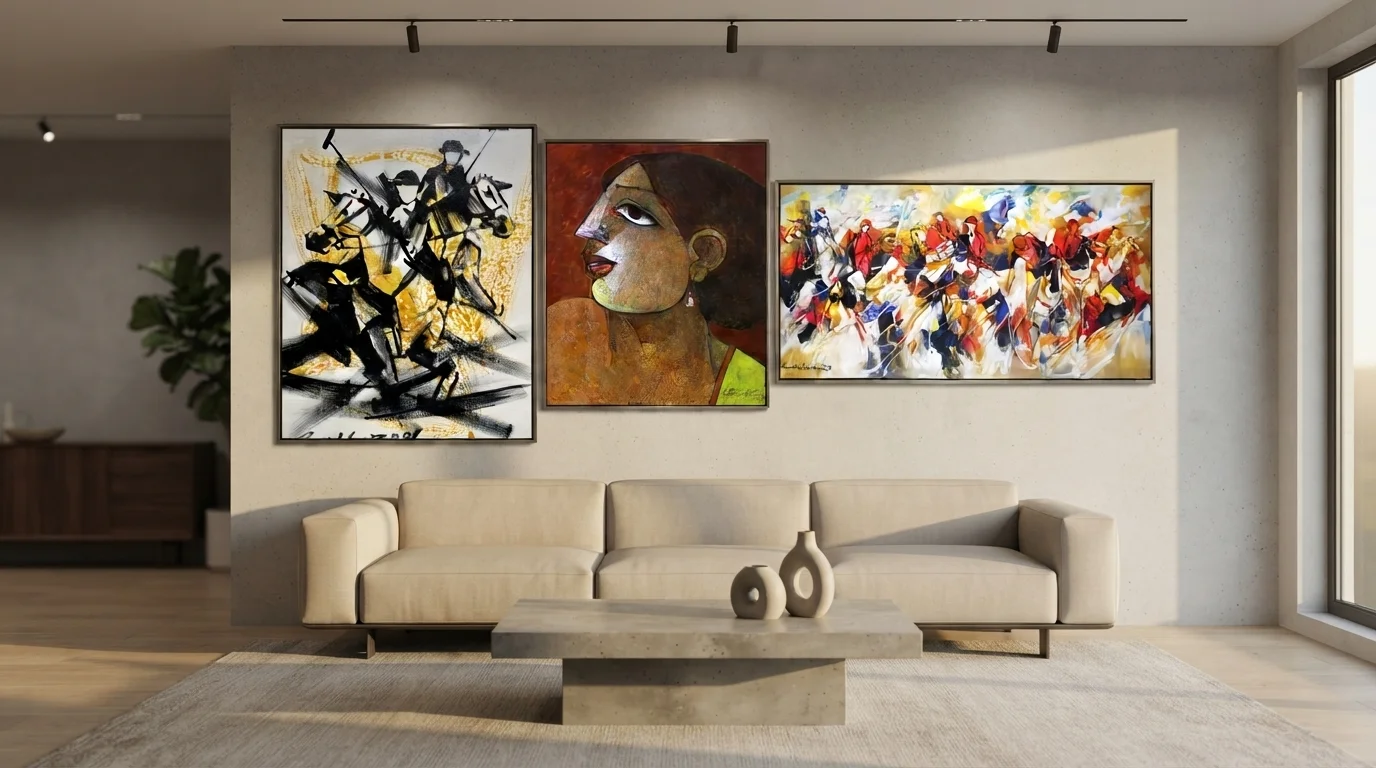
The best place for modern cubism art is somewhere with room to breathe. The visual energy and geometric detail of a cubist piece requires simple surroundings to be properly perceived. Bold cubist art needs a neutral or minimal backdrop of furniture so that the art is the obvious visual statement. Everything else supports the art rather than competes with it.
Don’t try to make a cubist painting blend into the room; make it a center of attention instead. Cubism is not art for the background. It calls for attention. The best interior course is to face that directly. Hang the work on the most prominent wall in the room and allow the rest of the space to fall into place around it.
The styling is more sophisticated in the balance of the colour palette between the artwork and the room. Many cubist works use earthy tones, ochres, greys and muted blues. Incorporate one of those colours into soft furnishings, such as a cushion, a rug or a throw, to create a visual link between the painting and the room without making the space feel too coordinated.
Styling tips for cubist art in modern interiors:
- Select a wall that will serve as a dedicated center of attention and set the cubist piece there alone
- Keep furniture and decor around simple, visually uncluttered
- Select one accent colour from the painting and echo it slowly in soft furnishings
- Use of directional lighting or a picture light to highlight the geometric detail in the work
- Don’t hang multiple bold artworks in the same sightline, as cubist work reads best without competition
Choosing the Right Frame for Cubist Paintings
The frame around a cubist painting affects how bold or restrained the piece feels in a room. A heavy weight frame drags the work into a traditional context that is often at odds with the visual language of cubism. It also competes with the geometric complexity of the composition itself.
Most cubist works look a lot better in clean minimal frames. A thin black, dark wood or natural wood frame keeps the attention on the painting, not on its border. For work with a warmer palette, a thin brushed gold or bronze frame can pick up the earth tones without adding visual weight that adds to the composition. Expert Framing Art Gallery provides professional framing advice, not only about the artwork but also about the room in which it will be displayed, so the finished product looks thoughtful and complete.
Where to Place Cubist Art for Maximum Impact
Living rooms and entryways are the most visible spaces in any home, and also where the strongest impression of cubist art is made. A cubist piece in the entryway immediately creates the vibe for the entire house. First and foremost, the visitors are confronted with the boldness and complexity of the work which makes a strong first impression of the space.
Home offices and study areas are given a different benefit by cubist art. The fragmented, multi-perspective visual language of cubism is genuinely thought-provoking. That sort of visual representation in a workspace can help support creative thinking and communicate to the character of the person who works there in a way that purely decorative art cannot.
Ideal placements for cubist art in the home:
- Above a console table in the entryway where it creates an immediate visual statement
- As the centerpiece of a gallery wall in the living room, anchoring the surrounding pieces
- Behind a desk in a home office where it contributes to a creative and intellectually engaged atmosphere
- In a reading nook or study corner where the complexity of the work rewards extended attention
Key Takeaways
Cubism art is one of the most visually powerful choices you can make for a modern interior. Few other art styles can fill a room with the depth and intellectual energy that its geometric fragmentation, multiple perspectives and layered compositions possess. The trick to styling it correctly is to keep everything around it simple. All the room needs is neutral walls, simple furniture and one carefully selected accent colour taken from the painting to allow the work to perform at its best.
Framing also matters. A clean, minimal frame lets the geometry speak clearly without distraction. Placement on a single focal wall, well lit and given adequate space, completes the effect. Expert Framing Art Gallery is the premier destination for original cubist work and professional framing expertise for collectors and design-conscious homeowners in Karachi and all over Pakistan.
Frequently Asked Questions
Q. What Is Cubism Art Style?
Cubism is an art style that shows subjects broken down into geometric shapes and multiple views at the same time. It does not follow realistic representation, but it reconstructs subjects by overlapping angular shapes and flattening spatial perspective.
Q. What Is the Cubism Art Definition?
Cubism art definition is an art movement of the early twentieth century that rejected realistic representation by breaking subjects into geometric shapes and incorporating multiple viewpoints within the same painting, led by Picasso and Braque around 1907.
Q. What Is the Cubism Art Movement?
The Cubism movement began in Paris around 1907 and is considered one of the most influential movements in the history of modern art. It challenged traditional representation and paved the way for abstraction, constructivism, futurism and many other directions of twentieth century art.
Q. What Is Cubism in Art?
Cubism is the art movement that deconstructs a subject into several geometric facets and shows it from several points of view at the same time. It rejects the single viewpoint of traditional painting in favour of a more analytical, fragmented visual language.
Q. What Is the Meaning of Cubism Art?
Cubist art is a style that uses fragmented geometric forms and multiple different viewpoints to portray subjects, rather than realistic representation. It represents the idea that a single point of view does not contain the entire truth of a subject and that combining different points of view expresses more than just one view.
Q. What Are the Key Themes in Cubist Art?
Cubist art is about issues of perception, reality as a whole, fragmentation of form and the relationship between space and structure. Throughout the history of the movement, portraits, musical instruments, still life subjects and landscapes are all frequently depicted.
Q. What Defines Cubism Art?
Cubism is characterized by fractured forms, geometric shapes, multiple combined viewpoints, flattened perspective and the use of overlapping planes to analyze and reconstruct rather than represent a subject as the eye naturally sees it from one fixed point.
Q. What Is Cubism Painting?
Cubism painting is a type of artwork that uses the cubist visual vocabulary to depict a subject by breaking down the subject into geometric planes and showing multiple viewpoints at once on the picture plane. Subjects are portraits, still-life, landscape and city scenes.
Q. Can Cubist Art Work in Small Living Spaces?
Yes, cubist art looks good in small spaces if chosen at the right size. A single well-framed piece on a clear wall can have an impact without filling up the room. Look for pieces in a more muted colour palette to create a feeling of open and considered space.
Q. What Colors Are Common in Cubist Paintings?
The colours of the Cubist paintings of the analytical period were often muted earth tones, ochres, browns, greys and muted blues. Cubism was created with bolder contrasting color combinations. Both methods will work in modern interiors depending on the existing palette of the room and the energy level you want.
Q. How Should a Cubist Painting Be Framed?
The best way to frame a cubist painting is with a clean, minimal frame that does not compete with the geometric complexity of the composition. Most works are suited to thin black, dark wood or plain natural wood frames that keep attention on the painting rather than its border.
Q. Is Cubist Art Suitable for Traditional Homes Too?
Cubist art can work in traditional homes, if you frame and place it carefully. A cubist painting in earthy colours in a simple dark wood frame is able to connect contemporary and traditional styles. It adds visual interest and artistic depth without clashing with classical elements of the interior.