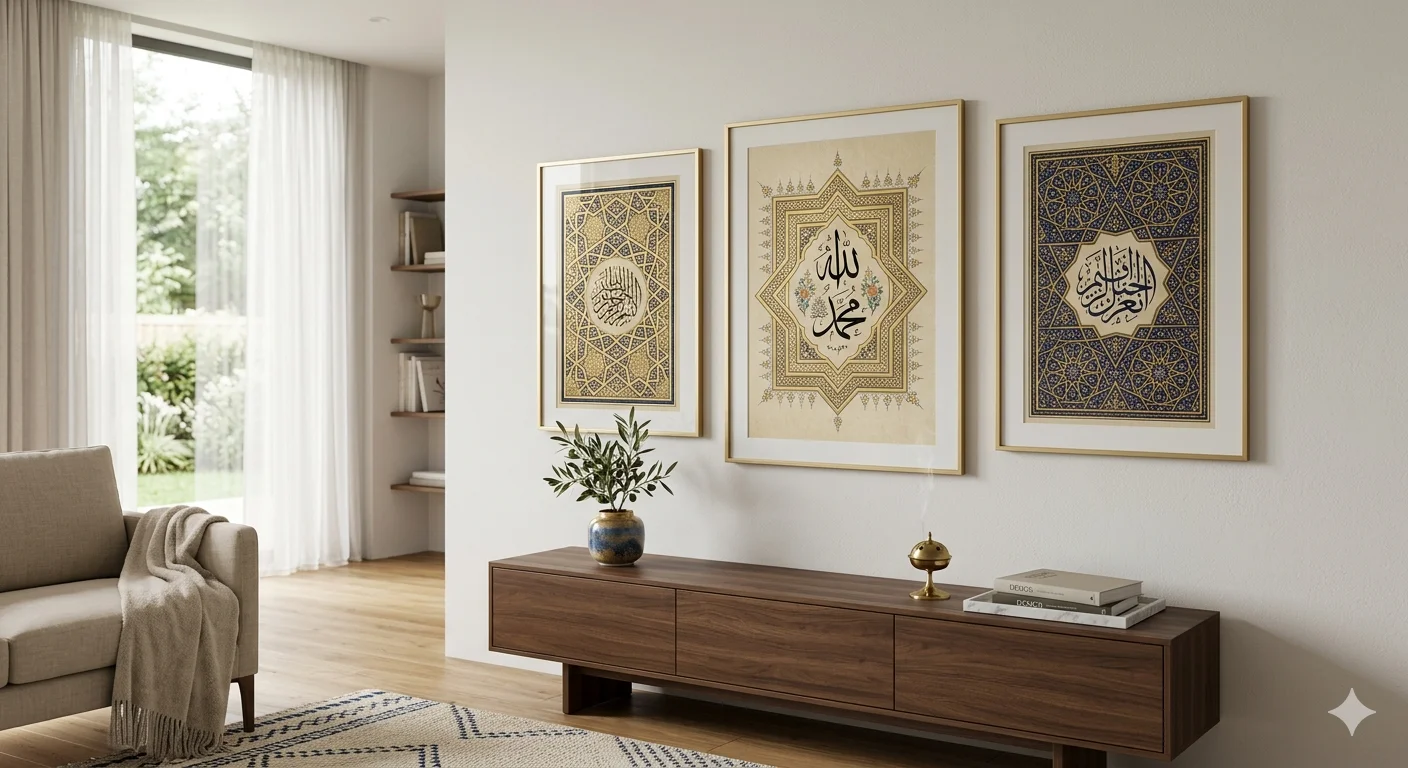

Imagine standing in front of a beautifully framed piece of Islamic art and feeling an immediate sense of peace. Something about the patterns, the script, or the colors just settles you. That feeling is not accidental. It is built into the art itself.
Islamic art has been creating that experience for over a thousand years. This blog covers what makes it unique, the different forms it takes, how it works in modern interiors, and how to choose the right piece for your home in Pakistan.
What Makes Islamic Art Different from Every Other Art Form
Islamic art has a unique look and feel because it is based on a set of visual and spiritual rules. The focus on pattern, symmetry, and geometry creates a sense of order and harmony that feels calming rather than clinical.
Islamic painting art and decorative work do not show God or the human body in a literal way in religious settings. Instead, artists channeled their creativity into script, pattern, and arabesque. The result is an art form that is both deeply spiritual and visually extraordinary.
The Visual Principles That Define Islamic Art and Calligraphy
Islamic art and calligraphy share three core visual elements that appear consistently across the tradition:
- Geometric patterns: Interlocking shapes, stars, and repeating forms that create a sense of infinite order. These patterns represent the mathematical precision of divine creation.
- Arabesque: Plant-inspired designs that flow, branch out, and repeat forever. The arabesque suggests the infinite nature of the divine through organic form.
- Calligraphy: Sacred and poetic text transformed into visual art. In Islamic art and calligraphy, the written word is considered the highest form of visual expression because it carries the direct word of God.
Together these three elements create a visual language that is immediately recognizable and deeply meaningful.
Islamic Calligraphy Art: Where Words Become Visual Beauty
Islamic calligraphy art is thought to be the best way to express yourself visually in Islam. Calligraphers spent years mastering their craft because writing sacred text was treated as an act of devotion in itself.
Islamic arabic calligraphy art is written in several major script styles. Naskh is clean and readable, widely used in Quran manuscripts. Thuluth is tall and elegant, often used for architectural inscriptions and formal art pieces. Kufic is angular and geometric, one of the oldest Arabic scripts. Diwani is flowing and decorative, developed in the Ottoman court and used frequently in contemporary art pieces today.
Each script carries its own visual character and suits different kinds of spaces and interior styles.
Islamic Calligraphy Wall Art: Bringing Sacred Words Into Your Space
Islamic calligraphy wall art has become one of the most personal and meaningful decor choices in Pakistani homes. Families pick certain verses and phrases because of their spiritual meaning, not just because they look nice.
Ayatul Kursi is the most commonly displayed verse, often placed near the entrance of a home for protection and blessing. Bismillah is placed in kitchens and above doorways. Surah Al-Fatiha and the 99 names of Allah are also widely loved choices across Pakistani households.
For placement, Islamic calligraphy wall art looks best when it is the main focus. The piece should be in a prominent place, like above a sofa in the drawing room, in the center of a bed in the bedroom, or on the main wall at the entrance of a home.
Islamic Calligraphy Paintings: Hand-Painted vs Printed, What to Choose
There is a big difference between hand-painted Islamic calligraphy paintings and printed versions that are made in large numbers.
Original calligraphy Islamic paintings are made by hand. You can see the brushwork, feel the texture of the paint, and sense the care and intention behind every stroke. These pieces carry genuine artistic and spiritual value. Printed versions are flat, uniform, and lack the depth and life of original work.
Expert Framing Art Gallery specializes in original hand-painted Islamic calligraphy paintings, giving buyers access to pieces that are genuinely crafted rather than simply reproduced.
Islamic Paintings: A Rich Tradition That Goes Beyond Calligraphy
Many people think Islamic paintings means only calligraphy. The tradition is actually far broader and richer than that.
The amazing Persian miniature tradition is a part of Islamic art paintings. It used incredibly detailed small-scale paintings to show court life, battles, love stories, and nature with stunning accuracy. Mughal painting, which was popular in South Asia, combined Persian, Indian, and Central Asian styles to make a visual style that is very important to Pakistani culture.
These old Islamic paintings show that this art form has always combined beauty, storytelling, and human experience with spiritual devotion.
Beautiful Islamic Paintings That Have Stood the Test of Time
There are some things that all beautiful Islamic paintings from different times have in common. Gold leaf was used to show the light of God. Rich jewel tones like deep blue, emerald green, and crimson. Fine details that are worth looking at closely. A feeling of order and purpose in every part of the piece.
These qualities are not just historical. Artists today in Pakistan and around the Islamic world still make beautiful Islamic paintings that are just as well-crafted and thought out as they were in the past. The Expert Framing Art Gallery picks out works of art with this level of skill in mind.
Islamic Abstract Painting: A Modern Take on a Classical Tradition
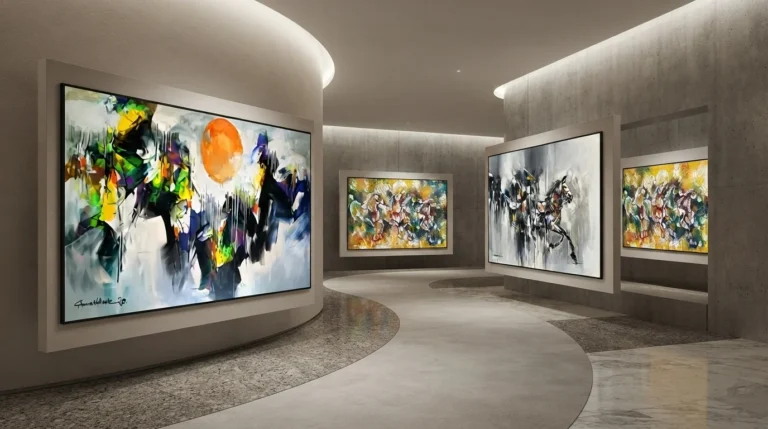
Islamic abstract painting brings the visual language of the Islamic tradition into a contemporary context. Contemporary artists use geometric abstraction, calligraphic strokes as expressive marks, and color fields inspired by Islamic architecture and tilework.
The result is art that feels both spiritually rooted and visually current. For Pakistani buyers who want something meaningful but modern, Islamic abstract painting offers the best of both worlds. It fits in with modern minimalist interiors without looking out of place, and it has a real spiritual meaning without being too formal.
Islamic Wall Art and How It Transforms Pakistani Interiors
Islamic wall art works across a wide range of Pakistani home styles. Here is how it fits into different interior types:
- Traditional interiors: Dark walls and rich wood furniture. This style is perfect for big, ornate Islamic wall art pieces with gold calligraphy or detailed arabesque designs.
- Contemporary minimalist: Clean lines, neutral walls, white or grey color palettes. Monochrome calligraphy or geometric Islamic abstract painting pieces work beautifully here.
- Luxury interiors: Grand spaces with high ceilings and premium finishes. Large arabesque oil paintings or oversized hand-painted calligraphy canvases in gold on black give these spaces the major impact they need.
- Modern family homes: Warm and welcoming spaces. Mid-size Islamic wall art pieces in warm tones with quality wooden frames suit these interiors well.
Choosing Islamic Art Frames That Do Justice to the Artwork
The right frame can make a big difference in how Islamic art looks on your wall and how the art looks in the frame.
Gold ornate frames go well with traditional and formal rooms, and they make calligraphy and arabesque pieces look more impressive. Dark walnut or slim black frames suit contemporary and minimalist spaces and let the artwork speak for itself. Float frames work well for canvas pieces where you want a clean modern presentation.
Expert Framing Art Gallery offers custom Islamic art frames designed to complement each specific piece and the interior it will live in. The right frame is not just a border. It is the finishing detail that completes the whole composition.
Islamic Canvas Art and Calligraphy Painting on Canvas: Which Is Right for You
Islamic canvas art covers a broad range of works on canvas, from geometric compositions to landscape inspired pieces to figurative works from the secular Islamic art tradition.
Islamic calligraphy painting on canvas is a more specific category. These are hand-painted calligraphic works on stretched canvas that combine the spiritual weight of sacred text with the visual richness of original painted art. Canvas gives these pieces texture and depth that paper or board cannot match.
For feature walls and large spaces, the stronger choice is Islamic calligraphy painting on canvas. A framed calligraphy piece on board or paper looks good in small or private spaces.
Frequently Asked Questions About Islamic Art
Q: What is Islamic art?
Islamic art is a broad creative tradition covering calligraphy, geometric pattern, arabesque design, architecture, miniature painting, and decorative art. It is not limited to religious content and spans over a thousand years of human creativity.
Q: How is Islamic art used in interior design?
Islamic art works in interiors as a point of focus, a spiritual statement, or a cultural connection. Calligraphy pieces are used above sofas and beds, geometric compositions work in corridors and offices, and arabesque designs suit formal drawing rooms.
Q: What is the difference between Islamic calligraphy art and Islamic painting art?
Islamic calligraphy art is text-based, transforming sacred script into visual beauty. Islamic painting art includes figurative, geometric, and landscape compositions that go beyond script.
Q: What makes Islamic calligraphy wall art a popular choice in Pakistani homes?
Islamic calligraphy wall art carries spiritual meaning beyond decoration. Pakistani families display Quranic verses like Ayatul Kursi as a form of devotion and blessing in their homes.
Q: Are Islamic art paintings suitable for a modern minimalist home?
Yes. Choose monochrome calligraphy or geometric abstract compositions with simple framing. Islamic art paintings in the right style look completely at home in clean contemporary interiors.
Q: What is the best frame for Islamic calligraphy paintings?
Gold frames suit traditional settings. Dark wood suits contemporary interiors. Expert Framing Art Gallery offers custom framing for all types of Islamic calligraphy paintings.
Q: What is Islamic abstract painting and is it religiously acceptable?
Islamic abstract painting typically uses geometry and calligraphic marks rather than figurative representation. This approach is widely accepted and respected within Islamic artistic tradition.
Q: How do I choose the right size Islamic canvas art for my wall?
For walls under 8 feet, a 24 by 36 inch canvas works well. For feature walls, go 36 by 48 inches or larger. Expert Framing Art Gallery offers multiple sizes for Islamic canvas art.
Q: What is the difference between printed and hand-painted Islamic calligraphy painting on canvas?
This original hand-painted Islamic calligraphy painting on canvas has real brushwork, texture, and a one-of-a-kind look. Printed versions are flat, made in large numbers, and don’t have the depth and life of the original work.
Q: What are some beautiful Islamic paintings I can display in my home?
Calligraphy in gold on black, Mughal-inspired miniatures, geometric abstract compositions, and arabesque oil paintings are all outstanding categories of beautiful Islamic paintings suited to Pakistani homes.
Q: Where can I buy original Islamic art in Pakistan?
Expert Framing Art Gallery in Karachi offers original Islamic art and Islamic wall art including hand-painted calligraphy, canvas pieces, and custom framing with delivery across Pakistan.
Discover Original Islamic Art at Expert Framing Art Gallery
If you are looking for original Islamic art that is beautifully crafted and suited to Pakistani homes and offices, Expert Framing Art Gallery is the right place to start.
Their collection covers hand-painted Islamic calligraphy, Islamic canvas art, geometric compositions, and contemporary Islamic abstract painting across a range of sizes and styles. Every piece is available with custom framing designed to complement your specific space. Browse their collection today and find the Islamic art paintings your walls deserve.