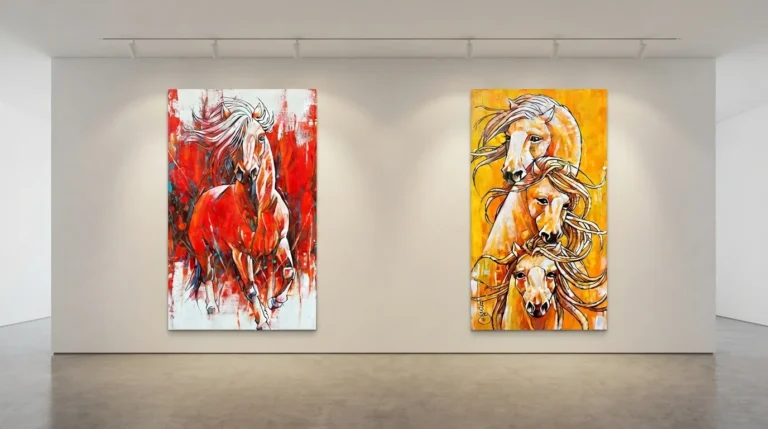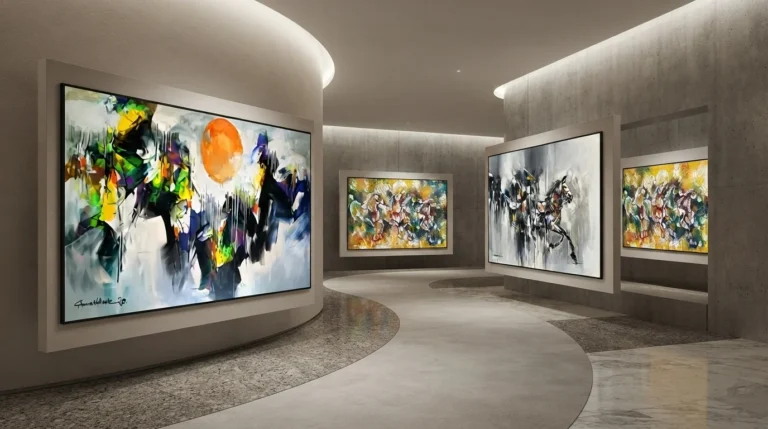
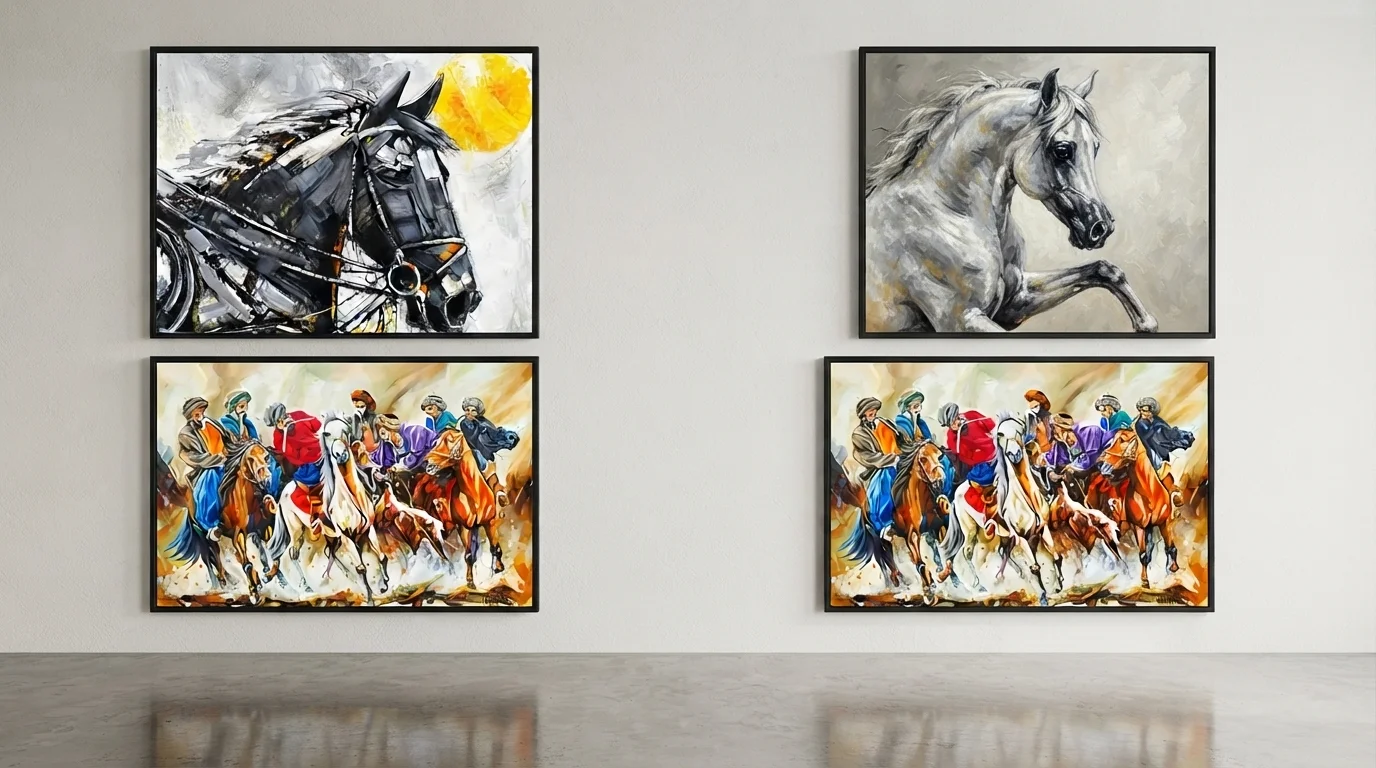

The same subject of a horse can look very different depending on the medium used to paint the horse. The richness and depth of an oil-painted galloping black horse is a whole different character when painted in acrylic. Buyers often think of all horse painting on canvas as being the same. Canvas is canvas and paint is paint, right? The difference between acrylic and oil is actually a big deal in terms of how the finished product looks on your wall and how it will age over time. In this blog, we clearly compare both the mediums so that you can pick the right one for your space and taste.
What Makes Horse Painting on Canvas Popular?
Serious painting has been done on canvas for centuries and it is still the dominant format for horse art today. There are things about paint on canvas that you can’t get on paper, on board, or any other surface. It creates a tooth on the surface that gives brushstrokes grip and physical presence, an added visual and tactile depth that goes a long way toward how a finished horse painting reads on a wall.
Horse subjects translate especially well to canvas because of the physical energy and visual weight the subject naturally holds. A horse in canvas has real presence in a room. The symbolic strength of the work and the material quality of the canvas create pieces that suit a range of interior styles, from traditional studies and formal sitting rooms to contemporary open-plan spaces.
Why Is Canvas a Popular Choice for Horse Artwork?
Horse artists favor painting on canvas, since the material’s texture presents itself to paint application that gives a painting both physical depth and visual presence. It is durable, open and scales well from small casual pieces to large statement works. Canvas also takes oil and acrylic paint well, and became the obvious choice for painting horses in all artistic traditions.
Understanding Acrylic Horse Painting
The acrylic horse painting is made with water-based pigment that dries fast and creates vivid bold colour results. Fast-drying times allow artists to layer quickly, building detail and texture over several sessions without the long drying times of oil painting. The resulting surface can be smooth and flat or heavily textured depending on the application technique and tools used.
Acrylic is especially suited to contemporary and modern horse art. Acrylic paint’s clean, saturated color palette adds brightness and visual energy to bold, expressive compositions. Abstract or contemporary artists working in the horse genre often choose acrylic because it allows them to work quickly and boldly without the medium interfering with their process.
Acrylic painting traits worth knowing:
- Fast drying time enables quick layering and detailed rework with no long delay between sessions
- A stable, bold, vivid colour that does not easily turn yellow over time
- Finish is flexible, smooth and glossy to heavily textured depending on technique
- Less maintenance required than oil and generally more forgiving in varied climates
Understanding Horse Oil Painting
The gold standard for the subject of horses, say many collectors and art historians, is a painted horse on canvas. Oil paint takes a long time to dry, so artists are able to blend colours together easily over large areas of canvas creating the smooth tonal gradations that make realistic horse portraits so compelling. The extended working time allows the artist to develop and change the painting over several sessions before the medium becomes forever set.
Horse oil painting is excellent for realistic and classical portrait styles. The richness of oil pigment gives you a depth of color that acrylic can only rarely match, though it can come close. Oil paintings on canvas also develop a certain quality with age, the colours blending and deepening in a way that gives older oil paintings a warmth that is really hard to create in a newer medium.
Characteristics of oil painting to Know:
- Slow drying time allows for smooth blending of color and frequent adjustment across the canvas surface
- Deep, rich tones with a natural luminosity that works beautifully in different lighting conditions
- Long lasting finish if varnished correctly and stored in suitable climates
- Best medium for realistic horse compositions when tonal accuracy is the primary goal
What Is the Difference Between Acrylic and Oil Horse Paintings?
Acrylics dry quickly and give a bright, vibrant colour and a flexible finish. Horse oil painting takes longer to dry, enabling more thorough blending and greater tonal depth. Acrylic is the best medium for contemporary and expressive styles; oil is best for realistic and classical horse portraits where the major visual objectives are smooth gradations and luminous depth.
Comparing Texture, Durability, and Finish
The texture of acrylic and oil horse paintings differs in ways that affect how each reads on a wall. Acrylic paint can be worked with palette knives and texture pastes and a variety of application tools to produce a wide range of surface effects. The finish is either perfectly smooth or slightly textured, and the paint sits on top of the canvas surface and does not sink in.
Oil paint has another kind of surface character. The paint blends a bit more organically into the texture of the canvas, resulting in a more smooth surface that looks less applied. The natural sheen of oil paint also interacts with light in a particular manner, subtly changing as the light source moves during the course of the day. Over time, properly cared for oil paintings on canvas become richer and more combined, which is part of their enduring collector appeal.
Practical comparison between acrylic and oil on canvas:
- Acrylic cures to a flexible finish that also does not crack in areas of temperature fluctuation
- Oil paintings need more careful climate control and should be kept away from extreme humidity
- Acrylic performs better in humid conditions so it’s a more practical choice for many Pakistani homes
- Oil paintings can take on a richer more nuanced tone with age if properly maintained and varnished
Popular Horse Painting Styles on Canvas
There are few colours that have the visual authority of black horse paintings on canvas. Deep black against a contrasting background makes for a bold, striking presence on any wall. Whether realistic or abstract, black horse compositions possess an elegance and intensity that makes them consistently popular choices for statement wall positions in living rooms, studies and hallways.
Contemporary horse painting and abstract horse painting on canvas provide a different kind of visual energy. These works favour expressive form and bold colour over accurate depiction, producing pieces that fit in with modern interiors where the artwork is expected to make a statement rather than quietly complement the surroundings. Often modern horse paintings are a mix of gestural painting and surprising color combinations, creating works that feel alive and energetic in a way that traditional portraits don’t always achieve.
A canvas painting of a running horse fills a room with a sense of motion and kinetic energy that static portrait compositions cannot match. Painted in either fluid gestural strokes or with more detailed realistic technique, the horse in motion creates a feeling of life and vitality that many collectors find compelling. These pieces are suitable for areas where visual energy is a plus, open living spaces, modern offices and entry areas where the first impression the room presents is important.
Choosing the Right Horse Canvas Art for Your Space
The selection of horse canvas art is about matching the medium and style of the piece to the specific characteristics of the room in which it will be displayed. Acrylic horse paintings respond well to direct illumination, so bright, natural light or strong artificial light are perfect. Oil paintings look best in warmer, more directional lighting that shows off the depth and richness of the surface of the paint.
Matching the colour pallette is important also. A bold contemporary horse painting in acrylic with strong contrast works well on a neutral or white wall where nothing competes with its energy. A rich oil portrait in warm earth tones and deep shadows is great for a room with wooden furniture, warm textiles and layered lighting to make the atmosphere intimate. Expert Framing Art Gallery is here to help you with professional advice on framing and canvas care so that your horse painting on canvas is displayed and protected properly from day one.
Quick tips for choosing between acrylic and oil for a specific room:
- Go for acrylic if you want bold colour and low maintenance in modern, light or humid areas
- Select oil in traditional, warmly lit rooms where depth of colour and long-term collector value are top priorities
- Think about paintings of running horses for high energy social areas like living rooms and entryways
- Choose portrait formats for studies, offices and quieter rooms where the main experience is intimate engagement with the work
Key Takeaways
The trick to picking the right horse painting on canvas is understanding what acrylic and oil each bring to the subject, and matching that to your room, your lighting, and your own aesthetic priorities. Acrylic offers strong, bright, low maintenance results that are great for contemporary spaces and humid climates. Oil has rich tonal depth, luminous colour and long-term collector value, and is suited to traditional surroundings and warmer interior styles.
Both media can produce great horse paintings in the hands of skilled artists. The subject itself, whether it is a serious black stallion, an abstract galloping form or a quietly powerful portrait, carries meaning and visual presence across both traditions. Expert Framing Art Gallery can help you find the right piece and frame it so that it will look genuinely at home on your wall for years to come.
Frequently Asked Questions
Q. What Is the Main Difference Between Acrylic and Oil Horse Paintings?
Acrylic is fast drying and gives a vibrant, strong colour with a flexible finish. Horse oil painting takes more time to dry and yields richer tonal blending and deeper colour luminosity. Acrylic works well for the modern style whereas oil works well for realistic and classical horse compositions where smooth gradations and lasting depth are the priority.
Q. Acrylic or Oil Horse Painting on Canvas Which One Is More Reliable?
With proper care, both can last for generations. Horse oil painting on canvas can age beautifully but requires stable climate conditions. It is also more resistant to cracking and the effects of humidity, making it more practical for use in environments with fluctuating temperatures and moisture, especially over time.
Q. Acrylic vs Oil for the Beginner Collector?
Acrylic horse painting is usually more convenient for first time buyers because it requires less specialized care and is less affected by different environmental conditions. In general, oil paintings are more valuable in the long term and visually richer, but they require more knowledgeable care and display conditions to preserve their quality over time.
Q. Why Are Black Horse Paintings on Canvas So Popular?
Black horse paintings on canvas have immediate visual impact with their bold contrast and simple elegance. The strong color scheme goes well with many interior styles. The subject has strong symbolic associations with strength and dignity that are cross-cultural in nature, and compositions of black horses have remained consistently popular with collectors.
Q. What Makes Abstract Horse Painting on Canvas Different From Realistic Styles?
In abstract horse painting on canvas, colour and movement, and expressive form are more important than accurate anatomical depiction. Realistic paintings of horses are judged on how well the artist captures the horse’s likeness but abstract paintings are judged on how well the artist conveys a feeling and how much life the painting has. Abstract paintings are more suited to modern spaces where the artist’s vision is more important than an accurate representation.
Q. Does a Running Horse Canvas Painting Suit Modern Interiors?
Yes. A canvas painting of a running horse is a great way to add a sense of energy and movement to a room and works particularly well in modern and contemporary interiors. The sense of motion and vitality of these works is a complement to open plan living areas, entryways and spaces where a feeling of energy and life is a positive design quality.
Q. How Should Horse Oil Paintings Be Maintained Over Time?
It is good to varnish horse oil paintings from time to time to protect the surface and to preserve the depth of colour. Do not expose to direct sunlight, high humidity and extreme temperature changes. Lightly dust with a soft, dry cloth. If any cracking or surface changes appear over time, have the painting checked professionally.
Q. Can Acrylic Horse Paintings Handle Humid Climates Better Than Oil?
Yes. Acrylic horse painting dries to a flexible film that is more resistant to the effect of humidity and temperature change than oil paint. This makes acrylic horse paintings a more practical choice for homes in Karachi and similar climates where humidity levels can change a lot in different seasons.
Q. What Size Horse Canvas Art Works Best for a Living Room?
The Horse Canvas Art should be about two-thirds the width of the main display wall in most living rooms. A large canvas above a sofa or a prominent feature wall makes for a strong visual presence. Medium-sized pieces work well in smaller rooms, adding character without overpowering the scale of the room.
Q. How Should a Horse Painting on Canvas Be Framed for Best Results?
A carefully positioned horse painting on canvas that complements rather than competes with the painting itself. Dark wood or plain metal frames work well with most styles. Gallery wrap canvases (no frame) should have the canvas edges neatly painted. Professional framing advice ensures the display is as good as the art itself.