It is assumed that art collecting is the preserve of the rich, the academic or the professionally connected. That assumption leaves out almost everything that matters about why people actually do it. Most collectors don’t start out with a plan or a budget. They start with a feeling, standing before a work that entirely stops them, and will not be forgotten. Why do people collect art? The answers are as different as the collectors themselves but there is one common thread and that is something very personal. Something that has little to do with status and everything to do with how we relate to beauty, memory and meaning as human beings.
Art Collecting Is More Personal Than Most People Realise
Art collecting is not primarily a financial decision or a social one, although those things can play in to it. At its heart, it is a very personal practice, built around emotional response, individual taste and the human desire to surround ourselves with the things that matter. When asked why they started, most collectors speak of a connection, not a calculation.
That is what makes collecting different from just furnishing a home. A collector is not looking for something that goes with the sofa or fills a wall. What they want is something that says, to them, something about them and about the world they live in. That distinction matters for everything from how a collection develops to why the process never quite feels finished.
The Emotional Pull: Collecting Art Because It Moves You
The most straightforward reason people collect art is the direct emotional experience of encountering a work that speaks to them in an unexpected way. Not all paintings receive this response. Most do not. But there are times in a gallery or open studio or even a friend's home when something stops you. The feeling is instant and hard to put a name to. It can be recognition, or beauty, or unease, or a kind of quiet that the room around the painting does not have.
That experience is the first step in collecting for many people. They buy the work not because it is part of their interior, not because the artist is well known, but because the alternative, to go away without it, feels like a real loss. That’s a different kind of buying decision than most purchases. It’s the jump from casual appreciation to something more committed.
What Does It Feel Like to Fall in Love With a Painting?
It’s not often that falling in love with a painting is slow. This typically happens quickly, in the first few seconds of looking before conscious analysis gets started. The piece says something before the viewer has formed a thot about it. Collectors speak of returning to a work over and over during a visit, unable to leave it, already changing their minds to accommodate owning it.
This kind of meeting is totally different from just finding something attractive. Attractive look, easy to forget. A painting that really moves you, really moves you, isn't either one. It has an emotional connection that stays with you after the first viewing and that is why collectors often say that some of the pieces in their collections still affect them years after they bought them.
Art as an Expression of Personal Identity
The artworks a person chooses to live with tell a true story about who they are. An art collection is not just a matter of taste. It is a visual autobiography, collected over many years, communicating values and interests, emotional range and cultural identity in ways furniture and architecture not often do.
Collectors often say their collections are more true representations of themselves than almost anything else they own. What they’re drawn to, what periods and styles they are always drawn to, what artists they choose to support, all these choices add up to something that tells a coherent story about the person who made them.
Art collection as an expression of personal identity:
- Subject matter preferences describe what the collector finds meaningful, beautiful, or worth studying
- Choice of style and period reveals aesthetic and intellectual concerns
- Collection reflects the cultural and spiritual heritage and beliefs of the collector
- The choice of local versus international artists reflects the collector’s perception of their role in the overall art world
Building a Private Art Collection as a Meaningful Life Practice
A private art collection is not created overnight. It grows with a person’s life and depends on where they go, who they meet, what they read, and how their understanding of art evolves over time. Building their collection is always referred to as one of the most satisfying ongoing practices in their lives, not for the objects themselves, but for all that the process involves.
Building a collection is research, it's talking to artists, it's going to galleries and studios, it's learning how to look more carefully, it's developing the ability to know the difference between something that's just pretty and something that's really important. These skills develop slowly, and reward patience like few other tasks.
How Does a Private Art Collection Grow Over Time?
Early acquisitions of a private art collection are mostly natural and emotional. The collector buys what they’re moved by, but has no developed framework for why. Patterns grow over time. Some themes, styles, or periods keep consistent, and the collector starts to see their own tastes more clearly.
Later acquisitions are more planned. The collection has a thematic structure which was not planned, but which grew out of a long personal involvement. For many collectors, this growth is one of the most satisfying parts of the practice, seeing a collection develop its own logic and identity.
The Desire to Support Artists and Keep Art Alive
Art collectors like to talk about their purchases as a cultural act of participation. Buying an original work by a living artist is regarded as not just a purchase, but a contribution to the artist’s ability to continue to make work. This motivation goes hand in hand with the personal and emotional ones and for some collectors it becomes just as important as any other reason.
Collectors who are prepared to invest in original work are important for the art ecosystem. Artists can’t live their practice without buyers. Those collectors who are aware of this often experience a real sense of responsibility as well as the joy of collecting and this sense of responsibility can influence which artists they favor and how they interact with the broad art community.
Ways art collectors actively support artists and the wider art ecosystem:
- Buying directly from artists or galleries that accurately represent the artists
- Commissions of new works with artistic freedom for the artist
- Going to exhibitions and taking others who might be interested and thus become further supporters
- Referring artists to collectors in friends, family and colleagues who are starting to collect
- Lending works to public exhibitions, which widen the artist’s audience and reputation
Cultural Pride and Collecting Paintings That Reflect Your Heritage
The desire to own a paintings collection that reflects their own culture, history and visual identity is a strong motivation for many collectors. Art that references familiar landscapes, shared spiritual traditions, or works within artistic conventions that feel personally rooted has a different kind of meaning than international work, yet excellent.
This is especially true for collectors who feel that their own cultural traditions of art deserve to be recognized and preserved. Acquiring and displaying art from a particular cultural lineage is viewed as an act of cultural pride, not simply an aesthetic decision.
Why Pakistani Art Collectors Often Choose Work That Reflects Their Culture
Art collectors in Pakistan are attracted to work that connects with local identity in ways that imported art cannot. The visual aspect of Islamic calligraphy is secondary to its spiritual meaning. Through traditions of miniature painting, contemporary collectors are linked to an extraordinary sophisticated Mughal artistic heritage. Buyers who want their collections to feel rooted in who they are and where they come from are drawn to local landscape subjects, architectural imagery and work by contemporary Pakistani artists who address local social and cultural themes.
Today’s Pakistani art scene is producing artists who are engaging deeply in all of these traditions and also in international art conversations. Collectors who support this work feel they are contributing to something culturally important beyond their own walls.
The Intellectual Pleasure of Knowing and Understanding Art
A fine art collection has to be driven by real curiosity and it fully reward its curiosity. pleasures that deepen with years of engagement: pleasures of knowing what makes one work significant and another simply as competent, learning the history of movements and the relationship between artists, developing an eye that can read a surface and a composition with increasing accuracy.
Many collectors talk about the intellectual component of collecting as one of its most sustaining qualities. It never seems to be complete knowledge and so the practice never gets boring. Each new acquisition opens onto a new area of learning and in itself the collection becomes a kind of ongoing education in the history and language of visual art.
Creating Environments That Reflect Intention and Care
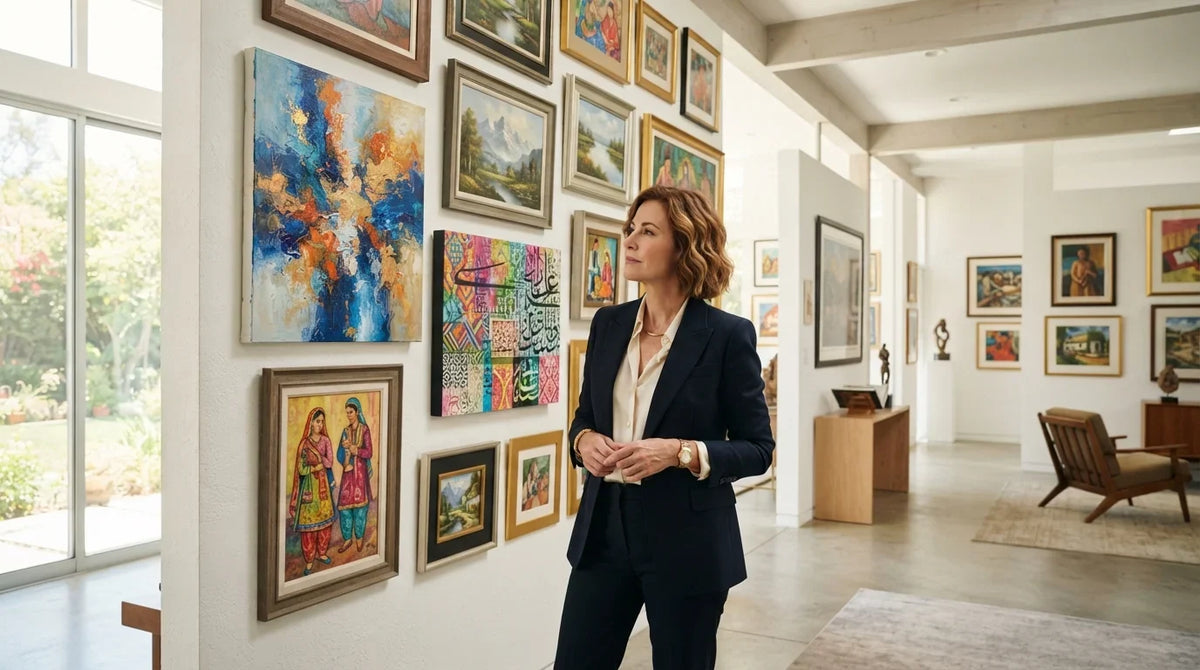
Collectors use their art collection to define the spaces in which they live, in ways that go above decoration. A room with carefully selected works that have personal meaning feels different from a room with well-chosen furniture and nothing on the walls. The art brings narrative, personality and a feeling that the person who lives there has thot about what surrounds them.
How an art collection transforms a living space:
- Creates a narrative sense through rooms as collection shows the changing taste of the collector
- Creates spaces that seem lived-in and personal, not staged for a generic audience
- Provides color, texture and emotional depth that furniture can not give
- Visitors get an instant and accurate sense of who lives in the space
Art as a Form of Memory and Personal History
Art collecting, over time, obtains a certain meaning. Each piece becomes a marker of a moment in a collector’s life. A painting bought on a big trip, an object to mark a personal milestone, a piece that recalls to the collector someone or a period that influenced them, all these associations accumulate until the collection itself becomes a kind of visual autobiography.
There’s no way collectors plan for this part of collecting. It just happens. The works form associations as meaningful objects do, but because they are also visually present on a daily basis, those associations are kept alive in a way that most other possessions do not sustain. Collectors say this quality is one of the most unexpected rewards of having a collection for many years.
The Financial Dimension: Investment as One Motivation Among Many
Original fine art collection pieces can be worth and appreciate in value with time. There is something very real about collecting and it would be dishonest to ignore this fact. Art by established or emerging artists with growing reputations can increase much more in value, and a curated collection can be an important asset over the long term.
That said, collectors who see art as a financial tool only choose not to experience the same sense of connection or fulfillment that those who collect for personal and cultural reasons do. Original art is not a predictable market like financial markets are, and the joy of owning something you love is entirely separate from what it might be worth to someone else.
Is Art Collecting a Reliable Financial Investment?
Art is capable of appreciating greatly in value but it is not a dependable financial instrument in the same way as conventional assets. Value is a function of artist reputation, condition, provenance, and changes in market taste, none of which are easily forecast. Collecting work they truly love protects collectors from the disappointment that can come from purely financial collecting.
Art Collectors in Pakistan: A Growing Community With Deep Roots
Art collectors in Pakistan are part of a long tradition of cultural patronage that runs deep in South Asian history. The Mughal courts were some of the greatest art patrons in the world and that tradition of supporting and commissioning original work has a living contemporary form in the growing collector community in cities such as Karachi and Lahore.
Today, galleries, art fairs, artist studios and institutions are making original work more accessible than ever before and supporting the contemporary collecting scene in Pakistan. One such destination is Expert Framing Art Gallery which brings together Pakistani collectors with original fine art and professional framing and presentation expertise that ensures each piece will be displayed and preserved correctly.
Frequently Asked Questions About Why People Collect Art
Q. Why Do People Collect Art?
People collect art for very personal reasons, from a deep emotional connection to individual pieces, to a desire to express their identity, to cultural pride, the pleasure of supporting living artists, intellectual engagement with art history, and the wish to create meaningful living environments that reflect genuine values and accumulated experience.
Q. What Does It Mean to Collect Art?
Collecting art means building a long, purposeful relationship with artworks, artists and the broader art world over time. It is distinguished from the casual purchase of decorative objects in that it involves the development of knowledge, the focus on one’s person, and a deepening engagement with what makes visual art meaningful and important.
Q. Do You Need to Be Wealthy to Start an Art Collection?
No. An art collection can be built slowly at almost any budget level. Emerging artists offer accessible price points, and original works at modest costs can carry genuine artistic quality. The personal significance and emotional importance of a collection have nothing to do with the monetary value of the works within it.
Q. What Is a Private Art Collection?
A private art collection is a collection of artworks gathered by an individual or family, rather than a public institution. The collection changes over time, following the collector’s evolving taste, knowledge and personal motivations, and not submitting to any institutional or curatorial mandate.
Q. How Do Art Collectors in Pakistan Find and Buy Artwork?
Art collectors in Pakistan buy art through galleries, art fairs, relationships with artists and, more often, online platforms. For instance, Expert Framing Art Gallery can help local collectors buy original pieces and receive expert advice on how to curate collections that reflect their style and cultural background.
Q. What Is the Difference Between Buying Art and Collecting Art?
Art buying is a transaction. Art collecting is a practice. Collecting is thoughtful; it takes time to develop knowledge and taste, to acquire themed or personally consistent objects, and to nurture an ongoing relationship with the art world that informs and enhances each subsequent choice.
Q. What Types of Paintings Do Most Collectors Start With?
Most collectors start their paintings collection with works that have a strong personal or emotional connection, such as accessible subjects, like landscapes, florals, and figurative work by upcoming local artists. These early purchases are likely to be organic, emotional purchases before a formal collecting framework is developed.
Q. How Does Building a Fine Art Collection Benefit You Personally?
A fine art collection offers emotional enrichment, intellectual growth with the study of art history and technique, the satisfaction of directly supporting artists, the creation of living environments that really feel personal, and the pleasure of building something of lasting value that grows in meaning alongside the collector's own life.
Q. Can Art Collecting Be Meaningful Without Spending a Lot of Money?
Yes, of course. It’s not about money, it’s not about how a work feels, its cultural importance or its personal significance. None of that has anything to do with the price tag. The most meaningful works in the collection for many collectors are those acquired early, at a reasonable price, from artists who mattered to them for reasons unrelated to market value.
Q. What Motivates Serious Art Collectors to Keep Building Their Collections?
Serious art collectors keep buying because the practice never stops rewarding curiosity. Tastes become more sophisticated, themes become more focused, relationships with artists are formed, and the collection itself becomes a more complete and personal narrative. Every new work adds to something that feels really alive, not just added up.
Q. Is There a Right or Wrong Way to Start Collecting Art?
There is no right place to begin collecting art. The surest start is an honest emotional response to one piece of work. From that first honest encounter, formal knowledge and collecting strategy, and the development of taste, all come naturally. The best thing to do is always to do what you really care about.
Q. Where Can People in Pakistan Start Their Art Collecting Journey?
If you’re new to collecting art in Pakistan, start by visiting galleries, attending local art exhibitions, and learning about artists whose work speaks to you. Expert Framing Art Gallery provides original fine art and the expertise to help new collectors find works that speak to their taste, cultural identity, and personal values.
Final Thoughts
Why do people collect art is ultimately not a complicated question. They collect because a painting once stopped them in a room and refused to let them go. They collect because their homes feel more like themselves when the walls carry something meaningful. They collect because they want to support artists whose work matters, because they are curious about history and technique, and because a collection that grows alongside a life becomes something no other possession can quite replicate.
Art collecting is not the preserve of the wealthy or the expert. It is a deeply human practice available to anyone willing to pay attention, develop their eye, and trust their own response to what they see. For those in Pakistan ready to begin, Expert Framing Art Gallery is a natural starting point, offering original works, cultural understanding, and the professional expertise to help any collection find its form.
Share:
The Complete Guide to Pencil and Charcoal Artwork
What Is Contemporary Art? Meaning, Evolution & Influence