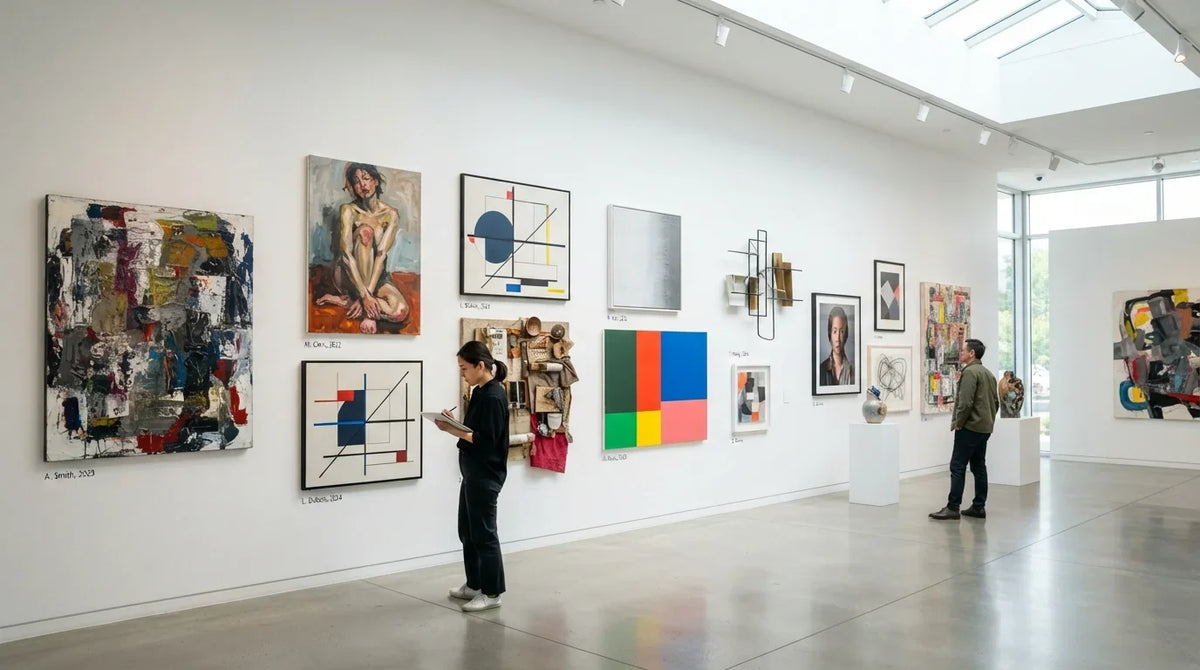
Art has never been static, but the pace of change since the middle of the twentieth century has been extraordinary. What is contemporary art is a question that trips people up because the answer is genuinely broader than most expect. It is not one style, a set time, or a movement with specific rules. Contemporary art is the name we give to art being made right now, by artists who are alive and working today, responding to the world as it actually is. This blog is about what contemporary art is, how it came about, what sets it apart from modern art, and why it still matters to artists, collectors and anyone interested in the world we share.
What Is Contemporary Art?
Contemporary art is art made in the present day, by artists who are working in the same time and place as their viewers, from the 1970s or so to the present day. Unlike movements that have defined the look of work or set materials to be used, contemporary art does not dictate how work should look or what materials it should use. And that is not a style, so much as an orientation, as a group, to the present moment.
Most galleries and institutions use contemporary art definition that puts its starting point roughly at the end of the 1960s, the period when the conceptual art movement completely changed what art could be. And from then on, artists began to question not just what to show, but whether representation was necessary at all. Therefore, the definition of art was seriously expanded.
Contemporary art meaning is more than just the dictionary definition of current or present-tense. Thus, art is talking back to the world in real time, responding to political events, technological shifts, environmental questions, and the full complexity of contemporary life. It's not so much beauty for beauty's sake but more about ideas, questions and the real engagement with how people are living today.
What Best Describes Contemporary Art?
The best way to describe contemporary art is art produced by artists alive today in response to the ideas, technologies and social conditions of our time. There is no established style or medium, focusing on conceptual depth and cultural relevance over any aesthetic tradition. One of its most constant features is its diversity of approach.
The Historical Development of Contemporary Art
Contemporary art is a result of the upheavals of the mid-twentieth century. By the 1960s, artists were challenging the dominance of Abstract Expressionism in America and Modernism in Europe, feeling that painting on canvas was no longer sufficient to deal with what was happening in the world. Pop art challenged the boundary between high and commercial culture. In conceptual art, the idea behind a work is more important than the work itself.
Developed in the 1970s and 1980s. Performance art, video art, installation art, and earth art all came into their own as valid forms, all pushing the definition of what art could be beyond the gallery wall and the framed canvas. Artists began to work with the body, with language, with industrial materials, with space itself as their creative territory.
By the 1990s contemporary art had become very international. Artists from outside Europe and North America introduced new perspectives, new subjects and new esthetic traditions into the conversation. The global art market, major biennials such as Venice and São Paulo, and the growth of international auction houses all played a part in establishing a contemporary art world that is truly global in scope.
Modern Art vs Contemporary Art: What's the Difference?
There is confusion between modern and contemporary art and it is useful to know the difference. Modern art is art produced from the 1860s to the 1960s and includes Impressionism, Cubism, Expressionism, Surrealism, and Abstract Expressionism. All of these movements were committed to breaking with academic tradition and to exploring new ways of seeing and representing the world.
The end of modern art and the beginning of contemporary art. It does not rest on a complete aesthetic or philosophical project as Modernism did. While most of the work of modern artists still was within the traditions of painting and sculpture, increasing what they could do in those forms, contemporary artists have gone well outside those boundaries to work in forms that would not have been recognized as art at all in earlier centuries.
Key differences between modern and contemporary art:
- Modern art is roughly 1860-1970 and contemporary art is from about 1970 to the present
- Modern art engaged in formal innovation within specific art forms, whereas contemporary art frequently asks what art itself can be
- Modern art was European and American in its dominant voices, contemporary art is truly global
- Modern art movements defined esthetics but contemporary art has no single style
- Modern art generally used traditional materials but contemporary art includes any medium including digital, biological and conceptual approaches
What Is Modern and Contemporary Art?
Modern and contemporary art are two different periods and approaches. Modern art (late nineteenth to mid-twentieth century) is defined by formal experimentation in painting and sculpture. Contemporary art refers to art made today in any medium, style, or cultural origin, since about the 1970s.
What Is the Difference Between Modern and Contemporary Art?
The main difference between modern and contemporary art is temporal and philosophical. Modern art has a specific historical period and a common project of formal innovation. Contemporary art has no finality and no unified philosophy. It includes everything made by living artists whatever the medium, style or cultural background.
Key Characteristics of Contemporary Art
It is more difficult to specify the characteristics of contemporary art than of previous movements, precisely because diversity is one of the key characteristics of contemporary art. No contemporary art style is shared by all practitioners. But some general tendencies can be observed in much of the work being produced today.
The most important thing is that concept comes before craft. Contemporary art does not have to show technical skill in the traditional sense. The whole point of the work may be its idea, its question, its cultural critique. This is not to say that technique should not be used, but that technique should be secondary to the concept and not the primary measure of worth of the work.
Main characteristics of contemporary art include:
- Conceptual depth, the idea or question behind the work is as important as its appearance
- Diverse medium, with artists working in painting, sculpture, digital media, installation, performance and combinations of all of these
- Engagement with contemporary social, political, environmental and technological issues
- A global view that incorporates artistic traditions from many cultures
- Some types, especially installation and performance work, involve interactivity and viewer participation
- No need for traditional craft skills to be the sole measure of artistic value
What Are the Main Characteristics of Contemporary Art?
The main characteristics of contemporary art are its conceptual orientation, variety of media, cultural pluralism and social engagement. It does not adhere to any one esthetic and it values originality of idea more than technical skill. Contemporary artists can work in any medium and are expected to respond to current cultural, political or environmental conditions.
Popular Types and Styles of Contemporary Art
The range of types of contemporary art is wider than any previous period in art history. The lifting of restrictions on what art must be or look like has opened the field to forms that earlier centuries would not have recognized.
Contemporary art styles and forms include:
- Installation art which transforms entire spaces and places the viewer inside the artwork
- Performance art: the work is the artist’s body or actions in real time
- Digital and new media art that uses technology, software, algorithms or screens as primary materials
- Conceptual art, in which the idea behind the work is the main content
- Mixed media work including painting and photography, text and found objects
- Street and public art outside gallery walls, directly engaging with communities
What Are Types of Contemporary Art?
Some types of contemporary art are installation art, performance art, digital and new media art, conceptual art, mixed media art, photography, video art and public art. Today’s artists freely mix these forms and are not bound to one or the other approach. The variety of types reflects the lack of any one style that define the movement as a whole.
Common Themes Explored in Contemporary Art
Contemporary artists are engaged in the whole spectrum of pressing issues that define life today. One of the most consistent themes is identity, including questions of gender, race, sexuality, cultural belonging, and what it means to be within the specific social and historical contexts into which each artist is working. These are not questions of theory. They come from the lived experience of the artists who write them.
Politics and power are very much on the agenda, with artists interrogating the systems, institutions and ideologies that structure public life. Environmental issues have become a prominent concern, with many artists directly addressing climate change, ecological collapse, and the human relationship with the natural world. Another major concern of contemporary art ideas today is technology, particularly the way it is changing human perception, communication and identity.
Mediums and Techniques Used by Contemporary Artists
Today’s artists work with a wider variety of materials and techniques than any generation before. Contemporary art paintings in oil and acrylic, sculpture in stone, bronze and found materials and printmaking, are still alive and well, legitimate areas of practice in the traditional media. But they sit alongside video, software-generated imagery, biological materials, industrial fabrication and forms of documentation that exist as a record of ephemeral actions.
The way the artist interacts with their materials has also changed. Many contemporary artists use fabricators, programmers and other specialists to realize their projects. The artist provides the concept, the vision, and the decision-making, while the physical execution may involve a range of other skills. This is not felt to diminish the authenticity of the work, since the idea is regarded as the primary act of creation.
Contemporary Art and Its Relationship With Society
Contemporary art is not separate from the world. It's one of the ways societies process, challenge and sometimes resist the circumstances they find themselves in. Artists respond to political upheaval, social injustice, technological acceleration and cultural change with a speed and accuracy that few other forms of cultural production can match.
This social engagement is not accidental. Many contemporary artists consider their practice to be political in nature or socially committed. The idea of gallery space itself has been challenged and reconfigured as artists have looked for an audience outside the traditional art world. Public installations, community projects and online distribution have allowed contemporary art to reach far beyond the limits of commercial galleries and museums.
Contemporary Art Examples
Several widely recognized works show what contemporary art can do. In 2010, Ai Weiwei created "Sunflower Seeds" at the Tate Modern, covering the floor of the gallery with more than one hundred million porcelain seeds hand-painted by Chinese artisans. The labor and scale involved, and the questions raised about mass production and individuality, all point to the characteristics of ambitious contemporary practice.
Kara Walker’s large-scale silhouette installations engage the history of slavery in America in a visual language that is both beautiful and very disturbing. Her work is visually accessible and invites the viewer in to be confronted with difficult historical and moral content. Many paintings and installations in contemporary art work in this way successfully.
Jenny Saville’s figurative paintings re-interpret the female body from a perspective that is grounded in the European painting tradition and at the same time thoroughly contemporary in its concerns. Her work shows that traditional media can be used in ways that feel entirely contemporary, when the ideas and perspectives applied to them are genuinely of the moment.
Contemporary Art in Pakistan
Contemporary art in Pakistan has grown a lot in the last three decades. A generation of artists trained both locally and internationally are producing work that engages with Pakistani cultural identity, Islamic artistic traditions, political history and the pressures of urban growth. Karachi and Lahore are the main hubs of a growing art scene that includes commercial galleries, independent projects and a growing collector base.
Pakistani contemporary artists are being featured in international exhibitions, their work participating in global conversations while remaining based in local experience and visual traditions. Expert Framing Art Gallery supports this scene by providing Pakistani collectors and art lovers with original contemporary works and the professional framing expertise to display them properly.
Why Contemporary Art Matters Today
Contemporary art matters because it reflects the world as it is, not as those who came before us thot it should be. It gives artists the freedom to address the most important questions of the moment in whatever forms and with whatever materials those questions require. For collectors, it presents the opportunity to engage with artists who are still working, to support ongoing practice and to purchase work that is essential to the cultural conversation of the moment.
In interior design and the home, contemporary art creates a sense of life and currency in a space, rather than just decoration. A good contemporary piece takes a room from generic space to one that speaks of real values and current sensibility. Expert Framing Art Gallery provides Pakistani collectors, and those who wish to engage with original contemporary work, access to artwork and the presentation expertise it requires.
Frequently Asked Questions
Q. What Is Contemporary Art?
What is contemporary art in the most basic terms, is art being created by living artists today. From around the 1970s to the present. It is not scripted, it occupies all mediums, and it is engaged with current social, political, technological and cultural conditions rather than any predefined aesthetic or tradition.
Q. What Are Types of Contemporary Art?
Types of contemporary art include installation, performance, digital and new media, conceptual art, mixed media, photography, video art, painting, and public or street art. Contemporary artists mix these easily, and the lack of restrictions on medium is one of the defining characteristics of contemporary practice.
Q. What Best Describes Contemporary Art?
Contemporary art is best described as diverse, concept-based, and culturally engaged. It includes all art by living artists from the 1970s to the present. Its value ideas over fixed esthetic rules, can use any medium, and engages with the full complexity of contemporary social and cultural life.
Q. What Are the Main Characteristics of Contemporary Art?
The main characteristics of contemporary art are conceptual emphasis, medium diversity, global perspective, and social engagement. It values originality of idea as much as or more than technical skill, has no one dominant style, and reflects the experiences and concerns of artists working in many different cultural contexts together.
Q. What Is Modern and Contemporary Art?
Modern and contemporary art are two different historical periods. Modern art is the name given to art produced roughly between the 1860s and the 1960s, defined as a very formal innovation in painting and sculpture. Contemporary art begins in the 1970s and continues today, encompassing any medium and any cultural origin.
Q. What Is the Difference Between Modern and Contemporary Art?
Modern art has a history and a collective project of formal innovation. There is no one esthetic or time limit to contemporary art. Modern art was European and American. Contemporary art is global. Modern art was mostly restricted to painting and sculpture. Contemporary art accepts every form.
Q. Who Are Famous Contemporary Artists?
Well known contemporary artists include Ai Weiwei, Kara Walker, Damien Hirst, Jenny Saville, Cindy Sherman and Anish Kapoor. They all work with very different media and subject matter, which shows how broad the category of contemporary art is in terms of style, approach and cultural origin.
Q. What Mediums Do Contemporary Artists Use?
Contemporary artists work in oil and acrylic paint, sculpture, photography, video, digital software, installation materials, found objects, biological materials, and performance. One of the hallmarks of contemporary art is the lack of restrictions regarding the medium, and many artists combine several forms in one body of work.
Q. How Is Contemporary Art Displayed or Collected Today?
Contemporary art is exhibited in commercial galleries, museums, public spaces and increasingly online. Collectors buy it in galleries and art fairs, directly from artists and at auction. Professional framing and archival display are necessary for the protection of original works and their display in ways that honor their visual and material qualities.
Q. Why Is Contemporary Art Important in Interior Design?
Contemporary art can bring visual energy, personal meaning and cultural relevance to interior spaces that generic decoration cannot. The work being made today creates rooms that feel like they have really been lived in and thot about. It links a space to the greater cultural dialog, and it reveals something real about the people who live there.
Final Thoughts
What is contemporary art comes down to this: it is art made by living artists that engages honestly with the world as it is right now. It has no fixed style, no required medium, and no single cultural origin. Its diversity is its strength, and its commitment to present-day questions is what keeps it genuinely relevant rather than historically decorative.
Understanding contemporary art opens up the possibility of engaging with it, collecting it, and living alongside it in a way that connects your home and your daily experience to the broader cultural moment. For art lovers in Pakistan looking to explore and collect contemporary art, Expert Framing Art Gallery provides both the access to original work and the expertise to ensure it is displayed with the care and quality it deserves.
Share:
Why Do People Collect Art? The Meaning Behind Collecting