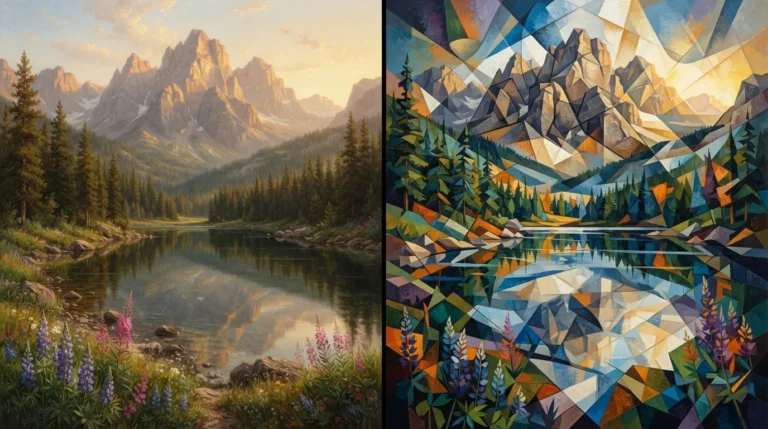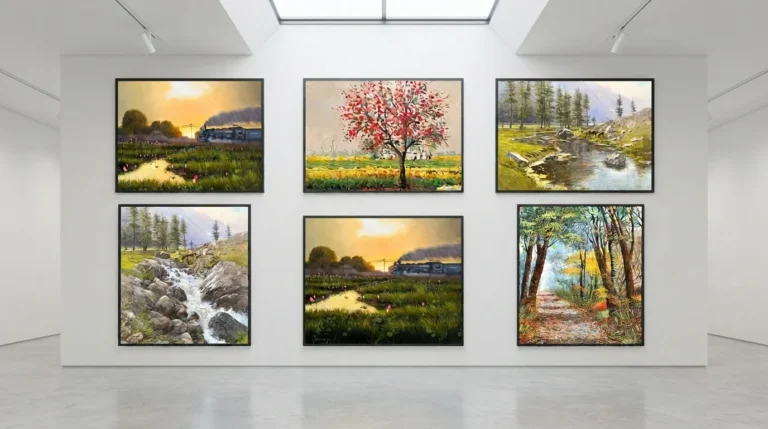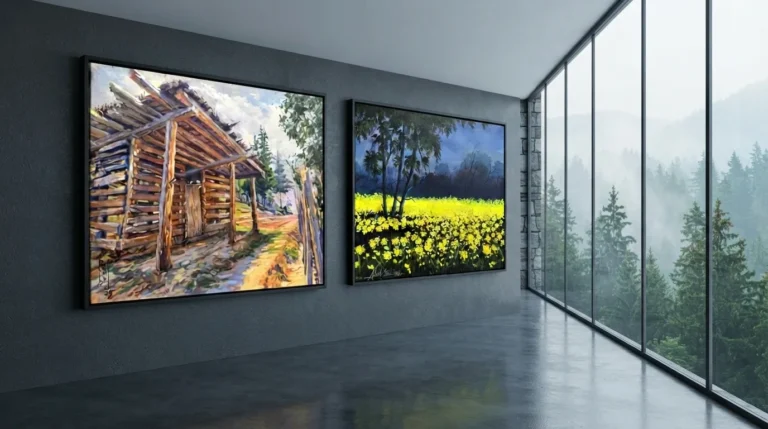
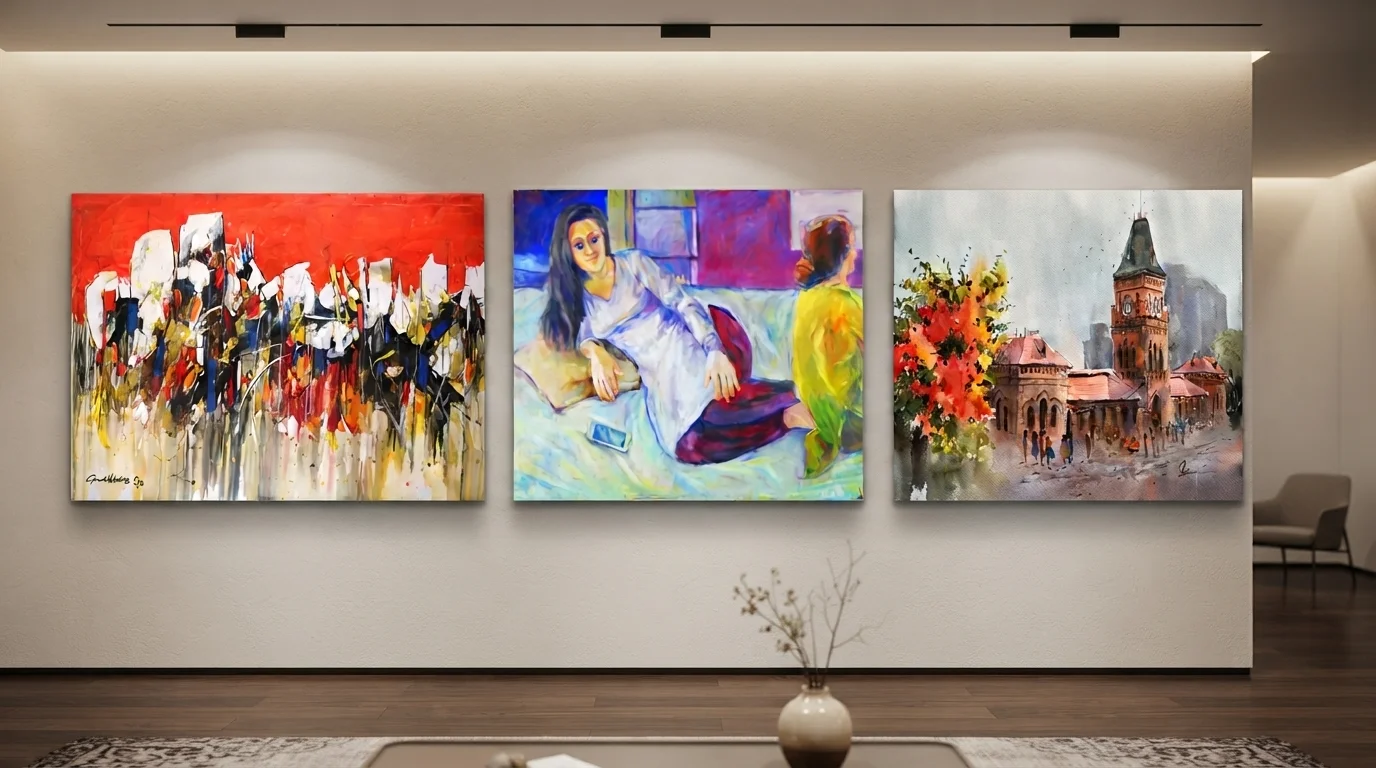

Some paintings do more than show you something. They make you feel before you’ve even had a chance to think about what you’re looking at. That instant emotional punch is what sets expressionism paintings apart from just about anything else in the history of art. These works weren’t created to show the world as it really is. They were made to transfer a feeling from one person to another through paint, colour, and distorted form. This blog looks at what expressionism really is, how it came to be, what it looks like, and why these works still speak so powerfully to viewers and collectors today.
What Is Expressionism in Art and Where Did It Begin
Expressionism in art is just the decision to put the inner emotional experience above the correct representation of the outer world. The movement started in early 20th-century Europe, especially Germany, as artists reacted to the period’s anxiety, alienation and social upheaval.
Expressionist artists did not paint what they saw, but what they felt. Faces were disfigured. Colors were muted beyond naturalism. Environments were changed to suit psychological states, not physical reality.
What Is Art Expressionism in Simple Terms?
What is art expressionism in plain language is art that prioritises feeling over accuracy. Where a realist painter shows you a street as it actually looks, an expressionist painter shows you how that street feels to be on. Distortion, exaggeration, and bold colour are all tools in service of communicating an inner state rather than documenting an outer scene.
This is also a difference between expressionism and impressionism. Impressionism was about the brief visual experience. Expressionism went deeper, looking for psychological and emotional truth.
What Defines Expressionism in Art?
What defines expressionism in art is the rejection of objective reality as the goal of painting. Expressionist artists believed that factual accuracy came at the expense of emotional truth. By distorting form, using non-naturalistic colour, and applying paint with visible urgency, they created works that communicated psychological states directly to the viewer.
Expressionism Art Definition and Its Core Visual Language
In art, formal expressionism is the notion that subjective emotional expression is more important than observed reality. Art historians describe it as a movement where meaning was stored in a distorted visual language, rather than in traditional representations.
Key ideas within the expressionism art definition:
- Subjective emotional experience takes priority over accurate visual description
- Forms are distorted or exaggerated to heighten psychological impact
- Colour is used boldly and non-naturalistically to communicate mood and emotion
- Brushwork is often urgent, visible, and physically energetic across the surface
- Feeling is always the intended content of the work, not factual representation
What Are the Main Features of Expressionism Art
Expressionism art is very different once you know what to look for. Its characteristics are the same from artist to artist and from one national tradition to another, though the specific subjects and palettes change a lot from painter to painter.
What Are Three Characteristics of Expressionism?
Expressionism is a broad term, but it usually has three main characteristics. First, distorted and exaggerated form, in which figures, spaces, and objects are distorted to produce an intense emotional effect rather than to preserve physical accuracy. Second, bold non-naturalistic colour, used not to describe surfaces as they are seen but to represent psychological states and emotional temperature. Third, brushwork that is visible, often urgent, and carries the physical energy of the artist’s emotional state into the paint itself.
What Are the Main Characteristics of Abstract Expressionism?
What are the main characteristics of abstract expressionism distinguish it from earlier European expressionism in several meaningful ways. Where German expressionism retained recognisable subjects, abstract expressionism removed them entirely. The emotional content was now carried purely by gesture, scale, colour, and the physical act of applying paint.
The scale became a defining feature. Abstract expressionist paintings were often very large, surrounding the viewer instead of just being looked at. The process of painting was just as important as the final product.
Expressionist Art and Its Most Powerful Examples
Expressionist art produced some of the most emotionally charged images in the whole history of painting. These are the works that stay in the viewer’s memory long after the viewing, not because of the technical precision but the raw feeling they express.
What Are Some Examples of Expressionism Art?
What are some expressionism art that most people would recognize? Munch’s most famous work, “The Scream” (1893), shows a figure in panic against a swirling, blood-red sky. Ernst Ludwig Kirchner’s Berlin Street scenes present urban life as alienating and disorienting. Egon Schiele’s figures showed psychological vulnerability with an almost uncomfortable directness, with angular distortion and raw exposure.
These works demonstrate the principle: that the painting is a record of feeling, not of observation.
Expressionist Paintings and the Artists Who Defined the Movement
Expressionist paintings were made by a fairly small group of artists in Germany and Austria in the early twentieth century. Norwegian Edvard Munch is an important precursor. In Germany the Die Brücke group included Ernst Ludwig Kirchner, Emil Nolde and Erich Heckel. Der Blaue Reiter, an associated movement with more spiritual and abstract leanings, was led by Wassily Kandinsky and Franz Marc.
What each of them contributed to the tradition was different. The color contrasts in Nolde’s religious paintings are violent. Kirchner’s figures were angular and agitated. Kandinsky moved steadily toward complete abstraction, eventually laying groundwork for what would come after the war.
Abstract Expressionism Art and the American Evolution of the Movement
Abstract expressionism art emerged in New York in the late 1940s and 1950s, taking the emotional intensity of European expressionism into fully non-representational territory. Artists who had fled wartime Europe brought expressionist ideas with them, and American painters developed those ideas in directions no one had anticipated.
What Is Abstract Expressionism Art and How Did It Develop?
Abstract expressionism art was actually the first major American art movement to have a real international impact. The New York School painters, Jackson Pollock, Mark Rothko, Willem de Kooning and others, combined total abstraction with the emotional directness of expressionism. The result was painting that spoke of feeling through just visual means, without reference to the visible world.
Abstract Expressionism Painting Techniques That Set It Apart
Abstract expressionism painting introduced really new technical approaches to fine art. Pollock’s method of drip painting involved pouring and dripping paint onto canvas placed on the floor. De Kooning worked with a very large scale and with an aggressive gestural brushwork. Rothko created hovering fields of colour that offered viewers who stood before them deeply meditative emotional experiences.
Defining technical approaches in abstract expressionism painting:
- Gestural mark-making where the physical movement of the artist is visible in the paint
- Large canvas formats that surround and immerse the viewer in the work
- Drip and pour methods that introduce chance and spontaneity into the composition
- Process-led working where the act of painting generates meaning alongside the finished result
- Complete removal of representational subject matter in favour of pure emotional and physical energy
Abstract Expressionism Artworks and Their Lasting Collector Appeal
Abstract expressionism artworks remain among the most sought after and valuable works in the contemporary fine art market. Their scale, emotional intensity, and technical originality give them a visual presence that few other categories can match on a gallery or collecting level.
The movement also has art historical value which adds to long term value. Abstract expressionism changed the course of twentieth century art forever. Original works of this change have both aesthetic and historical importance for serious collectors.
Modern Expressionism Art and Its Place in Contemporary Practice
Modern expressionism art is very much alive in current artistic practice. Contemporary painters continue to draw on expressionist principles, using distortion, bold colour, and gestural technique to address personal narratives, social commentary, and psychological experience in work that feels entirely of the present.
What Is the Modern Art of Expressionism Today?
What is the modern art of expressionism looks like in practice is painting that uses emotional distortion and bold visual language to address subjects that earlier expressionists could not have anticipated. Identity, trauma, political anxiety, and cultural displacement are all subjects contemporary expressionist painters explore with the same visual urgency that defined the movement a century ago.
Expressionism Artworks as a Bold Choice for Home Interiors
Expressionism artworks work as truly powerful statements in home interiors. Their visual boldness and emotional intensity form focal points that give a room real artistic character. They are works that demand to be noticed, and that reward the gesture.
Expressionist art is more than simply decoration; it adds emotion to a space. They add something to the feel of the room that changes the atmosphere of the space.
How to Choose Expressionist Paintings for Your Home in Pakistan
When choosing expressionism paintings for a Pakistani home, one should consider the emotional impact as well as the existing decor. A strong statement on a clear wall works best as one piece rather than competing with other strong visual elements. The scale matters a great deal. A larger expressionist work carries more emotional presence, while smaller pieces suit personal spaces like studies or reading corners. Expert Framing Art Gallery can assist you in sourcing and professionally framing original expressionist works to suit local interiors and individual taste.
Frequently Asked Questions About Expressionism Paintings
Q. What Is Expressionism in Art?
Expressionism in art is an art movement that prioritizes subjective emotional experience over realistic representation. The artist use distorted form, bold non-naturalistic colour and gestural brushwork as a means of expressing inner psychological states rather than to give a faithful representation of the visible world.
Q. What Is Art Expressionism?
Art expressionism is a form of painting that uses distorted visuals, bright colours and expressive brushstrokes to express inner emotional states. It is not a matter of looking like something. It is a matter of being emotionally true. So it is a very different thing from impressionism or realism.
Q. What Defines Expressionism in Art?
Expressionism is marked by a rejection of objective reality as art’s purpose. The distorted form, the bold colour choices, the urgent brushwork, all have a single aim, to communicate a psychological or emotional state directly from the artist to the viewer without mediation.
Q. What Are the Main Features of Expressionism Art?
The main features of expressionism art include distorted and exaggerated forms, bold non-naturalistic colour, visible and energetic brushwork, psychological subject matter, and the consistent prioritisation of emotional content over factual or observational accuracy in the finished work.
Q. What Are Three Characteristics of Expressionism?
The three main characteristics of expressionism are the use of distorted form to increase emotional effect, the use of bold colour beyond naturalism to express mood and the visible strong brushwork that carries the physical energy of the artist’s emotional state into the painted surface.
Q. What Is Abstract Expressionism Art?
Abstract expressionism art combines the emotional impact of expressionism with total abstraction. It arose in mid-twentieth century America, and abandoned all recognizable subject matter, relying on gesture, scale, color, and natural application of paint as the only means of expressing emotional meaning.
Q. What Are the Main Characteristics of Abstract Expressionism?
Major characteristics include large-scale formats, gestural and spontaneous application of paint, the total elimination of representational subject matter, drip and pour techniques, and the treatment of the physical act of painting itself as an expressive and meaningful event.
Q. What Are Some Examples of Expressionism Art?
Famous examples are Edvard Munch’s The Scream, Ernst Ludwig Kirchner’s Street scenes of Berlin and Egon Schiele’s figure paintings. All show a particular emotional condition by means of distorted form and forceful visual choices, rather than through accurate or aesthetic representation.
Q. What Is Modern Expressionism Art?
Modern expressionism art uses the technique of expressionism, such as distortion, bold colour and gestural technique, to subjects such as identity, trauma and social anxiety. Contemporary artists working in this tradition retain a sense of the emotional impact of the original movement in a contemporary artistic language.
Q. Are Expressionism Paintings Suitable for Home Interiors?
Yes, expressionist paintings can work very well in home interiors when chosen thoughtfully. They have a depth of emotion and visual punch that make them great focal points. The secret for a successful result is to find the right balance between the intensity of the work, the size of the room and the existing decor.
Q. What Makes Abstract Expressionism Artworks So Valuable to Collectors?
Abstract expressionism artworks have both a strong aesthetic presence and significant art historical importance. Their size, gestural originality and tie to a changing moment in modern art history give them lasting value and credibility in the fine art collecting market.
Q. Where Can I Find Expressionism Paintings in Pakistan?
Art lovers in Pakistan can explore Expert Framing Art Gallery for original expressionism paintings and abstract expressionist works, along with professional framing services to present each piece with the care and quality it genuinely deserves.
Final Thoughts
Expressionism paintings endure because they do something very few art forms can match. They transfer a raw emotional state from one person to another across time, through nothing more than paint, colour, and the courage to prioritise feeling over appearance. That power does not fade with changing tastes or interior trends.
Bringing emotionally resonant art into everyday living spaces changes how those spaces feel. A genuine expressionist work adds depth, energy, and personal meaning that purely decorative pieces rarely achieve. Expert Framing Art Gallery is a trusted destination in Pakistan for finding and framing original expressionist and abstract expressionist works that genuinely earn their place on your wall.