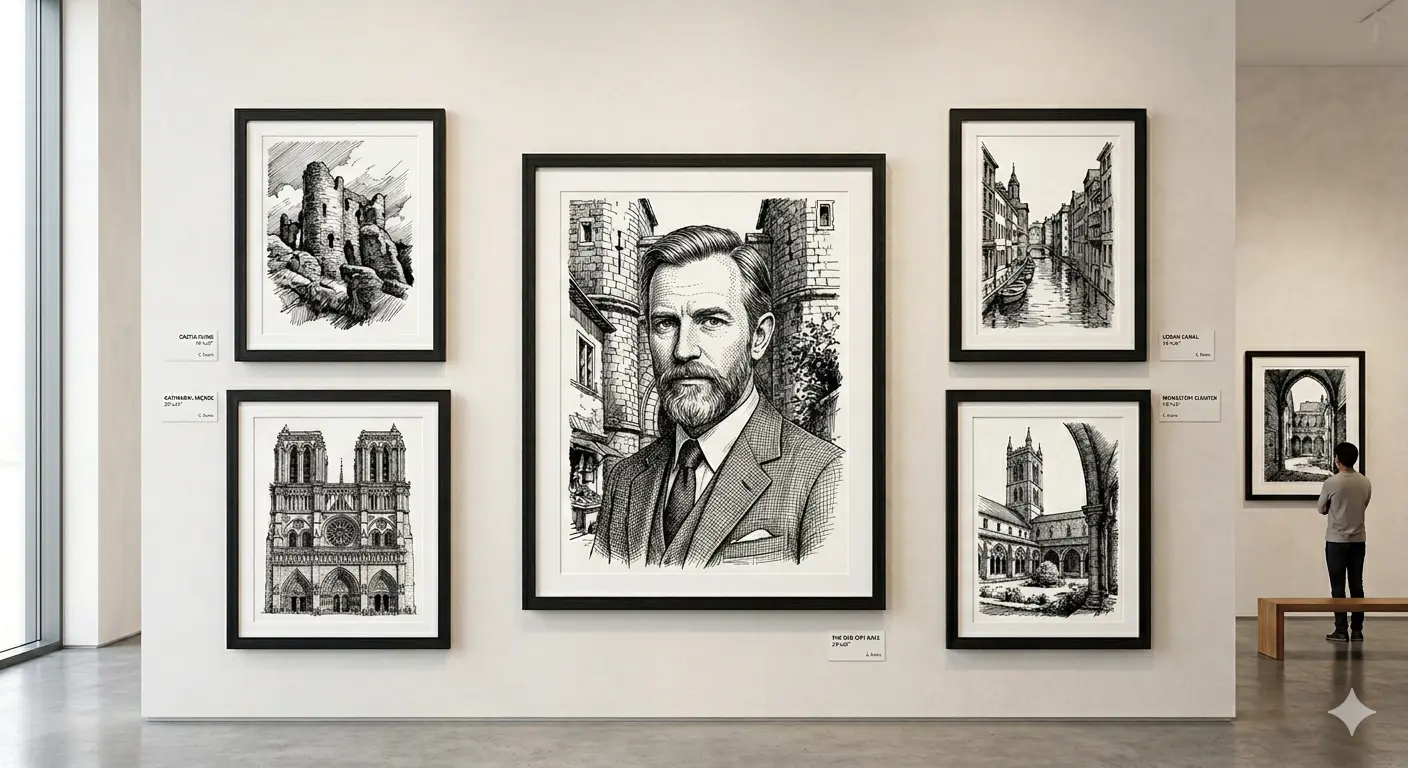

There is something quietly powerful about a single pen stroke on a blank sheet of paper. It carries weight, direction, and intention in a way that a broad brushstroke sometimes cannot. Pen and ink artwork is built entirely on this kind of precision. Every line is committed, each mark is made with an intention, and removal does not happen after ink gets absorbed by paper surface. Artists who show patience, appear confident, and choose slow work will get benefits from this medium since the work reveals itself by gradually adding. In this blog, we will cover what pen and ink artwork is, the different styles and techniques it involves, the artists who shaped it, and how it fits into contemporary interiors and collections today.
What Pen and Ink Artwork Really Means as an Art Form
Pen and ink artwork is one of the oldest and most disciplined drawing mediums in art history. It uses a pen with ink on paper, board, or vellum, and what makes it different from other mediums is that ink is permanent the moment it touches the surface. There is no erasing, no blending away mistakes.
This stability is what gives pen and ink art its unique character. The lines stay sharp, the tone builds slowly through repetition, and the finished work carries a visual clarity that collectors immediately recognize. Every piece reflects the sustained attention and confidence it took to make it.
Is Pen and Ink a Medium or a Technique?
Pen and ink art is honestly both. As a medium it refers to the physical materials: the pen, the nib, the ink, and the surface. As a technique it describes how marks are made to build tone and texture.
The type of nib, the ink formula, and the paper surface all have a big effect on the result. Carbon-based inks are deep and real. Sepia tones carry a warm historical feel. India ink is thick and sharp. Each combination gives a piece of ink artwork its own visual identity.
A Short History of Pen and Ink Drawing Through the Centuries
Pen and ink drawing has its roots in medieval monks who used quill pens to add complicated patterns and figures to manuscripts. By the Renaissance, pen drawing art had become a core tool for Europe’s greatest artists. Leonardo da Vinci sketched anatomy and engineering in ink. Rembrandt used ink with remarkable freedom, capturing gesture and light with just a few strokes.
Through the 18th and 19th centuries, pen and ink drawing became essential to illustration, printmaking, and scientific documentation. The Victorian era produced some of the most detailed pen drawing art ever made, particularly in natural history illustration. Today the medium holds a respected place in both fine art and contemporary illustration, which is part of why collectors value original ink works so highly.
Famous Pen and Ink Artists Who Defined the Medium
Rembrandt van Rijn is one of the most celebrated names in pen and ink art. His sketches were loose and expressive, capturing emotion with minimal marks. Albrecht Durer, on the other hand, made pen drawings that were almost as precise as architecture, with every hair, fold, and shadow carefully planned.
Aubrey Beardsley brought bold graphic contrasts to pen and ink art in the late 19th century, with flowing lines that still feel modern today. Gustav Klimt used ink studies that were often as admired as his finished paintings. Miguel Endara, a stippling artist, has shown new people what pen artwork can do by making photorealistic portraits out of ink dots placed by hand.
The Different Forms Pen and Ink Art Takes Today
There are many different styles and subjects in pen and ink art today. There isn’t just one visual language. Here are some of the most common forms that collectors and art lovers come across:
- Illustrative work rooted in the tradition of book and editorial illustration
- Landscape and architectural drawing capturing built and natural environments in fine detail
- Abstract compositions using mark density and pattern to create visual rhythm
- Portrait work valued for its sharpness and long-lasting quality
- Botanical and scientific illustration continuing the oldest tradition of art with pen
Each form draws a different kind of collector. The range of what art with pen can express is one reason this medium continues to attract new artists and new audiences.
Abstract Pen Art and What Makes It Visually Compelling
One of the most interesting parts of ink work is abstract pen art. At first, it might look like simple repeated marks, but if you look closer, you’ll see that there are dull crossover fields, flowing organic lines, and geometric patterns that are worth looking at for a long time.
What makes abstract pen art genuinely difficult is that there is no subject matter to anchor the composition. The artist creates visual balance entirely through the quality and distribution of marks. For interiors, it works well in modern and minimalist spaces. It adds texture and depth to a neutral wall without adding color or subject matter that matches with the room.
Pen and Ink Portraits: Capturing a Face With Only Line and Tone
Pen and ink portraits build tone entirely through line density rather than blending. The shadow under a cheekbone is a field of closely spaced lines. The highlight on a forehead is simply the white of the paper left untouched.
This means pen and ink portraits seem sharp compared to ones using a pencil or charcoal. Each line is easy to see and intentional. Art collectors sometimes pick an ink for portraits since it can keep details and the clearness longer time than mediums that are soft like charcoal.
Understanding the Techniques Behind Pen and Ink Drawings
Pen and ink drawings have a visual language that comes from a group of basic marking methods, each of which makes a different effect:
- Hatching: parallel lines in one direction to build tone. Closer spacing means darker areas.
- Shading: adding a second layer of lines on top of the first one to make the shadows and surface texture more interesting.
- Stippling: dots instead of lines. More thicker dots make a darker tone, which often looks like a soft photo.
- Contour drawing: lines that follow the form of an object rather than suggesting shadow, giving work a sculptured feel.
- Ink wash: water mixed with ink to create soft fluid tonal areas. When combined with fine line work, it blurs the line between pen and ink drawings and what could genuinely be called pen and ink painting.
Many artists combine several of these techniques within a single work to achieve greater tonal range.
The Role of Pen and Paper Art in Sketching and Composition
Pen and paper art is the most accessible form of ink drawing. All it requires is a pen and a sheet of paper, yet the paper choice matters more than most people realize. A rough surface breaks up fine lines and creates an atmospheric quality. A smooth surface allows sharp, precise marks and clean shading.
The quality of the paper also affects how long it will last for collectors. Art made with pen and paper on acid free archival paper stays the same for generations. Work on cheaper paper yellows and becomes brittle over time, which is why asking about paper quality before buying original ink works is always worth doing.
Ink Paintings vs Pen and Ink Drawings: Understanding the Difference
Many buyers confuse ink paintings with pen and ink drawings, but they are quite different. Ink paintings usually use a brush instead of a pen. They have fluid washes and gestural marks that come from East Asian art. The feel is broad, expressive, and often casual.
Control is what makes ink art made with a pen work. Marks are small, careful, to create up over time. An ink painting might be more appealing to a collector who likes atmospheric thoughtful work. A collector who values precision and detail will often choose pen-based ink artwork. Knowing which visual language appeals to you is the first step before investing in either.
How Pen and Ink Artwork Works in Interior Spaces
Pen and ink artwork has a quiet ability to elevate a room without dominating it. In Pakistani drawing rooms and home offices with neutral tones, marble surfaces, and wooden furniture, the black and white or sepia palette of ink work fits naturally. It adds artistic depth without competing with fabrics or other decor.
Pen art in a hallway or reading corner rewards anyone who stops to look closely, revealing detail that only becomes visible up close. This makes it ideal for smaller wall spaces where a large painting might feel too heavy. Expert Framing Art Gallery in Karachi stocks original pen and ink artwork by Pakistani artists and provides custom conservation framing to present and protect these works properly.
Choosing the Right Frame for Pen and Ink Art
Framing pen and ink art is not just a finishing step. It directly affects how the work looks and how long it lasts. A few key decisions matter most:
- UV-protective glass is essential. Pen artwork on paper is sensitive to light and will yellow and fade without proper glass protection.
- Frame style should support the work, not compete with it. Thin black frames suit contemporary and abstract pieces. Dark walnut works for landscapes. Slim gold frames complement detailed or classical pen and ink art.
- Matting creates space for pen artwork and also makes small works seem more important and suitable for gallery too.
Expert Framing Art Gallery offers custom conservation framing in Karachi with guidance on glass, mat sizing, and frame selection for all original ink works.
Frequently Asked Questions About Pen and Ink Artwork
Q: What is pen and ink in art?
Pen and ink is a drawing medium that uses a pen nib or technical pen with ink applied to paper or board. It is one of the oldest, most exact artistic media with a history of centuries in the European, Asian and South Asian artistic traditions.
Q: Is pen and ink a medium?
Yes, pen and ink are both a medium and a technique. As a medium it means the physical materials. As a technique it describes the process of creating marks: The type of ink, the nib of the pen and the surface you work on all affect the look and life of the finished work.
Q: What is pen and ink drawing called?
Pen and ink drawing is often called ink drawing or line drawing. When ink wash is involved, it may be called an ink painting. In illustration contexts it is sometimes referred to as pen drawing art or ink illustration depending on the style.
Q: How is ink used in art?
Ink is used through pen nibs for fine line work, brushes for wash effects, and stamping or splatter for textural marks. In ink artwork, the medium can be applied in controlled precise strokes or loose expressive gestures depending on the artist’s intent.
Q: What are some famous pen and ink artists?
Rembrandt van Rijn, Albrecht Durer, Aubrey Beardsley, and Gustav Klimt are among the most celebrated names in pen and ink art history. Contemporary artists like Mattias Adolfsson and stippling artist Miguel Endara have brought fresh audiences to the medium.
Q: Where is ink art most known?
Ink art has strong traditions across multiple cultures. East Asia is celebrated for brush ink painting. Europe has a deep legacy of pen and ink drawing from the Renaissance onward. In South Asia including Pakistan, ink artwork appears in miniature painting and contemporary fine art practice.
Q: What makes pen and ink portraits different from other portrait styles?
Pen and ink portraits build tone entirely through line density rather than blended shading. Each mark is intentional and irreversible. This gives a freshness and visual tension that pencil or charcoal portraits cannot achieve, and collectors value them for their precision and durability.
Q: What is abstract pen art and is it suitable for home decor?
Abstract pen art uses repetitive marks, thick line patterns, and geometric or organic compositions to create visual rhythm without a representational subject. It fits really well in modern and minimalist interiors, especially in neutral rooms where the detailed line work becomes a natural point of focus.
Q: What is the difference between ink paintings and pen and ink drawings?
Ink paintings typically involve brush application with washes and fluid strokes rooted in East Asian traditions. Pen and Ink Drawings Controlled line work and tonal building are done with a pen nib. Both are types of ink art, but the tools, marks and visual results are quite different.
Q: How should pen and paper art be framed and preserved?
Pen and paper art should be framed with UV-protective glass to prevent fading and yellowing. Acid free matting protects the paper edges. Avoid direct sunlight. Conservation framing is advised for every original ink works on paper said Expert Framing Art Gallery to be preserved for a longer time.
Q: Where can I buy original pen and ink artwork in Pakistan?
Expert Framing Art Gallery in Karachi offers a curated selection of original pen and ink artwork and pen art by Pakistani artists. The gallery also provides custom conservation framing for ink works. Browse online or visit the gallery in person. Delivery is available across Pakistan.
Why Pen and Ink Artwork Deserves a Place in Every Art Collection
Pen and ink artwork occupies a unique position in the world of collecting. It is a medium with centuries of history, a demanding technique that shows the artist’s hand in every mark, and a visual language that works equally well whether it is rendering a face, a landscape, or a fully abstract composition. Unlike many other mediums, pen and ink art rewards the viewer who spends time with it. The closer you look, the more you see. This capability to keep people’s attention and display new things again and again is not something painted artworks often show in quite such a personal way. Living with pen and ink artwork means living with something made slowly and with great care, and that care speaks through the work long after it leaves the artist’s hands. For original ink works and professional conservation framing in Pakistan, Expert Framing Art Gallery in Karachi is a trusted name among collectors and art lovers alike.