
An empty wall is one of the most overlooked opportunities in any home. With the right approach, that blank space can become the most striking feature in the entire room. Gallery wall decor has become one of the most popular interior styling trends for exactly this reason. It lets you express personality, mix art styles, and create something that feels genuinely yours. This blog walks you through seven practical and modern gallery wall ideas, along with everything you need to know about planning, spacing, and making it all look great.
What Is a Gallery Wall and Why Is It So Popular Right Now
A gallery wall is a curated collection of art, frames and decor items that work together to create an overall look on a single wall. Rather than simply hanging one painting by itself, you make a composition that narrates a story across the whole wall. It’s loved by interior designers and homeowners because it turns empty space into something personal and visually rich.
What Are Gallery Walls Called in Interior Design?
Gallery walls are known by many names. They are called feature walls, art walls, picture walls, or salon-style hanging. “Salon style” refers to a heavy, layered arrangement, based on nineteenth-century exhibition halls. They all refer to the same idea of multiple pieces put together in one complete wall feature.
What Makes a Gallery Wall Different From Regular Wall Art Display?
Regular wall art display typically means one or two pieces, simple placement. A gallery wall art arrangement is carefully arranged. You’re making a compositional decision about scale, spacing, variety of frames, visual balance across the whole wall. A great gallery wall feels curated and thoughtful, instead of just decorated.
Idea 1: The Modern Art Gallery Wall With a Unified Colour Theme
The easiest way to get a sophisticated modern art gallery wall is to pick one color theme and stick with it. If all of the pieces are in a similar tone, cool grey, warm earth tones or deep moody hues, the wall reads together, even if the subjects and frame styles are all different.
Practical tips for a color-balanced modern art gallery wall:
- Choose a wall paint colour that sits within or complements your artwork palette
- Use frame finishes in one consistent metal tone or wood family as an anchor
- Select artworks where dominant tones relate to each other even if subjects differ
- Avoid one piece with a completely unrelated colour that pulls attention away
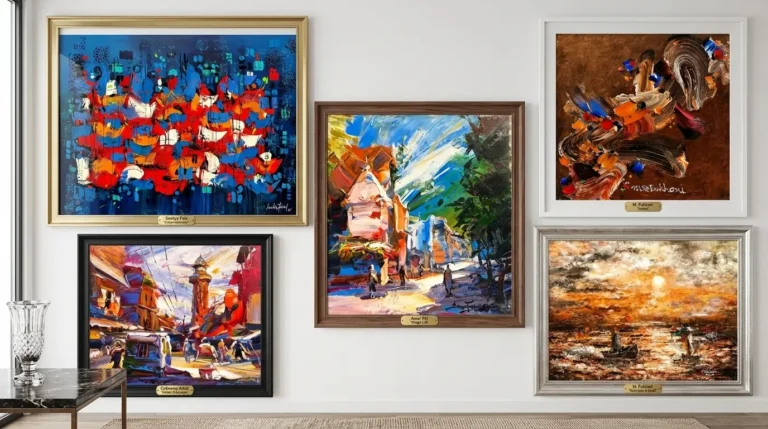
Idea 2: The Mixed Frames Gallery Wall for an Eclectic Look
The mixed frames approach gives a relaxed, collected feel that looks like it was collected over time. The answer is controlled variety. You want your gallery wall frames to look like a specially curated collection, not a random mix.
How to Choose Gallery Wall Frames That Work Together
Anchor your gallery wall frames, mix with a repeated finish. Most frames are black but a few in natural wood or gold still feel intentional, as the black creates consistency. Different sizes in a similar style family also helps.
Key principles for mixing gallery wall frames successfully:
- Repeat one frame finish across at least half the pieces as a visual anchor
- Vary frame sizes but keep profile weights roughly consistent
- Use mat boards inside frames to unify pieces that would otherwise feel mismatched
- Stick to a maximum of two or three different frame styles to keep the mix readable
Idea 3: Gallery Wall Ideas for Living Room Spaces
The living room has the largest, most prominent walls in the home, making it perfect for an ambitious gallery wall ideas living room arrangement. Done right it becomes a visual centerpiece for the whole space.
How to Design a Gallery Wall in Your Living Room
The first step is to choose the focal wall. This is usually the wall you see first when you walk into a room. Pick one strong anchor piece and build from there. Planning on the floor before you hang anything saves a lot of unnecessary holes in the wall.
Steps for designing a living room gallery wall:
- Identify the focal wall and measure the available space carefully
- Choose one large anchor piece to establish the visual center
- Plan the full layout on the floor before committing to wall positions
- Work outward from the anchor with complementary sizes and orientations
- Hang the anchor piece first and build the arrangement around it
Idea 4: Bedroom Gallery Wall Ideas for a Personal Sanctuary
For the bedroom, you need a different approach. Whereas the living room can get away with bold arrangements, the bedroom needs something more quiet and personal. The best bedroom gallery wall ideas work when the art choices feel close and the overall palette is kept soft and restful.
Bedroom Gallery Wall Ideas That Feel Calm and Personal
The bedroom gallery wall most natural position is above the bed. The horizontal spread picks up the proportions of the bed and creates a grounded and purposeful visual effect. The art choices are more important than anywhere else here.
Bedroom gallery wall ideas for a calm and personal look:
- Soft botanical prints or nature-based illustrations in muted tones
- Personal photographs printed and framed in a consistent size and finish
- Gentle abstract paintings in warm neutrals or dusty pastels
- Simple line drawings or watercolor portraits that feel quiet and considered
- Thin frames in natural wood or brushed gold to keep the mood light
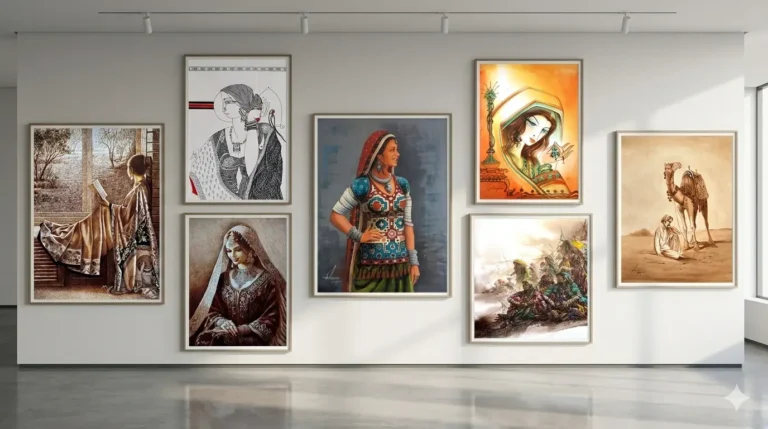
Idea 5: Gallery Wall Paintings as the Centrepiece of Your Display
There is an essence in an original gallery wall paintings that you cannot get in a photograph or print. Paintings have a quality and depth and physical presence that just makes the whole display feel more substantial and really artistic. The presence of even one or two original works improves the whole arrangement very much.
How to Mix Gallery Wall Paintings With Other Art Formats
The key to mixing gallery wall paintings with photographs and prints is visual weight. An original painting typically carries more visual weight than a photograph of similar size because of its surface texture and depth. Place paintings toward the center or at eye level so they anchor the composition naturally, and surround them with lighter prints that complement rather than compete.
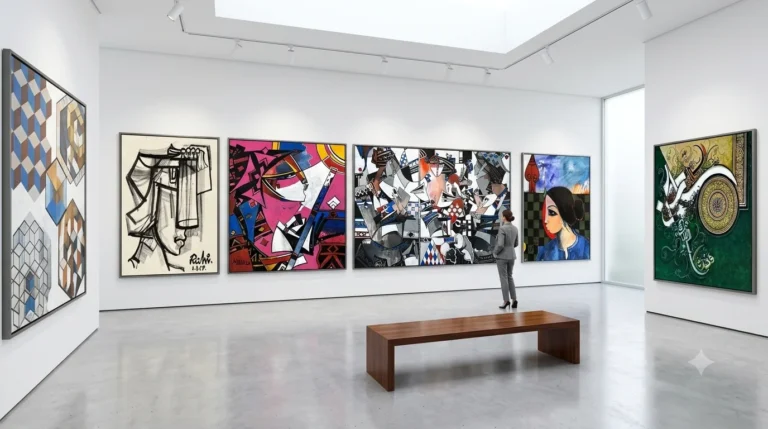
Idea 6: The Symmetrical Gallery Wall for a Clean and Structured Look
A symmetrical gallery wall consists of identical or nearly identical frames in a symmetrical, even grid. It provides a formal and architectural look appropriate for modern and traditional interiors. This works particularly well in dining rooms, hallways and staircase walls where a visual rhythm of structure feels appropriate.
What Is the Best Spacing for a Gallery Wall?
The spacing for a gallery wall should depend on the overall style you’re going for. A uniform space of five to seven centimeters between the frames is good for a clean symmetrical arrangement. Wider gaps feel more relaxed. The smaller the gap, the denser the salon-style effect.
Spacing rules worth following:
- Use a five to seven centimeters gap between frames for most arrangements
- Increase spacing slightly on larger walls to avoid a crowded appearance
- Cut paper templates and tape them to the wall before making any holes
- Use a spirit level throughout to keep symmetrical rows truly straight
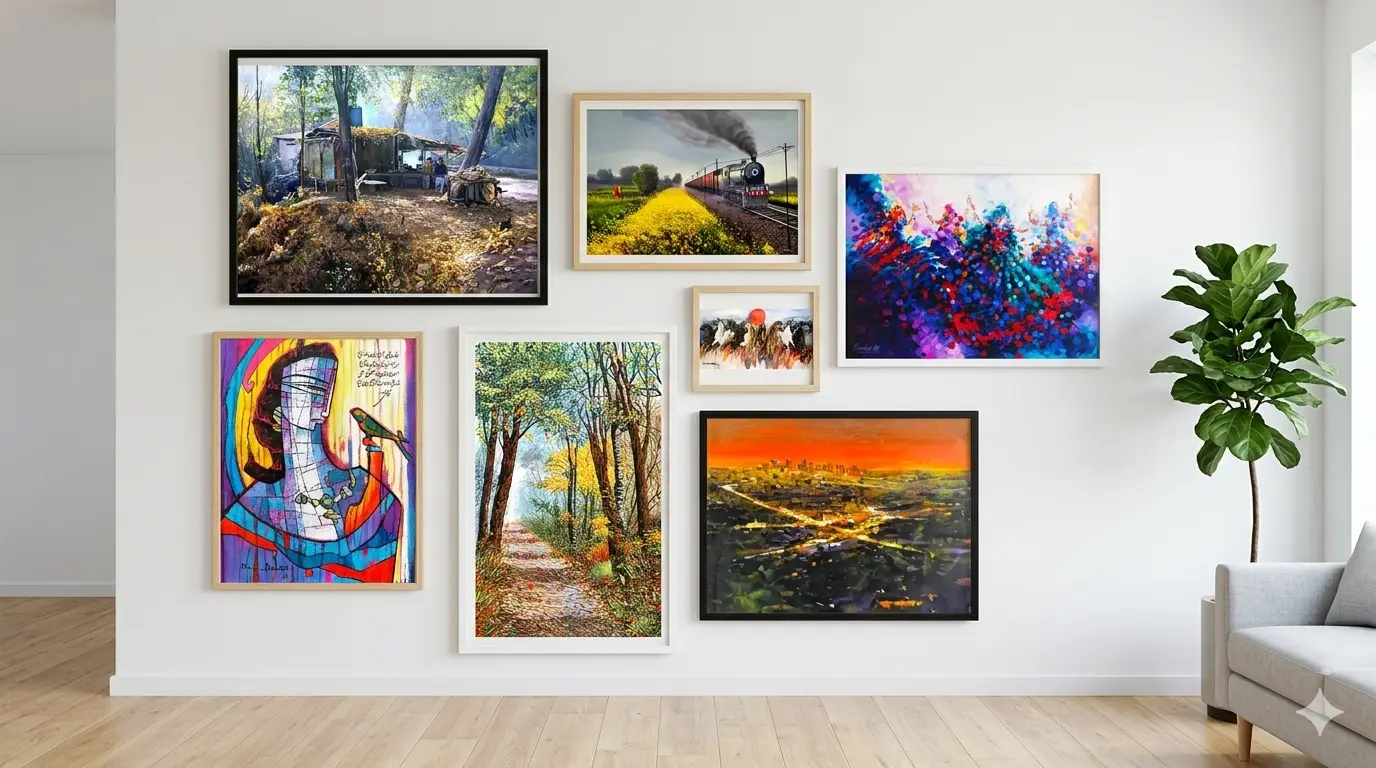
Idea 7: The Asymmetrical Gallery Wall for a Relaxed and Organic Feel
Asymmetrical gallery wall ideas are the most popular and forgiving method. Different sized frames, mixed orientations and an organic layout provide a personal, lived-in feel to the display. The trick is to make it look intentional, not accidental.
How to Make a Gallery Wall Look Nice Without Formal Symmetry
To make an asymmetrical gallery wall look nice, it’s all about starting with a large anchor piece instead of small frames. Big chunks give the arrangement a natural visual gravity point everything else can relate to.
Tips for a beautiful asymmetrical gallery wall:
- Start with one large anchor piece and build outward rather than filling in randomly
- Mix horizontal and vertical frame orientations throughout
- Maintain consistent spacing even when the layout itself is irregular
- Step back and assess balance regularly as you add each piece
- Avoid clustering all large pieces together or all small ones in one corner
How to Decorate a Gallery Wall From Start to Finish
A successful gallery wall is mostly about planning before you put anything up on the wall. The most common mistake is hanging pieces without first testing the layout, which results in a display that feels off-center or poor spaced.
Planning Your Gallery Wall Layout Before You Hang Anything
Cut paper templates of each frame, label them, and arrange them on the floor. Experiment with different layouts until one feels right, then photograph it before moving anything to the wall.
Planning steps before hanging your gallery wall:
- Measure the available wall space and note the full dimensions
- Cut paper templates for every frame and arrange them on the floor first
- Photograph the floor layout before transferring anything to the wall
- Mark wall positions lightly with pencil using the templates as guides
- Use a spirit level on every piece during the actual hanging process
Frequently Asked Questions About Gallery Wall Decor
Q. What Is a Gallery Wall?
A gallery wall is a single wall with a collection of curated artwork, frames, photographs and decorative objects hung together. It is not just a collection of things hung up individually. Items are placed deliberately to create a single combined visual composition.
Q. What Are Gallery Walls Called?
Feature walls, art walls, picture walls and salon-style hangings are other names for gallery walls. salon style: a highly layered display related to nineteenth century exhibition displays. All terms describe a multi-piece wall display that is composed to be intentional and connected.
Q. How to Design a Gallery Wall?
First, select a focal wall and a strong anchor piece. Before you hang anything, do the whole layout on the floor. Work out from the anchor with complementary sizes and frame types. Keep the spacing even and use a level to keep it looking clean and straight.
Q. How to Decorate a Gallery Wall?
Choose your art and frames first, then make a plan on the floor with paper templates. Transfer the design to the wall using light pencil marks. First hang the anchor piece and then build out from there. Maintain equal spacing and take time to step back and assess the visual weight of your work.
Q. What Is the Best Spacing for a Gallery Wall?
A gap of five to seven centimeters between frames works well for most gallery wall arrangements. Tighter spacing creates a denser salon feel. Wider spacing feels more relaxed and contemporary. Always test spacing using paper templates taped to the wall before making permanent holes.
Q. How to Make a Gallery Wall Look Nice?
Start with a strong anchor piece and maintain consistent spacing throughout. Use a common colour thread through art and frames. Mix frame sizes but keep related finishes. A gallery wall should be curated and spaced in a way that allows for visual breathing room, every piece should appear intentionally chosen.
Q. How Many Pieces Should a Gallery Wall Have?
Most gallery walls work well with 5-15 pieces depending on wall size. Five or six pieces are hung with confidence on a small hallway wall. Twelve or more is handled by a large living room wall. The goal is to reach a full and considered coverage that does not seem cluttered or visually distracting to the space.
Q. What Art Works Best on a Gallery Wall?
Gallery wall art works best in a thoughtful mix of formats. Original paintings, photographic prints, illustrations, mirrors and small three-dimensional objects, all work well together. And balance visual weights, surface textures and frame depths so one piece doesn’t overpower. Unless it is the centerpiece of the arrangement.
Q. Can a Gallery Wall Work in a Small Room?
Yes, gallery wall ideas scale down well for smaller spaces. Use smaller frames, tighter spacing, and lighter colour palettes. A vertical layout that draws the eye upward makes a small wall feel more expansive. Keep the number of pieces modest so the arrangement feels curated rather than busy or overwhelming.
Q. What Is the Best Wall Colour for a Gallery Wall?
Neutral tones like white, warm grey, and soft putty create versatility and let the artwork carry the visual weight. Deeper tones like navy or forest green add drama and make colours pop. The best wall colour for your gallery wall decor should be informed by the dominant palette running through your chosen artworks.
Q. Should All Frames Match on a Gallery Wall?
Frames do not need to match. Matching gallery wall frames create a clean and formal look. Mixed frames create a relaxed and personal feel. Both approaches work when done with intention. The key is applying consistent logic to whichever direction you choose rather than mixing without any unifying principle.
Q. Where Can I Find Quality Art and Frames for a Gallery Wall in Pakistan?
Art lovers in Pakistan can explore Expert Framing Art Gallery for original artworks and quality framing solutions across every gallery wall decor style. The gallery offers a curated art selection and professional framing services to help you bring your gallery wall vision to life with care and quality.
Final Thoughts
A well-designed gallery wall decor arrangement is one of the most personal and visually rewarding things you can do for your home. Whether you go for a clean symmetrical grid, a relaxed asymmetrical mix, or a calm bedroom arrangement built around soft botanical prints, the result is always a wall that reflects your taste and tells your story.
The seven ideas in this blog cover a range of styles and room types, but the common thread across all of them is intentionality. Great gallery wall displays are planned rather than assembled randomly. If you are ready to start yours, Expert Framing Art Gallery is a trusted partner for original art, quality frames, and the professional guidance that makes every wall look its very best.