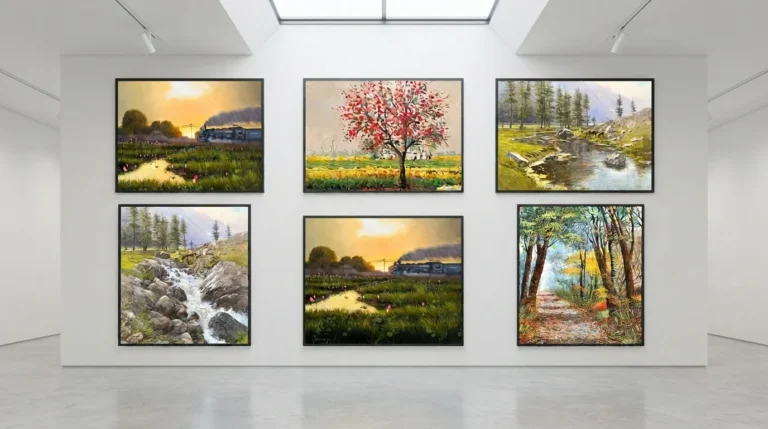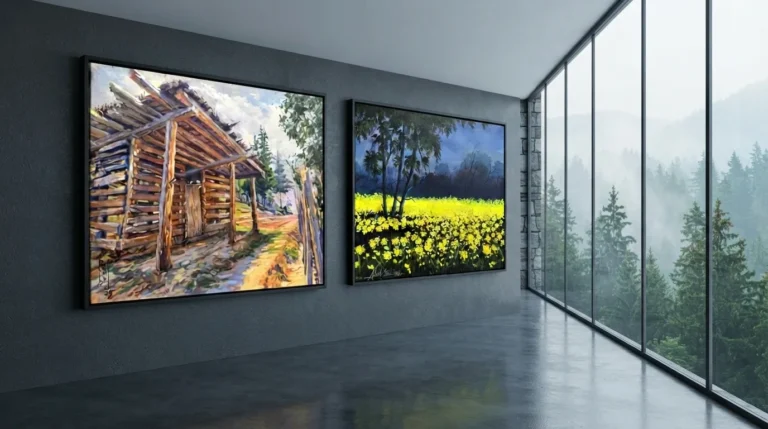
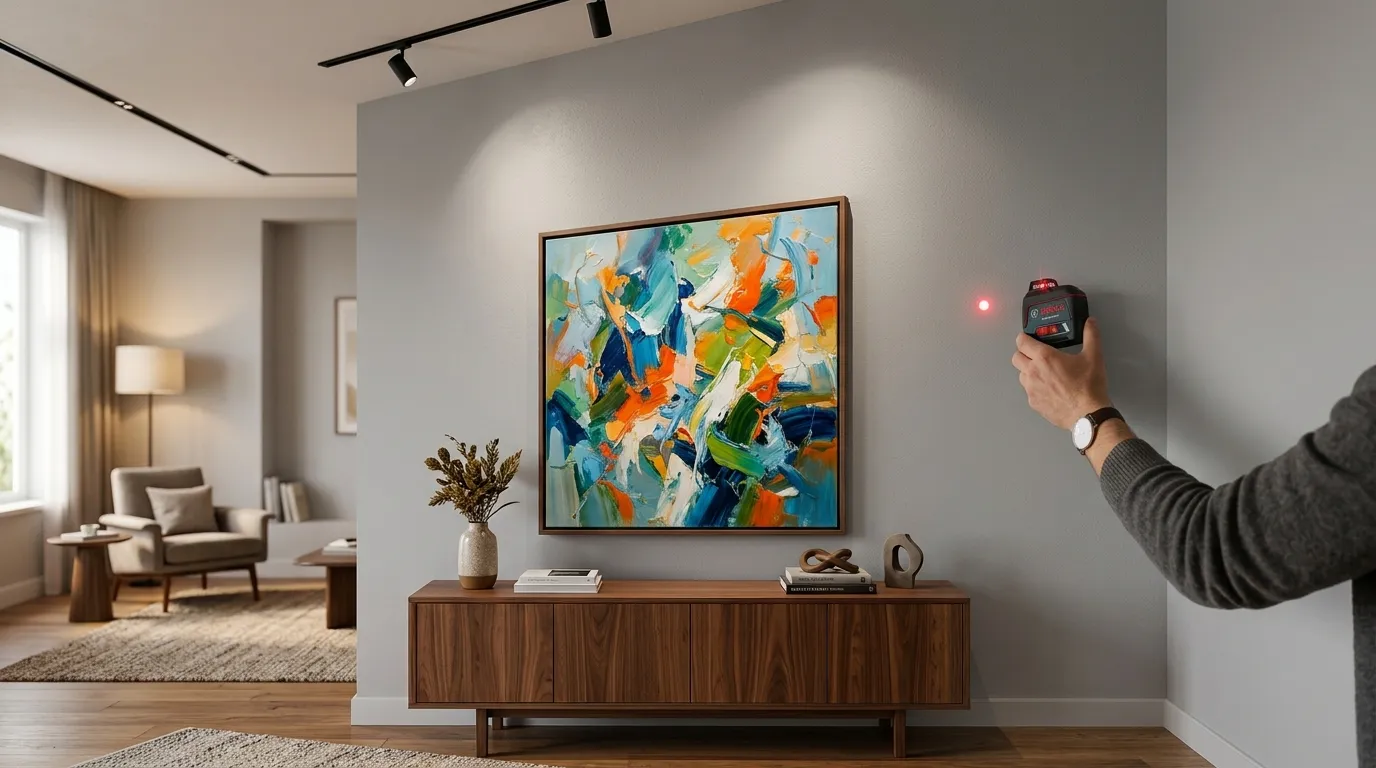

There’s a clear difference between a painting that hangs a little too high, a little off center, and one that looks like it belongs right where it is. The difference between those two outcomes is knowing how to hang painting on wall perfectly. Galleries get that finished look by careful measurement, not guessing. This blog will guide you through the exact steps, tools and standard measurements that give any painting a truly professional finish.
Why How You Hang a Painting Changes the Way a Room Feels
How to hang a painting properly affects far more than just the artwork itself. Height, placement, and alignment shape how the entire wall and room feel. A beautiful piece can look awkward and out of place if hung too high, too low or at a slightly tilted angle.
Galleries know this effect and are very precise with the height and placement of hangings. They don’t guess at what looks right. They are operating from consistent measurements that have been proven to generate visual balance across countless different rooms and wall types.
Essential Tools and Measurements Before You Start Hanging Artwork
There are some basic tools that make hanging artwork a much easier, much more accurate process. Skipping this preparation is usually where things go wrong, with crooked frames or holes drilled in the wrong spot.
Essential tools and measurements for hanging artwork:
- A tape measure for accurate wall and frame measurements
- A spirit level to confirm the painting is straight before committing
- A pencil for marking hook positions lightly before drilling
- Picture hooks or wall anchors suited to your specific wall type
- The standard 57 inch eye level centre point used by most professional galleries
What Is the Standard Height for Hanging Wall Art?
The most important thing to help you get a professional result is hanging wall art at the right height. The standard for galleries is to centre artwork at about 57 to 60 inches from the floor to the centre of the piece. This height is at the average eye level of most adults standing up in a room.
This standard can be adjusted depending on the situation. For example, above a sofa or sideboard, the painting usually sits a little lower, closer to the furniture below it, rather than at the strict 57 inch mark.
Step-by-Step Wall Hanging Painting Ideas for a Level Result
It’s more about following a consistent process than eyeballing it to get a level result with wall painting hanging ideas. Each step builds from the last. Usually skipping ahead results in a crooked or misplaced piece.
Step by step process for hanging a painting:
- Measure the wall and mark the horizontal centre point of where the painting will hang
- Measure the distance from the top of the frame to its wire or hanging hardware
- Subtract that distance from the desired centre height to find the hook’s exact position
- Mark the hook position lightly with a pencil before driving anything into the wall
- Use a spirit level to confirm the painting sits straight once it is hung
How to Hang a Painting Without Damaging Your Wall
How to hang a painting without making Unnecessary Holes Depending on the weight of the painting and your wall material. Small picture hooks can often be used on lightweight canvases with little effect. Heavier framed paintings require appropriate wall anchors that are rated for their weight, especially when hanging on drywall where a single nail will not hold over time.
Hanging Paintings in Groups: Painting Hanging Ideas for Multiple Pieces
Painting hanging ideas change a lot when you go from a single piece to a grouping. When you hang paintings together, you map out the spacing and alignment of the whole arrangement before you put up a single piece on the wall.
The biggest mistake with grouped paintings is thinking about each painting as a separate decision. The successful group hang regards the whole composition as one unit of vision from the beginning.
How Much Space Should Be Between Hanging Wall Art Ideas in a Group?
When you have a group of paintings, leaving a space of about two to three inches between frames usually provides the best hanging wall art ideas. The spacing here feels organized without feeling cramped. On bigger walls with larger groupings, this can open up to about 4 inches, while smaller, compact groupings can close to about 1 and a half inches between pieces.
Wall Hanging Painting Ideas for Different Room Types
Wall hanging painting ideas should shift depending on which room you are working in. Furniture height, sightlines, and how people actually move through the space all affect what hanging height and placement work best.
Matching hanging approach to room type:
- In living rooms, position art so its bottom edge sits eight to ten inches above sofa back height
- In bedrooms, hang pieces beside or above the bed slightly lower than standard eye level
- In dining areas, centre art with dining chair eye level in mind for seated viewers
- Along hallways, keep pieces at standard eye level since most viewing happens while walking past
How to Hang Wall Art Without Nails for Rental Homes
One of the most common questions for renters is how to hang wall art without nails, especially when you can’t drill into walls. There are a number of practical solutions that don’t cause permanent damage but still let you have a polished display.
Glue strips designed specifically for hanging frames work well for lighter pieces. You may also choose removable hooks that are rated for picture hanging, or simply lean a framed piece against a wall on a shelf or mantel, which avoids hanging altogether but still looks intentional and considered.
Are Adhesive Hanging Strips Safe for Heavier Paintings?
Before you put your trust in adhesive strips for hanging artwork ideas, there are real weight limitations to be aware of. Most adhesive strip products are rated for lighter canvases, usually under a few kilograms. Heavier framed paintings need proper wall anchors, since adhesive strips are simply not designed to hold much weight with safety over time.
Wall Hanging Art Ideas That Mimic a Professional Gallery Look
There’s no one trick to getting that polished gallery quality through wall hanging art, it’s a combination of consistent principles. Alignment is very important and so is the relationship of frame colour to wall colour. A dark frame against a light wall creates contrast that draws the eye cleanly to the artwork itself.
The negative space surrounding a work is as important as the work itself. Galleries do not often include just one statement piece but instead give the eye ample breathing room for a rest and the artwork the opportunity to demand real attention.
How Lighting Affects the Way Hanging Wall Art Looks in a Room
Even a good piece of hanging wall art can be ruined by the wrong lighting. Glazed artwork that is hit by direct light washes out detail and causes distracting reflections. Accent lighting at a slight angle without creating a glare flatters a statement piece very well and provides the sort of presence you would expect in a real gallery.
Frequently Asked Questions About Hanging Paintings on Walls
Q. How Do I Hang a Painting on the Wall?
Measure the wall to find your centre point, then measure the drop from the top edge of the frame to the hanging wire. Mark the hook position accordingly. Use a level to check alignment. Prior to driving anything in, select hardware appropriate for your wall type and the weight of the painting.
Q. How to Hang a Painting Without a Nail?
Use adhesive hanging strips, removable picture hooks rated for the weight of your piece, or lean a framed work against the wall on a shelf or mantel for lighter canvases. Each option avoids permanent wall damage and still produces a finished, intentional display.
Q. What Height Should a Painting Be Hung At?
The standard gallery guideline is to centre artwork 57 to 60 inches from the floor, the average eye level. This can be lowered slightly if hung above furniture such as sofas or sideboards, where the piece should relate visually to that which sits beneath it.
Q. How Far Apart Should Paintings Be When Hanging Multiple Pieces?
Two to three inches between frames usually works well for grouped paintings. Larger walls with larger groupings can tolerate slightly wider spacing of about four inches, while smaller, denser groupings often look better with tighter gaps closer to one and a half inches.
Q. What Tools Do I Need to Hang a Painting Properly?
For basic preparation you will need a measuring tape, spirit level and pencil. For the actual hanging you will need picture hooks or wall anchors that match your wall surface be it drywall, plaster or concrete and the weight of the specific piece.
Q. Can Heavy Paintings Be Hung Without Drilling Into the Wall?
No, usually. Heavier paintings require the right kind of wall anchors to hold their weight over time. Adhesives and light-weight hooks are fine for smaller canvases, but anything more than a light-weight piece really needs drilled anchors rated for the actual weight involved.
Q. How Do I Keep a Painting From Tilting on the Wall?
Instead of a single central hook, use two hanging points, which will prevent the painting from rotating over time. A little museum putty behind the bottom corners also stabilizes the piece. Checking with a level from time to time will catch any slow tilting early.
Q. What Is the Best Way to Hang Art in a Stairwell?
Follow the angle of the stair with a diagonal line of frames, keeping the same spacing between each piece throughout the run. This creates a sense of flow visually that matches the movement of the stairs themselves rather than fighting it.
Q. Should All Frames Be the Same Height When Hanging a Gallery Style Wall?
No, you don’t have to match frame heights for a consistent gallery style display. The pieces aligned along a common centreline or baseline create a visual unity even when the sizes and proportions of the frames vary considerably within the arrangement.
Q. How Do I Hang a Painting on a Plaster or Concrete Wall?
Drywall picture hooks won’t work on plaster and concrete, which require masonry drill bits and appropriate wall plugs. These harder surfaces need a bit more prep but once you get the right anchor in there properly they will hold weight very stable.
Q. What Are Some Creative Hanging Art Ideas for a Blank Wall?
Consider an asymmetrical grouping of varied frame sizes, a single oversized statement piece that commands the entire wall, or simply leaning framed work on a shelf or ledge for a relaxed, layered look that feels less formal than a single centred painting.
Q. Where Can I Get Help Hanging or Framing Artwork in Pakistan?
Art lovers in Pakistan can turn to Expert Framing Art Gallery for professional framing services and expert guidance on how to hang painting on wall correctly, ensuring artwork is displayed with the precision and care it genuinely deserves.
Final Thoughts
Learning how to hang painting on wall with real precision changes how a room feels far more than most people expect. Careful measurement, the correct height, and thoughtful placement work together to transform a simple painting into something that genuinely belongs in its space. These are the same principles galleries rely on, and they translate easily into any home.
Expert Framing Art Gallery remains a trusted partner across Pakistan for framing and presentation guidance, helping ensure every piece is displayed exactly as it should be.