
The thunder of hooves in a sunlit field; the blur of a mallet on its downward swing; dust rising as horses and riders tear along at full speed. This is the stuff polo paintings are made of, and they do it with a power few other subjects in art can touch. But polo paintings aren’t just sports memorabilia. They are part of a serious and long tradition in fine art that has gone back centuries. In this blog we will cover the artistic history behind polo paintings, the different styles and mediums artists use, why this genre connects so deeply with Pakistani collectors, and how to bring this energy into an interior space with confidence.
The Artistic Tradition Behind Polo Paintings
The horse has been one of the most painted subjects in art history across every major culture. From Mughal court paintings to Persian manuscripts, from European sporting art to Chinese scrolls, the horse appears again and again as a symbol of power, beauty, and grace. Polo paintings sit at a specific and exciting point within this broader tradition of equestrian art, combining the visual beauty of the horse in motion with the drama of competitive play.
This combination has attracted serious artists for centuries. A polo scene demands mastery of anatomy, movement, light, and atmosphere all at once. The best polo paintings demonstrate the same level of artistic commitment as any other respected fine art genre, which is exactly why they have been collected by royalty and exhibited in galleries across generations.
How Polo Found Its Way Into Mughal and Persian Art
Long before it became the international sport that it is today, polo was played in Mughal courts, and it was shown in miniature paintings with remarkable energy and detail. The artists worked in the Mughal and Persian traditions, representing horses and riders in full motion, expressing speed in a very small format with fine brushwork and jewel-like color.
To Pakistani collectors, this history gives polo paintings a certain cultural value. The visual tradition of equestrian art in South Asia is not an import or alien one. This is part of the artistic heritage that this region helped create, making the subject something very personal, not just decorative.
Sporting Art and Why It Belongs in Fine Art Collections
There is sometimes a perception that sporting art is somehow less serious than other genres, but that does not hold up to any real analysis. Sporting art has been collected by royalty, exhibited in major museums, and painted by masters across centuries. Polo paintings are one of the finest examples of what sporting art can achieve because the subject demands everything a skilled artist must master at once: anatomy, motion, light, atmosphere, and narrative.
What Makes Polo Artwork Visually Different From Other Sporting Art
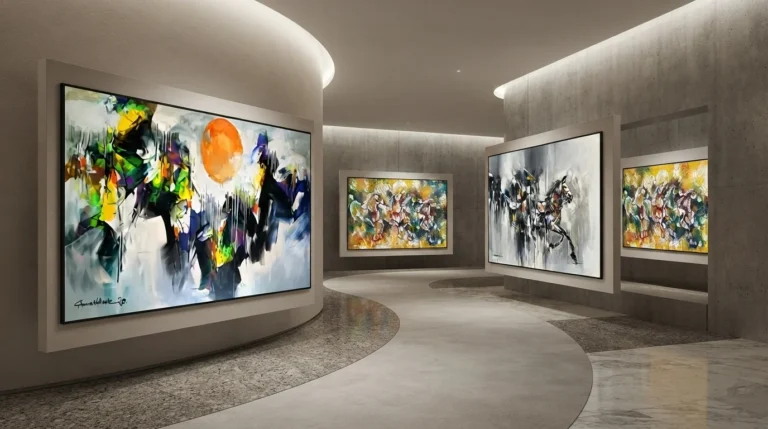
The visual complexity of the scene is what separates polo artwork from other sporting art subjects. Polo is played on a large open field with several horses moving in different directions, and players competing against each other. The horizontal sweep of polo artwork often is needed to impart a sense of speed and space that is unmatched by most other sporting subjects.
There is also a tension in polo between controlled athletic technique and raw animal power that gives the best works a particular visual charge. That balance is what makes polo artwork so genuinely challenging to paint well and so alive on the wall when it is done right.
The Running Horse: Energy Captured on Canvas
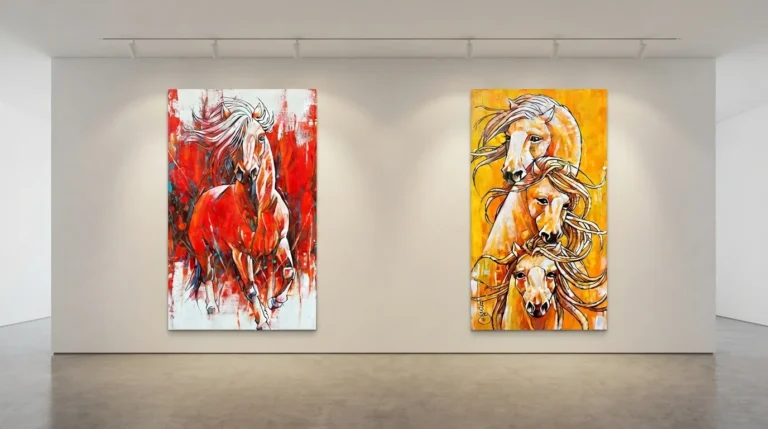
The running horse symbolizes the essence in almost all polo paintings. The great running horse painting is a composite of anatomical detail and movement. The design of the gallop, with the horse’s actions frozen in mid-movement, the muscles that had been drawn on with enough detail to be almost tangible, the ability of the animal to come out of the painting and walk away.
Large scale canvas painting of running horses works especially well, because the bigger the canvas, the more detailed the sense of motion. A large format running horse canvas painting that occupies an important portion of a wall creates a totally different experience compared to a smaller piece. The viewer is not looking in on the horse from a distance. They are not quite with it.
How Artists Capture Horse Movement
Painters who work well with equine subjects study the mechanics of horse movement closely. How does a running horse canvas painting come to life, instead of being static? It’s a mix of knowledge and technique. The legs and hooves are painted with a loose gestural brushwork suggesting speed without freezing the movement. The directional markings in the background creates a sense of the environment rushing past. Selective softening of the border gives a better impression of movement. These are the qualities to look for when choosing a running horse painting that will hold its power on the wall over time.
Polo Horse Painting: Portrait of an Athlete
Not every equestrian work shows a full polo scene. Polo horse painting as a dedicated subject focuses on the individual horse in a more composed, portrait-like format, showing the animal’s nobility and character rather than capturing it mid-action. Equestrian art in this portrait tradition connects to a very long history of royal horse portraiture where great horses were considered worthy subjects in their own right.
What to Look for in a Quality Polo Horse Painting
A fine polo horse painting is classified by a few key things worth knowing before you buy:
- Anatomical accuracy in the proportions, muscle definition, and leg positioning reveals if the artist truly understands horses or is predicting
- The quality of light in animal form separates flat inanimate work from work that feels present and real.
- Background and setting contribute to the overall impression, and indicate the depth of the artist’s involvement with the subject
Serious polo artwork is always a reflection of the artist’s real experience of horse as a living subject. The Expert Framing Art Gallery Karachi curates equestrian works with such qualities in mind.
Polo Player Painting: Capturing the Rider as Much as the Horse
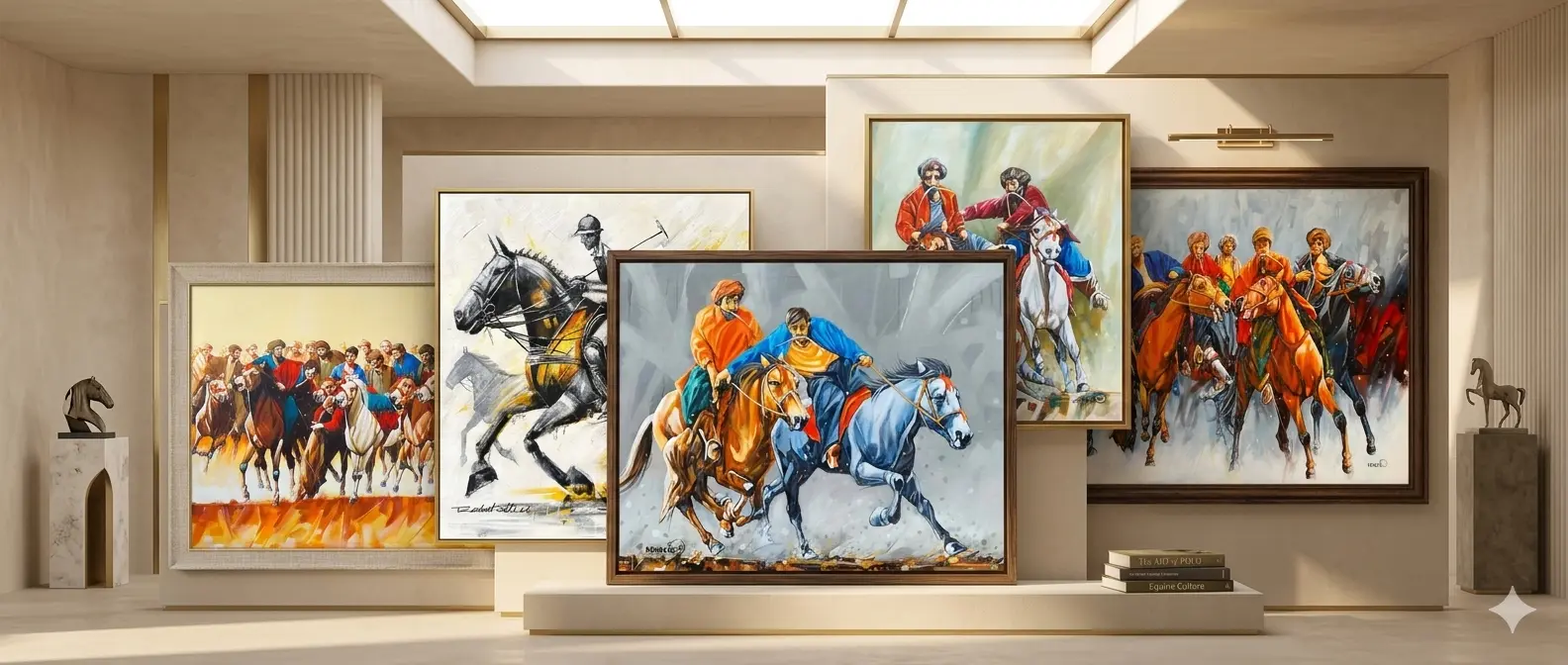
A polo player painting is a bit difficult to make. In this painting, the artist has to show a person riding a moving horse. Both the rider and the horse are moving at the same time. The artist also has to show how they are connected while playing. Things like how the rider is sitting, how the stick (mallet) is held, and how the body leans while hitting the ball must look real and natural.
A great polo player painting conveys the communication between horse and rider that makes polo so visually compelling. The physical commitment of the athlete, the elegance of technique under real pressure, the sense of two bodies moving as one: these are the qualities that take a polo canvas work from a competent sporting image to something truly memorable.
Polo Canvas Paintings: Why Scale Transforms This Subject
Polo as a subject needs room to breathe. A large polo canvas transforms the drama of the sport into something the viewer can genuinely feel. It commands attention from the moment you enter a space and fills the wall with movement and energy in a way that more static subjects simply cannot. For a Pakistani drawing room or corporate reception space with a substantial wall, an oversized polo player painting creates a point of focus that anchors everything else in the room around it.
Displaying Polo Paintings in Pakistani Homes and Spaces
Pakistani collectors have found a connection in polo paintings that is more than just aesthetic appreciation. Polo is part of Pakistani sporting heritage, from the grounds of Lahore and Gilgit to the equestrian culture rooted in rural communities across the country. Polo artwork works across a range of interior settings:
- In a drawing room it creates energy and serves as a natural conversation piece
- In a home office it projects strength and ambition without feeling decorative or minor
- In a dining room, it adds visual impact without making the space feel too heavy or crowded
- In a corporate reception it communicates prestige and cultural identity immediately
Warm earthy tones in polo works sit naturally with wooden furniture and neutral walls common in Pakistani interiors. Expert Framing Art Gallery advises collectors on framing choices that bring out the best in large equestrian works, from float frames in dark walnut to antique gold finishes that add warmth and richness.
Frequently Asked Questions About Polo Paintings
Q: What are polo paintings and why are they collected?
Polo paintings are small paintings of the game of polo, the horses, riders and scene of the game. They’re gathered for their equine beauty and sporting drama. Polo artwork is attractive to collectors on both the artistic level and the cultural level, as polo is a sport.
Q: What is equestrian art and where do polo paintings fit within it?
Equestrian art is a broad genre covering all fine art works where the horse is a primary subject, including portraiture, battle scenes, and sporting art. Polo paintings sit within the sporting branch of equestrian art, combining the visual tradition of horse painting with the energy and narrative of competitive play.
Q: What makes a running horse painting visually compelling?
A powerful running horse painting combines anatomical precision with kinetic energy. It’s the long gallop, the tension in the muscles and the movement of the mane and tail with the body that give polo artwork of horses in full stride a feeling of being alive rather than static.
Q: What is the difference between a polo horse painting and a running horse canvas painting?
A polo horse painting is a portrait of the individual horse, focusing on the horse’s nobility and character. Canvas painting of a running horse at full gallop in motion and energy. Both are types of equestrian art but they create very different visual effects and are appropriate to different purposes of collecting and display.
Q: What should I look for when buying a polo player painting?
When buying a polo player painting look for an artist who understands the anatomy of both horses and humans in motion. The connection between horse and rider should be natural and alive. Think carefully about scale for polo canvas works as this subject lends itself to generous proportions where the composition can breathe.
Q: Is sporting art considered fine art?
Yes. Sporting art has been exhibited in major museums and collected by serious buyers for centuries. Polo paintings by skilled artists demonstrate mastery of anatomy, motion, light, and composition at the same level as any other fine art genre. The subject matter defines the visual territory, not the artistic quality of the work.
Q: What size polo canvas works best for a drawing room?
A standard Pakistani drawing room should have a polo canvas of between 36×48 and 48×60 inches. This is a strong statement but not overpowering for the space. A running horse canvas painting benefits from horizontal formats that mirror the lateral movement of the subject. Expert Framing Art Gallery can advise on the right scale for your specific wall.
Q: How should polo artwork be framed?
Polo artwork on canvas works well with float frames in dark walnut, antique gold, or matte black depending on the color palette of the work. For polo paintings with warm earthy tones a gold or bronze frame adds richness. For more contemporary works a slim dark frame keeps the focus on the painting itself.
Q: Why do polo paintings attract Pakistani collectors?
Polo has a profound place in the sporting and cultural history of Pakistan. The polo paintings link collectors to a tradition they feel personally invested in, from the polo grounds of Lahore and Gilgit to the equestrian culture of rural Pakistan. Here, there is cultural pride and true aesthetic appeal in equestrian art.
Q: Where can I buy original polo paintings in Pakistan?
Expert Framing Art Gallery in Karachi offers a curated collection of original polo paintings and polo artwork by Pakistani artists across multiple styles and formats. Custom framing is also available. Browse the collection online or visit the gallery in person. Delivery is available across Pakistan.
Why Polo Paintings Capture Something No Other Subject Quite Does
Polo paintings remain a collecting genre because they combine things few other art subjects do: animal power and human skill, competitive drama and visual elegance, cultural heritage and painterly challenge. “A great work of polo turns a wall into a window on a world of speed and energy that the viewer can really feel when standing in front of it. This is not ornamental sports imagery. It is a serious art tradition that goes back centuries across cultures and continents and is rooted in Mughal miniatures and equestrian art. Collecting polo paintings means bringing that tradition into your home alongside something that carries real cultural meaning for Pakistan. For original polo and equestrian art and professional framing in Pakistan, Expert Framing Art Gallery in Karachi is a trusted name among collectors who take this genre as seriously as it deserves.