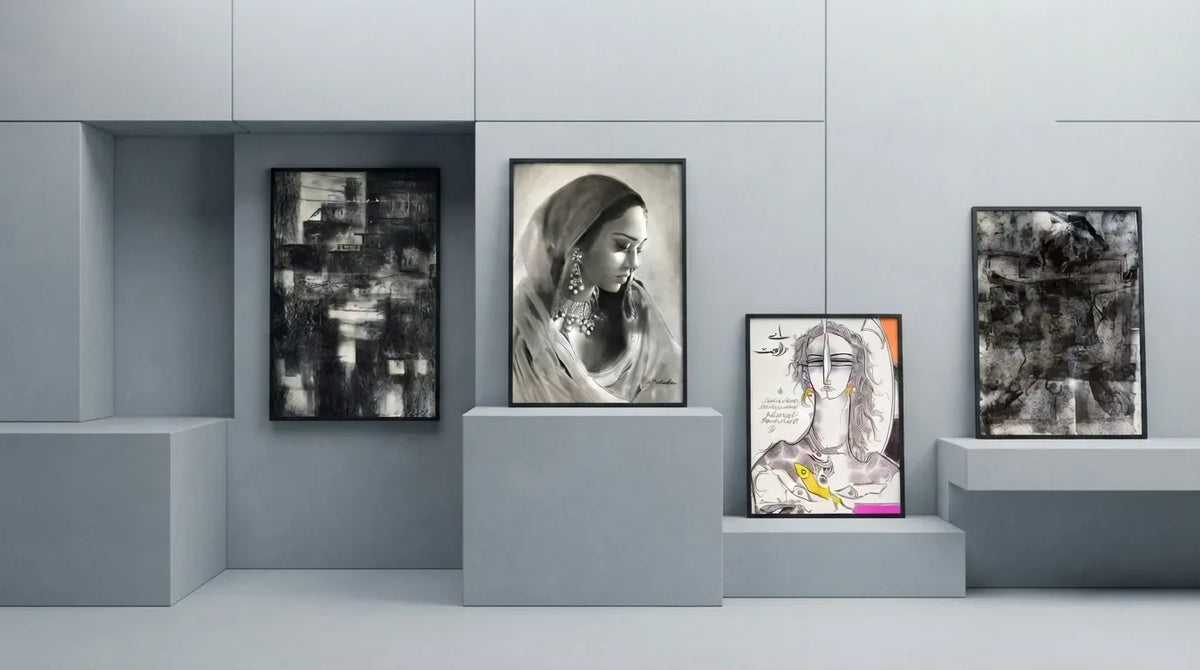
Emotion can be greater in a simple graphite sketch than a whole canvas painted in full. A fully colored painting can't always do the quiet restraint of a pencil line, the soft darkness of a smudged charcoal stroke, the way empty space becomes part of the composition. There are many who consider abstract pencil art too subtle or incomplete compared to oil or acrylic work. That's precisely where its strength lies. This blog breaks down what abstract pencil and charcoal art really is, the techniques behind it, and how to properly style these works in a modern home.
What Is Abstract Pencil Art?
Abstract pencil art is the creation of expressive compositions, non-representational in nature, using graphite or pencil rather than realism of recognizable subjects. The artist works with line, tone and mark instead of colour. The pencil is the tool for emotional expression rather than accurate documentation. The end result is artwork that communicates mood, movement and feeling in the simplest possible way.
What makes this approach so powerful is that the artist manages to do all this without using any colour of any kind. Shading adds depth. Line weight indicates energy or rest. The negative space, the unmarked areas, becomes as meaningful as the marks themselves. A well-executed abstract piece in pencil can feel contemplative or urgent, quiet or unsettled, depending entirely on how these elements are treated.
What Makes Pencil Art Abstract Rather Than Realistic?
Abstract pencil art is abstract when the artist uses expressive mark-making and emotional tone over accurate representation. The composition is not of a recognizable subject, but rather uses line, shading, pressure variation and negative space to create meaning and mood without a literal narrative.
Popular Techniques in Abstract Art Pencil Drawings
Abstract art pencil drawings are based on a variety of technical approaches, each with a different visual character. Tools in this tradition often include cross-hatching, layered shading, loose gestural lines and intentional use of negative space. The technique an artist chooses shapes not only the look of a work but the feeling of looking at it.
Finished abstract art with pencil as well as abstract art pencil sketches depend on the artist’s ability to control mark-making with precision and intention. It makes all the difference, the pressure you put on the pencil on the paper. Light strokes of softness and suggestion. Heavier pressure builds density and visual weight. The direction of the strokes creates movement and rhythm across the surface.
Techniques used in abstract pencil art:
- Layered directional lines for depth, texture, and tonal complexity with cross-hatching
- Soft blending with a tortillon or fingertip for smooth transitions of tone and atmospheric effects
- Quick, loose, expressive line work to suggest movement and emotional energy
- Used shading with controlled pressure to create contrast and lead the viewer’s eye through the composition
- Deliberate use of negative space as an active compositional element, rather than empty paper
What Techniques Are Used in Abstract Pencil Sketches?
Abstract art pencil sketches typically use a mix of cross-hatching, shading, varied line weights and intentional negative space to create expressive compositions without using color. The artist achieves mood not by the colour relationships characteristic of most painted work but by pressure, by direction of stroke, by contrast of tonality.
Exploring Abstract Colored Pencil Art
Abstract colored pencil art occupies an interesting middle ground between graphite pencil work and fully painted art. Coloured pencil applies pigment in a completely different way from paint, building tone through layered strokes rather than mixing wet pigment on a palette. The end result is artwork of a polished, somewhat muted quality appropriate for spaces where subtlety is more valued than visual volume.
This characteristic gives abstract colored pencil art a special power in spaces that need warmth and visual interest without bold contrast or high energy. The softness of the coloured pencil surface is personal and handmade, a quality that is characterful in a space without imposing a strong visual mood that might conflict with quieter interior schemes.
Where colored pencil art works best in a room:
- For bedrooms where soft colour and fine detail match the restful mood
- Reading nooks and studies where the small scale invites close viewing
- In hallways, smaller, finer pieces work well when viewed up close
- To balance a gallery wall arrangement with the softer palette, by pairing with bolder pieces
Understanding Abstract Charcoal Art
The abstract charcoal art has a visual character, which is fundamentally different from the pencil work. Charcoal can produce deep rich blacks and a full range of values from near white, through all the grays to full dark black in a single drawing. Charcoal art abstract pieces have a physical and atmospheric quality to them that lends itself to bold expressive compositions. The material smudges and blends and builds in ways that graphite can't.
The natural drama of the medium enhances charcoal drawings in an abstract style. The dark marks against the light paper are high contrast, and this makes for an instant visual impact. Smudging introduces softness and atmosphere. The marks are bold, confident, made with the side of the charcoal stick, with a sense of movement and energy that is rarely achieved with the careful control of pencil lines.
Key charcoal traits that define its visual character:
- Deep, rich black tones, with strong contrast to the light paper surface
- Soft smudging capabilities to create atmospheric, blurred and moody effects
- Expressive, energetic compositions as a result of heavy use of bold mark-making
- The ability to combine fine detail and loose gestural work in the same piece
Styling Pencil Art on Wall Displays
The pencil art on wall is best displayed in interiors where the visual focus is on the subtle sophistication of the work and not competing with powerful surrounding elements. The best neutral walls are white, off-white, warm grey or soft putty tones, because they do not add colour that competes with the monochromatic quality of the artwork itself.
These pieces are most successful as subtle focal points rather than bold statement art. One good abstract pencil or charcoal drawing on a clear wall in a study or bedroom gives just the right sort of atmosphere for reflection without the demanding visual quality of a large colourful canvas. That's the thing, really, and the room has to support that, not work against it.
Styling tips for pencil and charcoal art in modern interiors:
- Work with neutral or muted wall colours so the tonal range of the work can be read clearly
- Use warm directional lighting, not cool overhead light, to bring out shading and texture depth
- Group smaller sketches together in a gallery wall arrangement that makes a strong visual statement
- Keep the furniture and decor in the surrounding area visually simple so the line work and tonal detail remain the focus
Choosing the Right Frame for Pencil and Charcoal Pieces
The frame around a pencil or charcoal piece influences the entire tone of the display. A heavy, ornate frame limits the delicate quality of the pencil work, producing a visual disconnection between the restraint of the drawing and the weight of its border. The frame should be as considered and refined as the body of work it supports.
Simple and thin frames in natural wood, black or white work well for most abstract pencil and charcoal. A white or off-white mat board between the artwork and the frame provides visual breathing room and gives the piece the gallery presentation it deserves. Mat boards are particularly important for charcoal drawings, since they also prevent the surface of the work from touching the glass directly, which can cause smudging and damage over time.
At Expert Framing Art Gallery we offer professional framing advice specifically suited to the needs of pencil and charcoal artwork, so that each piece is protected, presented correctly and displayed with the quality it really deserves.
Key Takeaways
Abstract pencil art and charcoal work give something really different from painted art. Their strength is in their restraint. Without the distraction of colour the viewer is forced to focus completely on line, tone, texture and composition. Good artists use those elements to create work of real emotional depth and visual sophistication.
These pieces are perfect for modern homes in Karachi and Pakistan. They are very well suited to minimalist, neutral and contemporary interiors. They add a quiet character and artistic refinement to a wall, without the visual demands of bolder painted work. Their subtle appearance can be a real strength, not a perceived weakness, if styled well, with proper framing, warm lighting and simple surroundings. Expert Framing Art Gallery is a trusted source for framing advice and original works in this quietly powerful artistic tradition.
Frequently Asked Questions
Q. What Is Abstract Pencil Art?
Abstract pencil art is a type of art that incorporates graphite or pencil to create expressive, non-representational compositions that lack any realistic subject matter. Artists use line weight, shading, and negative space to express emotion and mood. The lack of colour forces all visual meaning into the marks themselves and the spaces left empty on purpose.
Q. How Is Abstract Charcoal Art Different From Pencil Art?
Abstract charcoal art uses a softer and broader medium that creates richer blacks, deeper tonal contrast and more atmospheric blends than graphite pencil. Charcoal is good for bold, dramatic compositions while pencil is better for refined, detailed or difficult abstract work in which controlled mark-making is the primary visual language.
Q. What Techniques Create Texture in Abstract Pencil Sketches?
Abstract art pencil sketches use cross-hatching, strokes in varying directions on top of one another, different pressures with intent, and blending with intention to create texture. Every technique produces a different surface quality from smooth atmospheric tones to thick and visually complex marks, creating real depth and tactile interest across the surface of the drawing.
Q. Is Colored Pencil Art Suitable for Modern Interiors?
Yes. Abstract colored pencil art is good for modern interiors as it is refined and muted and adds warmth and visual interest without bold contrast. The soft, layered colour of the medium is perfect for bedrooms, reading nooks and gallery wall arrangements where a more muted artistic presence is desired.
Q. Where Should Pencil Art on Wall Displays Be Placed?
Pencil art on wall displays work best in studies, bedrooms, reading corners and quiet hallways where their subtle quality can be appreciated up close. These pieces are suitable for neutral toned walls and will benefit from warm directional lighting which will bring out the depth and tonal variation of the shading.
Q. What Frame Works Best for Charcoal Drawings?
Charcoal drawings are best matted in a simple, thin black, white or natural wood frame with a white or off-white mat board to give the work visual breathing room. The mat board is also important to keep the charcoal surface from touching the glass directly, which can cause smudging and permanent damage to the glass surface over time.
Q. Can Abstract Pencil Art Suit Minimalist Decor Styles?
Yes, abstract pencil art is one of the best art choices for minimalistic interiors. It’s monochromatic palette, restrained use of mark and quiet visual presence are naturally aligned with the principles of minimalist design. In a minimalist space, a single well-chosen pencil piece on a clear neutral wall will be enough without disturbing the visual calm.
Q. Does Charcoal Art Need Special Care or Protection?
Yes. Abstract charcoal art will require fixing spray to stabilise loose charcoal particles on the surface, and should always be glazed behind glass when framed to prevent smudging. Keep charcoal pieces out of direct sunlight and humidity and handle framed works with care to avoid disturbing the fragile surface.
Q. What Size Pencil Sketch Works Best for a Gallery Wall?
Abstract art pencil sketches in A4 to A3 scale also work well for gallery wall arrangements when mixed with similarly sized pieces. Consistent sizing creates structure, though modest variation in format adds visual interest. The trick is to make the whole grouping read as one overall display and not as a random collection of little drawings.
Q. Is Abstract Pencil Art a Good Choice for Small Spaces?
Yes. Abstract pencil art is ideal for small spaces because its small scale and quiet visual presence have no impact on tight rooms. A single well-chosen piece or a small grouping adds real artful character to a small wall without the visual weight of larger or more colorful works.
Share:
Why Charcoal Paintings Leave Such a Bold Impression
Realism in Portrait Pencil Art for Animal and Nature Subjects