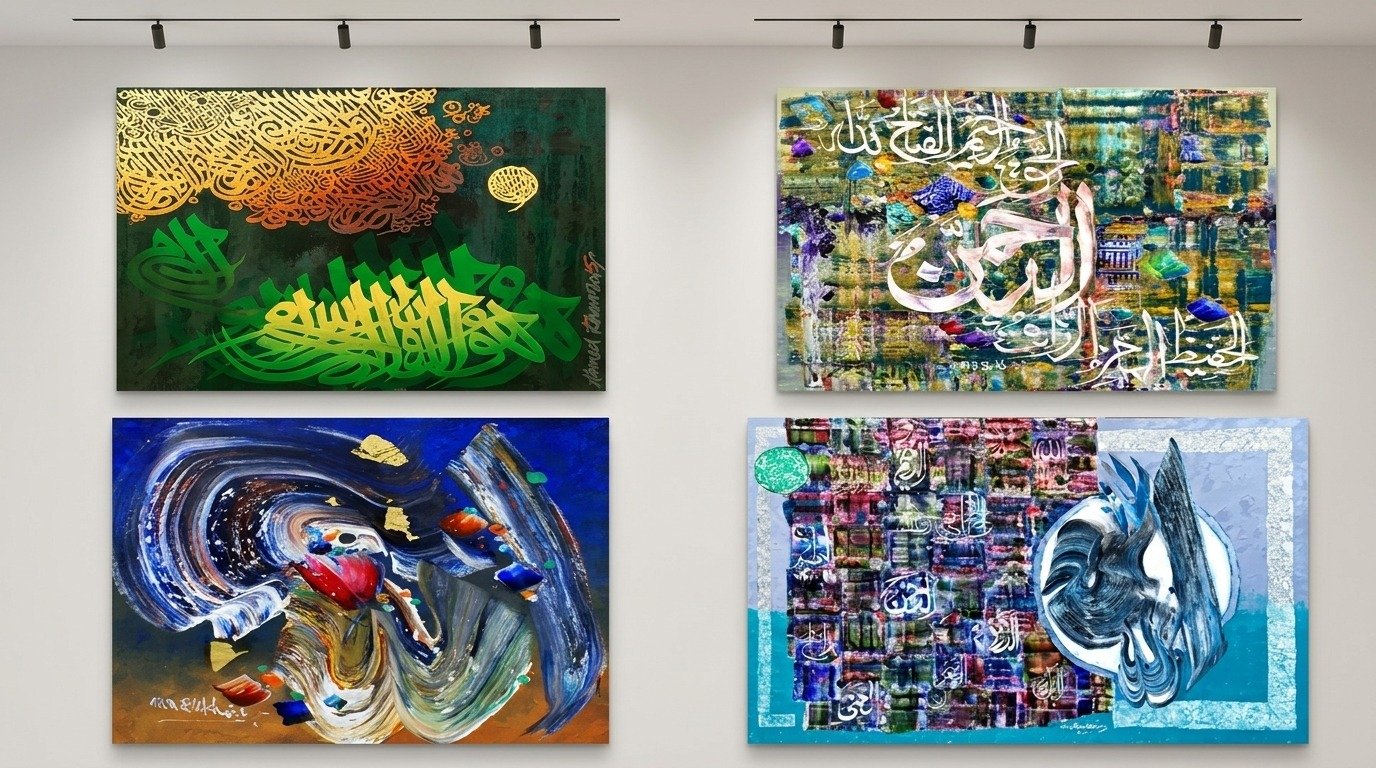

The flowing Arabic script has a way of turning a blank wall into something truly reflective. The shape and flow of the letters combine aesthetic beauty with deep spiritual meaning. For over a thousand years, this dual power has been carried by Islamic calligraphy wall art, from religious manuscripts, to mosque walls, to the living rooms of modern Pakistan. In this blog, we take a look at where this art form comes from, the major script styles behind it and how it continues to find new expression in contemporary homes.
What Is Calligraphy Art and Why Does It Hold Such Significance
Calligraphy art, in general terms, is the art of beautiful, expressive handwriting as a true visual art form. From China to Europe, every culture in the world has developed its own calligraphic traditions, which raised written script to a new level of aesthetic meaning, beyond mere communication.
In the world’s traditions, Islamic calligraphy holds a special place. It became one of the most refined and widely practiced visual arts in the Islamic world, carrying both artistic and spiritual weight that few other calligraphic traditions can match.
What Is Islamic Calligraphy Art?
Islamic calligraphy art mainly involves the artful writing of Arabic script, often with the use of Qur’anic verses and other sacred phrases. The practice originated in the need to copy and preserve the Quran and, over a period of centuries, grew into a highly respected art form in its own right.
This is what makes Islamic calligraphy different from decorative lettering elsewhere. The script is not just visually pleasing. It has religious and cultural meaning that influences its production, exhibition and understanding by viewers.
What Is Islamic Calligraphy Called?
The Arabic word for what we call Islamic calligraphy is khatt, a term that covers the whole art of beautiful Arabic writing. There are several known styles of script in khatt, each with an unique look and historical period of popularity. It is good to know these terms when looking at or buying calligraphy art, as pieces are often described by their type of script, rather than just being called calligraphy.
A Brief History of Arabic Calligraphy Art and Its Evolution
Arabic calligraphy art started as a functional need. Early scribes wanted a way to copy and preserve religious texts correctly. Over the years the writing of this script was refined into something more than function. It became a respected art form practiced and celebrated throughout the Islamic world.
Calligraphy grew with the expansion of Islamic empires from the Arabian Peninsula to North Africa, the Levant and South Asia. The schools in the different regions developed their own style preferences, and master calligraphers acquired real prestige for their skill.
A few of the most influential classical Arabic calligraphy script styles:
- Kufic is the oldest major style, known for its angular, geometric letterforms
- Naskh is a rounded, highly legible script commonly used for Quranic manuscripts
- Thuluth is an elegant, flowing style often used for decorative inscriptions and titles
- Diwani is an ornate, cursive script that developed within the Ottoman court tradition
Islamic Arabic Calligraphy Art and Its Spiritual Dimension
Islamic arabic calligraphy art carries a spiritual weight that goes well beyond decoration. The religious art of Islam, throughout history, has generally moved away from representations of the human figure, especially in sacred spaces, and therefore calligraphy became the primary visual language of expressing devotion.
The beautiful presentation of a verse of the Quran or a sacred phrase was itself an act of devotion. The skill and care that went into the script showed the artist’s respect for the words being written, making the act of writing something like worship.
How Islamic Calligraphy Paintings Express Devotion Through Form
Islamic calligraphy paintings combine technical mastery of script with true compositional artistry. The beauty of it really shows in the way the letters curve and balance and create a rhythm across the page. Line and proportion, rather than any pictured scene or figure, express the spiritual meaning, and this makes the discipline truly unique among the traditions of world art.
Islamic Calligraphy Art Paintings as a Bridge Between Faith and Fine Art
Islamic calligraphy art paintings occupy an unusual position. They are devotional objects for many collectors, but they also exist as serious fine art. This dual identity is part of what makes the genre so compelling to a wide range of buyers.
A collector might choose a piece only for its religious meaning, while another might be drawn entirely to its visual composition and craftsmanship. Both the answers are correct and the best Islamic calligraphy art paintings usually satisfy both at the same time.
Calligraphy Paintings on Canvas and the Modern Presentation of Sacred Script
The most popular way to get this traditional art into contemporary homes is through calligraphy paintings on canvas. Canvas provides scale and texture that manuscripts and smaller traditional formats can’t, and that means calligraphy is real wall art rather than just a framed page.
Why Calligraphy Paintings on Canvas Suit Contemporary Interiors
Calligraphy paintings on canvas have a great flexibility that fit with modern interior design. Almost, they can be scaled to fit any wall. Framed for traditional or minimalist spaces, their visual weight makes them a good focal point in classic and contemporary Pakistani homes.
Modern Calligraphy Painting and Abstract Calligraphy Paintings as New Directions
Modern calligraphy painting has brought the tradition into new creative territory. While contemporary artists play with bold colour, layered textures and unconventional compaosition, they still anchor their work in the language and spiritual roots of classical script.
How Abstract Calligraphy Paintings Reinterpret Traditional Script
The abstract calligraphy paintings go a step further in this experimentation. Artists deconstruct and reimagine Arabic letterforms through gesture, colour and abstraction to create work that feels rooted in tradition but entirely contemporary in its visual energy. This direction has been especially popular with collectors who desire the cultural depth of calligraphy with a truly modern aesthetic.
Islamic Calligraphy Wall Painting as a Meaningful Choice for Pakistani Homes
Islamic calligraphy wall painting is especially attractive in Pakistani homes. It combines cultural identity, religious meaning, and pure visual beauty that few other art forms can match in the local context.
Practical tips for choosing Islamic calligraphy wall art for the home:
- Select a verse or phrase that has personal or spiritual meaning for you
- Match the script style, ornate or minimal, to your room’s existing decor
- Select a scale that fits the wall without filling or lacking the space
- Consider professional framing for a more polished and lasting presentation
How to Choose Arabic Calligraphy Wall Art for Your Space
The first thing you need to decide when picking out arabic calligraphy wall art is the script style and colour palette that catches your eye. Go for a strong Thuluth in deep gold for a formal sitting room, or a softer, more minimal script for a bedroom or study.
The room you put a piece in is as important as the piece. Consider the viewing distance and angle for the calligraphy, since detailed scripts look different when viewed from across the room versus when viewed up close. Expert Framing Art Gallery can help source and frame a piece that feels both meaningful and visually cohesive with your space.
Calligraphy Wall Art Beyond Religious Spaces
Calligraphy wall art has moved well beyond mosques and dedicated religious settings. It now appears regularly in living rooms, offices, and bedrooms, valued as much for its visual sophistication as for its spiritual content.
It’s that potential that comes from the range of styles. A bold, abstract calligraphy piece suits a contemporary office. A classical Naskh script belongs in a quiet study. The art form adjusts to almost any environment, but still remains cultural and aesthetically relevant throughout.
Frequently Asked Questions About Islamic Calligraphy Wall Art
Q. What Is Calligraphy Art?
Calligraphy art is the practice of artistic and expressive handwriting and is not just a simple communication, but a real visual art form. Many cultures have their own traditions of calligraphy, but within Islamic culture it has especially deep religious and aesthetic meanings.
Q. What Is Islamic Calligraphy Art?
Islamic calligraphy art is the artistic form of the Arabic script, often derived from the verses of the Quran and sacred phrases. Calligraphy holds a central position in Islamic visual art. Born of religious necessity, it became one of the most revered forms of art in the Muslim world.
Q. What Is Islamic Calligraphy Called?
In Arabic, Islamic calligraphy is known as khatt. Within this broad term, there are a number of recognized script styles, such as Kufic, Naskh, Thuluth, and Diwani, each with its own visual character and period of prominence within the tradition.
Q. What Makes Islamic Calligraphy Wall Art Different From Other Wall Decor?
Islamic calligraphy wall art carries something that purely decorative pieces do not: a combination of spiritual meaning, cultural heritage and true visual artistry. It has religious value to a lot of viewers. But it is also a serious work of fine art in its composition and in its technique.
Q. What Are the Main Styles of Arabic Calligraphy Art?
The most popular styles of Arabic calligraphy art include Kufic (angular and geometric), Naskh (clear and rounded), Thuluth (elegant flowing lines) and Diwani (ornate, originating from the Ottoman court).
Q. Is Islamic Calligraphy Wall Art Suitable for Non-Religious Rooms?
Yes, calligraphy wall art is suitable for non-religious rooms when used properly. Calligraphy pieces work well in living rooms, offices and bedrooms, particularly if you match the phrase, script style and scale to the room’s existing mood and decor.
Q. What Is the Difference Between Traditional and Modern Calligraphy Painting?
Traditional calligraphy follows very strict rules of the classical scripts and their proportions. Modern calligraphy painting uses colour, abstraction and contemporary composition, but still employs the same letterforms and cultural roots, offering a new visual interpretation of the traditional discipline.
Q. Can Abstract Calligraphy Paintings Still Carry Religious Meaning?
Yes, a lot of abstract calligraphy paintings is intended to preserve recognizable phrases or letterforms in their abstracted designs. Artists often break a script down visually into pieces but leave the words intact so that the spiritual meaning can remain present despite the contemporary treatment.
Q. How Do I Choose the Right Calligraphy Paintings for My Home?
Choosing the perfect calligraphy paintings is about selecting a verse or phrase that relates with you, matching colour to your current decor and also considering scale relative to your wall space. The placement of the rooms also influences how the script reads at different viewing distances.
Q. Should Islamic Calligraphy Wall Art Be Professionally Framed?
Yes, professional framing really helps islamic calligraphy wall painting. The right frame prevents damage to the piece, and contributes to the overall presentation. Expert Framing Art Gallery guides collectors and homeowners through this process, offering quality framing options for each work.
Q. Where Can I Find Quality Islamic Calligraphy Wall Art in Pakistan?
If you’re an art lover in Pakistan, you can check out Expert Framing Art Gallery for authentic Islamic calligraphy wall art. We have original, carefully framed art pieces in a variety of script styles that can complement traditional and modern homes across the country.
Final Thoughts
Every piece of Islamic calligraphy wall art is saturated with centuries of history, spirituality and true artistic talent. It has always known how to find in writing new forms of faith and beauty, from the angular grace of Kufic to the bold risk of abstract calligraphy paintings.
For Pakistani homes, it remains one of the most meaningful decor choices available, connecting cultural identity with sophisticated visual art. Expert Framing Art Gallery offers a trusted starting point for finding and framing calligraphy pieces that bring genuine depth and beauty into any space.