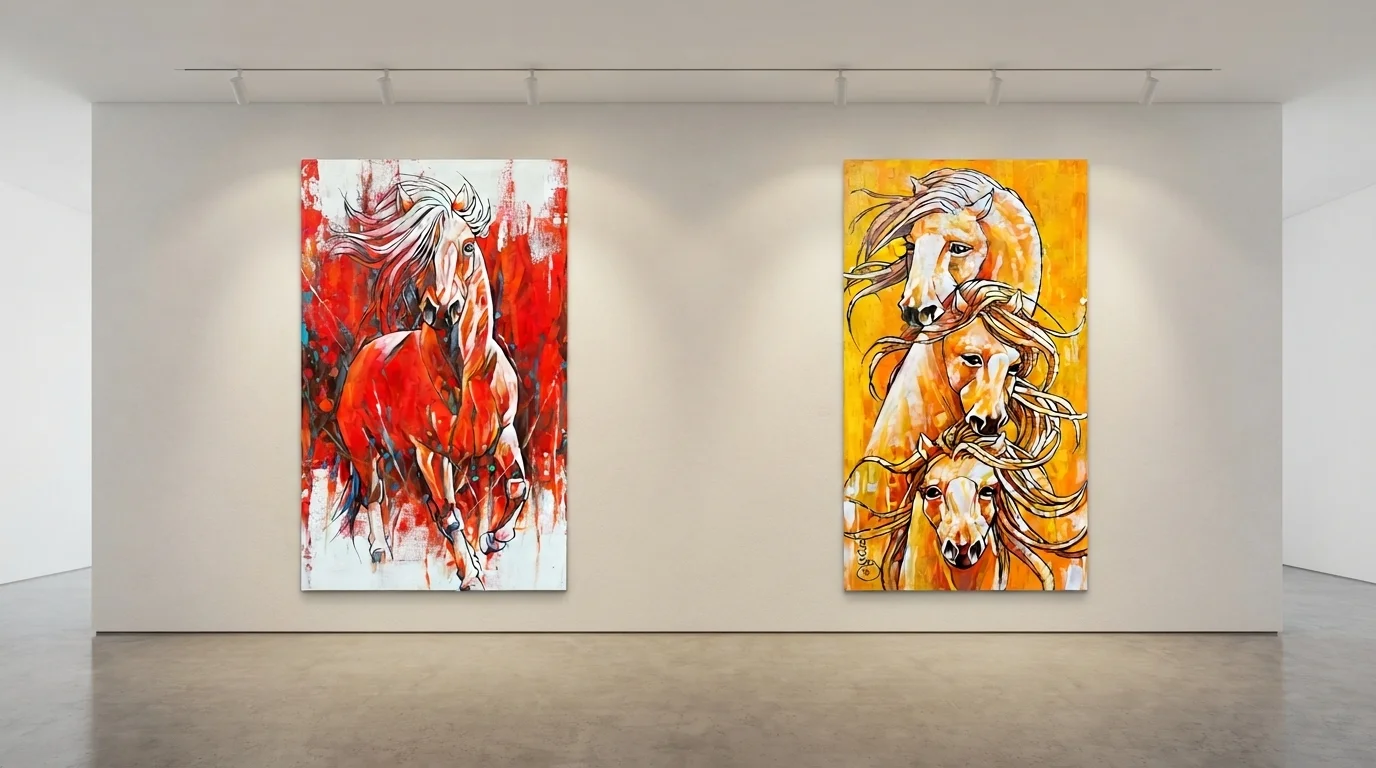

There is something in the eye of a horse, in a well-done portrait, that is hard to describe. There is intelligence there, and a kind of quiet dignity that feels almost human in its depth. Many people admire horse portrait painting without really understanding why it affects them so strongly. The answer is in the symbolism, the choices of composition, and how talented artists use pose and expression to present far more than simple animal likeness. This blog explores the meaning of horse portraits, the different styles of artists and how these works fit into a home interior.
What Is a Horse Portrait Painting?
A horse portrait painting is a detailed study of a particular horse, focusing on the unique personality and aura of the animal rather than placing it in a wider scene or setting. The composition generally focuses on the head, face and upper body which allows the artist to show expression, muscle tension and the specific qualities of the subject in close up.
It is this close focus that distinguishes horse portrait paintings from general equestrian art. So, a hunting scene or racing composition shows horses in action within an environment, but a horse portrait invites the viewer to engage with the animal as an individual. The result is more personal, more emotionally immediate than narrative horse paintings.
What Defines a Horse Portrait Painting?
A horse portrait painting is defined by its focus on the specific character and presence of the horse, rather than its action or surroundings. The composition is a close-up of the face and upper body, using expression, posture and light to communicate the personality and spirit of the animal directly to the viewer.
The Symbolism Behind Horse Portraits
Horses have a rich symbolic history in virtually every major culture of the past. They stand for power, for nobility, for freedom, for a kind of feral grace that no domestic creature can match. In Islamic art tradition the horse is associated with spiritual nobility and refinement of character. In Western art, portraits of rulers and military commanders on horseback were a formal way of showing power and prestige. These associations have been built over centuries and provide horse visuals with an immediate cultural resonance that artists continue to draw on.
The portrait format really heightens this symbolism. When the horse fills the canvas and the viewer is face to face with its eyes and expression, the symbolic associations are no longer abstract. They become personal. What you see is the strength of this animal. The gaze holds a particular quality. The composition asks you to look at the horse as an individual presence rather than a symbol of a category.
Serious collectors are often surprised by the emotional connection they experience in front of a strong horse portrait. The horse’s eyes, drawn with care and sensitivity, have an expressiveness that creates a real feeling. Many buyers describe the experience of finding the right horse portrait as if they were finding a work that looks back at them, rather than one simply being looked at.
Horse Head Paintings and What They Represent
Horse head painting is a compositional decision, and all the emotional weight of the subject is focused on the most expressive part of the horse’s body. The eyes, the nostrils, the set of the ears, the tension in the jaw, all these details express mood, temperament and presence with a strength that a full body composition cannot match.
Close-up head compositions are used by artists to communicate raw emotion and concentrated power. The horse head dominates the canvas, offering an immediate, almost confrontational, visual presence. The viewer can’t look away, or take in his surroundings, because there aren’t any. The whole experience is the horse’s face, and that singular focus is precisely what makes this compositional choice so effective.
Why Do Artists Focus on the Horse’s Head in Portraits?
They focus on horse head painting compositions because the face is the most emotional and informative part of the subject. Eyes, ears and jaw tension have much to say about temperament and mood. All distraction is suspended by closing the head and a direct and immediate connection is established between the viewer and the animal’s inner life.
Horse Silhouette Paintings and Their Quiet Symbolism
Horse silhouette painting is the exact opposite of detailed portrait work in that it removes all surface information and leaves only pure form against a contrasting background. What you have is a composition of impressive visual clarity which says something quite different from a detailed study of a head or a full portrait.
Silhouette compositions have a symbolism of mystery and timeless beauty. When details are removed from a horse what is left is the idea of the horse, the shape of the horse, the curve of the neck, the angle of the legs, the set of the tail in motion. This simplification to pure form gives silhouette works a meditative quality not always found in detailed portraits.
Differences in silhouette and detailed portrait styles:
- Silhouette paintings are about pure form and outline; portraits are about surface detail and expression
- Silhouettes represent mystery and timelessness, whereas portraits inspire familiarity and individual character
- Silhouette compositions are fitting for minimalist and contemporary interiors, while detailed portraits work for traditional and classical spaces
- Silhouettes communicate the idea of the horse, whereas portraits communicate the specific horse
Realistic vs Modern Horse Portrait Styles
In the tradition of portraiture, realistic horse painting uses fine detail, correct anatomy and naturalistic colour to obtain a truthful likeness of the subject. It is a great deal of skill to convey the texture of a coat, the definition of muscles and the particular quality of light in a horse’s eye. This tradition is always attractive to the collector interested in technical mastery and faithful representation.
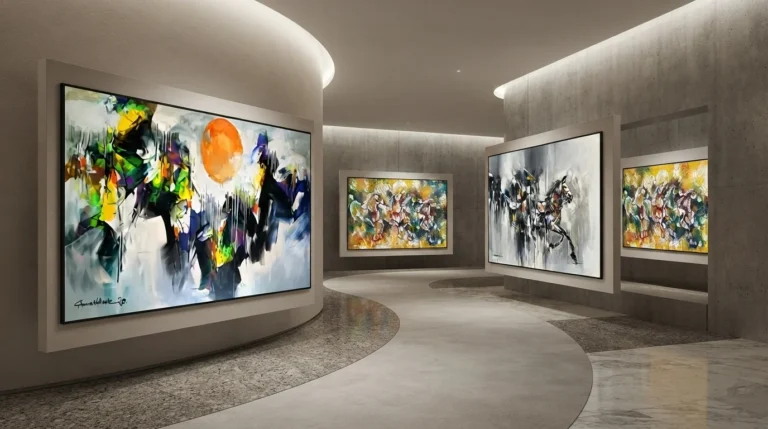
There is a different set of values in modern horse art on the same subject. With looser brushwork, bolder colour choices and more expressive compositional approaches, contemporary artists can capture the emotional essence of a horse, free from the rules of strict realism. A modern equine portrait might have three or four sure strokes of the brush to suggest the head, yet be more powerful in expressing the presence of the animal than a highly detailed painting.
Comparing the two styles:
- Realistic portraits are created with fine detail and natural colour tones to create a convincing, lifelike presence
- Modern portraits use expressive brushwork and more daring colour choices to highlight emotional impact
- Realistic pieces work well in classic, traditional or heritage interiors
- Modern horse art pieces fit modern, minimalist or eclectic interiors
Styling Horse Artwork and Horse Wall Art at Home
Horse artwork of all kinds benefits from thoughtful placement that considers sightlines, wall scale, and the relationship between the painting and the room around it. Studies and home offices are natural settings for horse portraits, since the quiet strength and concentrated presence of the subject suits spaces where focused work and personal character matter. Hallways and living rooms also work well, particularly when the portrait is given enough wall space to be appreciated from a comfortable distance.
Horse wall art in portrait style looks best with warm wood tones, leather furniture and natural textile finishes that mimic the warmth of the subject matter. A strong portrait can carry the visual weight of a room without competition on neutral walls. Horse portraits should not be hung near other strong works in the same sightline. The direct nature of the composition means they are best read without visual competition from neighbouring pieces.
When you frame a horse portrait properly, it makes all the difference in the display. A substantial but clean frame in dark wood or brushed metal suits most portrait styles without ruining them. Expert Framing Art Gallery offers professional framing advice taking into account the character of the painting and the room it will be in so the finished result looks considered and complete.
Key Takeaways
A horse portrait painting adds more than decorative beauty to a room. It gives symbolic weight, emotional presence, and a kind of quiet authority that comes from a subject with centuries of cultural meaning behind it. Whether the work is a close head study in the realistic tradition, a daring modern interpretation with expressive brushwork or a clean silhouette composition reducing the horse to pure form, the result carries a power that truly transforms a wall.
Horse portrait art for collectors and homeowners in Karachi and throughout Pakistan combines cultural impact with meaning sophistication that few other subjects can match. Finding the right piece and framing it well are what turn a beautiful painting into a genuine statement. Expert Framing Art Gallery is a trusted starting point for the both.
Frequently Asked Questions
Q. What Does a Horse Portrait Painting Symbolize?
Horse portrait painting has strength, freedom, nobility and individual character. The portrait format draws the viewer’s attention to the horse’s expression and presence, rather than to a larger narrative or environmental context, and thus brings these associations into personal focus.
Q. Why Are Horse Portraits Considered Powerful Art Pieces?
The strength of horse portraits lies in the tight compositional focus which creates an immediate emotional connection between the viewer and the subject. The eyes of the horse have a depth of expression that seems almost human, and the symbolic associations of strength and dignity that horses carry, amplify that emotional impact very much.
Q. What Is the Difference Between a Horse Portrait and a Horse Head Painting?
A horse portrait may show the head, neck and upper body, whereas a horse head painting is a close-up of the face and top of the neck. The head painting is compositionally more focused on the most expressive elements, and thus has a more concentrated and confrontational emotional effect.
Q. What Does a Horse Silhouette Painting Represent?
A horse silhouette painting is the essence of the horse without surface detail. The silhouette form highlights shape, grace and movement. It also has symbolism of timeless, mystery and quiet beauty that is not the same as the personal intensity of a detailed close portrait.
Q. Is Realistic or Modern Horse Art Better for Home Decor?
Neither is completely better. Realistic horse painting is perfect for traditional and heritage style interiors with fine detail and naturalistic colour. Modern horse art suits contemporary spaces where bolder colour and expressive brushwork complement clean lines and minimal furnishings. The choice depends on the personality of the room.
Q. Where Should Horse Portrait Paintings Be Placed in a Home?
Horse portrait paintings are perfect for studies, home offices, hallways and living rooms where they can be viewed from a comfortable distance. They work well on walls with enough space around them to allow the composition to breathe without visual competition from other works of art or heavy decorative elements nearby.
Q. What Makes a Horse Portrait Feel Emotional or Expressive?
The emotional quality of a horse portrait is established by the artist’s treatment of the eyes, the quality of light across the face, and the subtle details of muscle tension and posture. They add to the feeling that one is meeting an individual presence rather than simply a painted animal.
Q. How Should a Horse Portrait Painting Be Framed?
A horse portrait painting suits a substantial but clean frame in dark wood or brushed metal that props up the work without fighting it. Avoid ornate frames that distract from the composition. The frame should look right in relation to the canvas and match the decor of the room.
Q. Do Horse Portraits Suit Both Traditional and Modern Interiors?
Yes, with appropriate style selection. Traditional decors match themselves well to detailed realistic horse painting. Modern horse art portraits are looser, bolder and ideal for a contemporary space. The most common are silhouette compositions, they look equally good in both traditional and minimalist interiors.
Q. What Size Horse Portrait Works Best for a Living Room Wall?
For example, a horse portrait painting that is to hang as a single statement piece in the living room should be approximately two thirds the width of the available wall space. Larger rooms with higher ceilings can easily take bigger canvases, while smaller living spaces are good for medium-scale portraits that have presence without dominating.