
Walk into a room with too many colors, patterns and things and you can feel your brain getting tired in seconds. Visual clutter is everywhere in modern homes and offices and offers little relief for the eye. And this is where minimalist art comes into play. It takes away the unnecessary and highlights the necessary, bringing a sense of calm and order. In this blog we’ll take a look at how minimalist art brings balance, clarity to interiors and helps a space feel intentional, not cluttered.
What Is Minimalist Art? Understanding the Meaning Behind the Movement
The concept of minimalism art derived from a simple belief that less can say more. It began in the middle of the 20th century by artists who rejected complex details and symbolism and wanted to work with simple shapes, flat colors and open space. The idea was never to take away meaning but to allow the viewer to be able to engage with a work without distraction.
Maximalism adds richness through texture, color and detail. Abstract expressionism channels raw emotion into bold brushwork. Minimalism relies on control. The minimalist art meaning lies as much in what is not on the canvas as in what is. Every line and shape carries purpose.
What does minimalist art look like?
Once you know what to look out for, it’s easy to spot a minimalist piece. It usually includes:
- Clean, simple lines with little or no clutter
- A neutral or limited color palette
- Large areas of negative space that let the eye breathe
- No unnecessary detail or ornamentation
Key Characteristics of Minimalist Art
Minimalist art is defined by certain traits, which can help buyers choose pieces that are truly aligned with the style. The starting point is simple shape. The artist reduces his composition to its fundamental forms and never uses anything that appears decorative for decoration’s sake.
Color is also a big factor. Most minimalist paintings are in two or three shades, either monochrome or muted. That means the focus is on structure and space and not on contrast or brightness. If there is texture, it prefers not to be bold, but understated, creating depth without distracting from the overall composition.
- Forms and compositions clean
- Minimalist or monochromatic colour schemes
- Think about the negative space
- Geometric or abstract shapes
- Subtle texture over bold detail
What are the characteristics of minimalist art?
Minimalism in art is about simplicity, restraint and space. Busy detail is not their style; they prefer clean lines and a limited palette of colors and geometric or abstract shapes. Focus is on form and balance and every element in the composition feels thought out and intentional.
Minimalist Abstract Art vs Minimalist Landscape Painting
A minimalist abstract painting is about shapes, color blocks and spatial balance, not realistic visuals. Often they are a mood or feeling expressed in composition alone, making them perfect for spaces in need of a strong visual anchor, but not necessarily a literal subject.
Or a minimalist landscape painting that reduces nature down to its basic essentials. Think soft horizon line, muted sky and soft gradients suggesting a scene rather than drawing it in full detail. Abstract pieces tend to work best in bold, modern spaces, simplified landscapes feel more appropriate for calmer, more reflective rooms.
Why Minimalist Wall Art Works for Modern Interiors
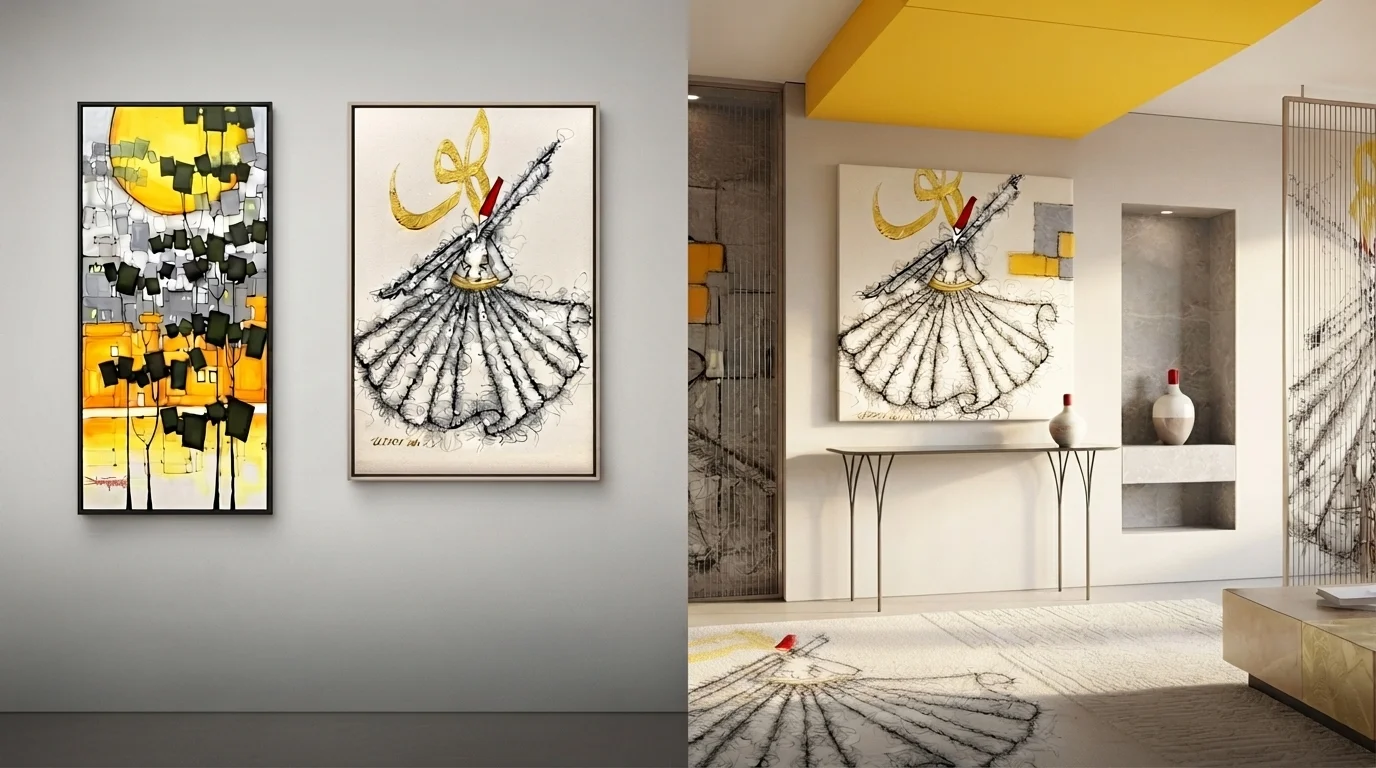
Minimalist wall art almost immediately reduces visual clutter. They minimize the details, so they provide a room with breathing space, instead of competing with furniture, lighting or other elements of decor. A single, placed minimalist wall painting can anchor a whole room without dominating it.
This style goes hand in hand with modern, Scandinavian and contemporary interiors that appreciate clean lines and functional beauty. These philosophies of design are in keeping with minimalist modern art, which also represents the ideals of simplicity and purpose, but in a different medium.
- Living room feature walls
- Bedroom accent walls
- Home offices and study corners
- Entryways and hallways
The Role of Framing in Contemporary Minimalist Art
Selecting a minimalist art frame is as important as the artwork itself. Thin, invisible frames in neutral tones such as black, white or natural wood are thought to work best. Thick or fancy borders can draw attention away from the simplicity the piece is supposed to express.
Proper framing maintains the visual balance of contemporary minimalist art and also protects the art itself. At Expert Framing Art Gallery, we often suggest slim metal or matte wood frames. This way, the painting stays the center of attention without adding unnecessary weight to the overall look.
How to Choose the Right Minimalist Painting for Your Space
Before you buy a minimalist painting you should consider the size of your wall, how much natural light the room has and the tones already in your furniture. If it is a big blank wall, you can go with a bigger statement piece, but smaller spaces are generally better with small art.
And mood matters too. Soft, muted minimalist abstract art works well in bedrooms or reading corners where calm is the priority, while bolder colour blocks can energise a living room or workspace. The end result feels purposeful, not random, because you are coordinating the painting with the purpose of the room.
- Measure your wall space before choosing size
- Match the existing decor with the color scheme
- Take into account the room’s natural and artificial light
- Choose a frame that complements the painting’s simplicity
Key Takeaways
Minimalist art teaches us that you don’t need to fill a space to make it whole. This style is defined by clean lines, open space and a muted color palette to help bring calm and clarity to any room. A small abstract work or a simple landscape can, in a way, transform a cluttered wall into an ordered one: the right painting.
Framing is a subtle but important part of this balance, and careful placement can help make sure that the artwork complements its environment, rather than takes over. In the end, minimalist art isn’t about what you bring into a room, but what you allow to remain, bringing a sense of purpose and peace to every corner of your home.
Frequently Asked Questions
Q. What defines minimalism art?
Minimalism art is defined by simple shapes, clean lines and a limited palette of colors. It eliminates additional details and targets basic shapes and open space. It gives a feeling of deliberate calmness to each element of the composition, not a colorful or busy one.
Q. What is meant by minimalist art?
Minimalism is an art style that uses simple forms, limited colors and empty space to achieve visual balance. The aim is to speak in simplicity, where more elements say more than a detailed, cluttered composition.
Q. What does minimalist art look like?
It is marked by clean lines, muted or monochromatic colors and large areas of open space. There is little decorative detail, the forms are often geometric or abstract, and the experience for the viewer is calm and uncluttered.
Q. How to understand minimalist art?
To understand minimalist art it is important to consider what has been left out as well as what has been included. Don’t expect to find hidden detail or realistic visuals. Look at how space, color, and shape work together to create balance.
Q. What are the characteristics of minimalist art?
Its main characteristics are simple shapes, a limited palette, geometric shapes and an emphasis on negative space. The texture is not bold but subtle and every element has a purpose in the overall composition.
Q. What is minimalism art?
Minimalism is a movement that values less detail. Developed in the mid-20th century, it still influences modern design. It’s all about clarity, it’s all about simplicity. It’s about the idea that less can say more than more ever could.
Q. Is minimalist art always abstract?
Not really. Most minimalist art is abstract, but minimalist ideas have been used in simplified landscapes and figurative art as well. It’s not lack of specific subjects, it’s restraint in color and detail.
Q. Can minimalist art work in small spaces?
Yes, minimalist art works very well in a small space. The simple design doesn’t clutter the vision, so rooms feel bigger and calmer, not cramped. This is why it works so well in apartments, studios and compact home office.
Q. What colors are commonly used in minimalist paintings?
Neutral are popular such as white, black, beige and soft grays, as well as muted blues or earthy tones They are colors that add a peaceful note and let the shapes and spaces of the composition be the focus of attention.
Q. How should a minimalist painting be framed?
Minimalist paintings should be in simple, thin frames in neutral colors, such as black, white or natural wood. Avoid heavy or expensive frames that detract from the crisp, clean look of the art.
Q. Is minimalist wall art suitable for office spaces?
Yes, minimalist wall art works well for offices. Its clean, uncluttered look promotes focus and productivity, so it is a popular choice for meeting rooms, reception areas and private workspaces where a distraction-free environment is beneficial.
Q. Does minimalist art fit traditional interiors too?
It can, especially if used sparingly as a point of contrast. A single minimalist piece in a traditional room will add a modern touch without clashing if the colour palette picks up on the existing tones of the decor and furniture.