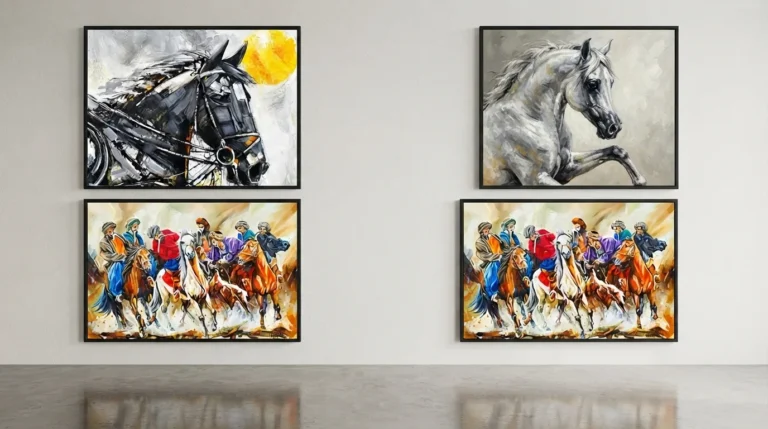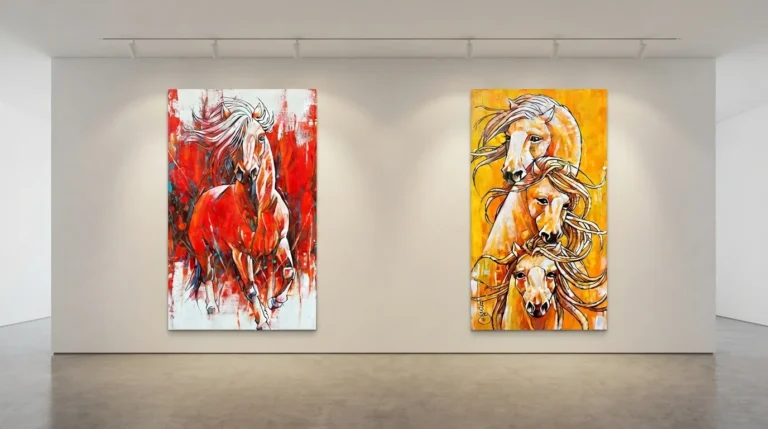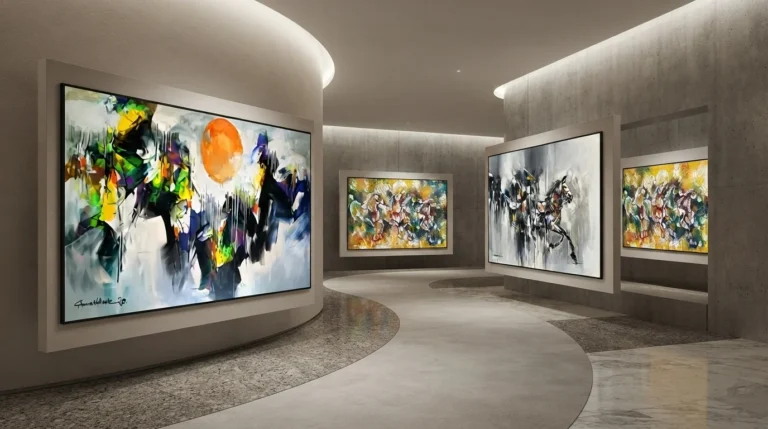
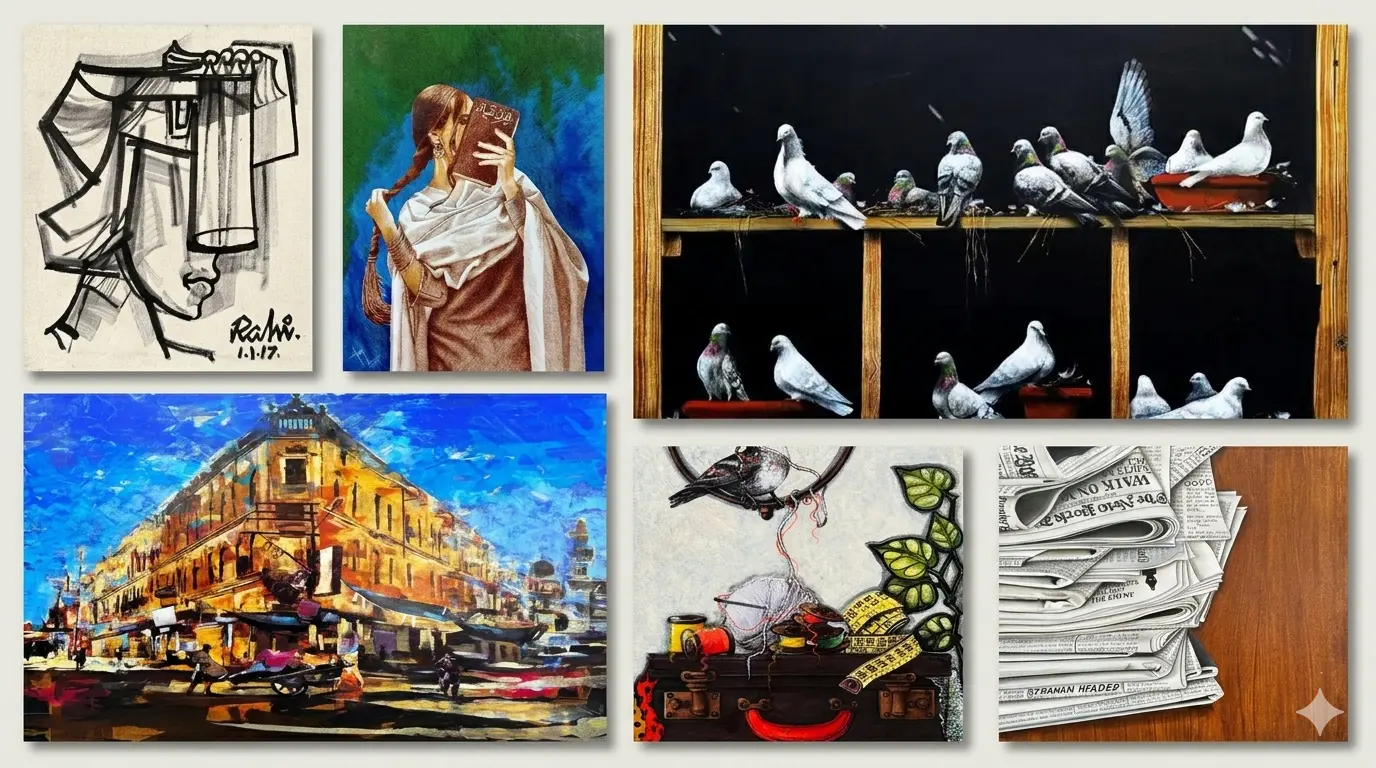

Some paintings stop you completely. You find yourself looking at a face, a hand, or a shaft of light falling across a table, and for a moment it feels less like a painting and more like a window. That is the power of realism art. It connects with viewers in a way that feels immediate and honest, and that quality has kept it relevant for well over a century. In this blog we explore what realism art actually is, the history of it, its unique qualities and why it still matters today for collectors and home interiors.
What Is Realism in Art and Where Did It Come From
The question of what is realism in art has a simple answer and a deeper answer. On the face of it, it means art that shows the world as it really looks. No serious exaggeration, no mythological themes, no imagined beauty. Just honest, careful observation of real people, real places and real life.
Realism as a formal movement emerged in France in the mid nineteenth century. Artists like Gustave Courbet were instrumental in the movement by carefully painting the subjects that academic art had ignored: ordinary workers, rustic landscapes and the everyday textures of life.
What Defines Realism in Art?
Realism in art is defined as a commitment to truthful representation. Realist artists studied their subjects carefully, and painted what they actually saw, not what they thought was noble or beautiful. This was quite radical at a time when academic painting was all about celebrating mythological scenes and heroic figures.
Central to this is the absence of imagination. A realist portrait doesn’t iron out wrinkles or fix posture. A realist landscape does not create bright light that does not exist. It shows the subject matter straight up and truthfully. And that honesty is where the emotional power is.
What Type of Painting Is Realism?
What kind of painting is realism? You can answer that question by seeing where it fits among other major styles. Unlike Romanticism, which displayed drama and emotion, Realism valued accuracy. Unlike Impressionism, which sought to capture light and atmosphere, the fleeting, Realism demanded precision and detail. Realism art is still based on the observable world, while abstraction moves away from recognizable forms altogether.
It is one part of the larger family of representational art but with a very particular commitment to truth over beauty or expression.
Realism Art History and Its Rise as a Major Movement
Realism art history starts in France in the 1840s and 1850s, a time of great social and political change. The industrial revolution was changing the shape of the cities. Class divisions were showing more clearly. The artists began to believe that painting had a duty to reflect real life, rather than escape into fantasy or mythology.
This change was represented in the figure of Gustave Courbet. His large-scale paintings of rural funerals, stone breakers, and working people were truly controversial, since they approached ordinary subjects with the same seriousness that had previously been reserved for history and religion.
How Realism Art Changed the Way Artists Saw the World
The shift that realism art history records was not just about technique. It was about what art was for. Realist artists argued that the world around them, with all its hardship, labor, and ordinary beauty, was worthy of serious artistic attention.
The notion spread throughout Europe and America. Artists such as Jean-François Millet painted peasant and farm workers with a quiet dignity. American realists such as Thomas Eakins brought the same pure honesty to portraiture and scenes of everyday urban life. The movement primarily changed what counted as a valid subject for fine art.
Realism Art Characteristics That Make It So Distinctive
The realism art characteristics that define the movement are similar across artists, periods and subjects. Together they form a visual language that feels centered honest, and close to lived experience in a way that other styles rarely do.
Knowing these characteristics also helps viewers and collectors identify real realist work, and understand what skill it actually takes to create.
What Are the 5 Characteristics of Realism Art?
The five core realism art characteristics are:
- Accurate observation with subjects painted as they actually appear rather than idealized or dramatized
- Attention to detail in surfaces, textures, light, and form that gives the work its convincing presence
- Natural light and color used as they exist in the real world rather than heightened for effect
- Everyday subject matter including ordinary people, working life, domestic scenes, and familiar landscapes
- Absence of idealization meaning figures and settings are shown honestly without flattering embellishment
What Are Common Themes in Realism Art?
What are common themes in realism art The movement’s core values. One of the most important themes was working-class life. The realist painters thought that the workers and the country folk were just as worthy of artistic treatment as nobles and historic figures.
Rural and agricultural landscapes appeared frequently, as did domestic interiors, market scenes, and portraits of ordinary people. Social commentary ran through much of this work. Realist painters were quietly making the case that real life, all its beauty, had a true dignity and should be seen clearly.
Realism Art Paintings That Defined the Genre
Realism art paintings cover a huge range of subjects and approaches, but they share a commitment to careful observation and honest representation. What makes them so compelling is not a technical display, but that the artist actually looked at his subject and rendered it faithfully.
The best realism art paintings hold up to close attention. The more you look the more detail you find. The more you feel you are looking at something real, not built up.
What Is an Example of a Realism Painting?
What is an example of a realism painting that most people would recognize? One of the best examples is Gustave Courbet’s The Stone Breakers (1849). It shows two workmen smashing rocks on a roadside with no heroics, no drama, no flattery. Just two tired men doing hard physical work, painted with complete honesty and remarkable technical skill.
The painting caused controversy when it was exhibited because it treated working-class labor as a worthy subject for serious art. That was the point, and it remains one of the most powerful statements in realism art history.
Famous Realism Paintings That Still Resonate Today
Famous realism paintings continue to appear in major museum collections around the world, and for good reason. They speak to experiences that do not date. Grief, labor, hunger, quiet domestic life, these subjects are as recognizable today as they were in the nineteenth century.
Millet’s “The Gleaners,” Courbet’s “A Burial at Ornans,” and Eakins’s “The Gross Clinic” are all works that still produce a strong emotional response in modern viewers. They feel immediate rather than historical.
Why Famous Realism Paintings Continue to Connect With Modern Viewers
Famous realism paintings are related because they show things people actually recognize. There is no mythological distance, no great symbol to break. You look at the face of a working man or a grieving relative and you just know what you are looking at.
The technical mastery involved also contributes to this. When a surface clearly catches the light, when a fabric folds naturally, when a face shows real age and experiences the work establishes a kind of trust between the painting and the viewer. That trust keeps the famous realism paintings relevant through generations.
Realism Artworks Across Different Subjects and Styles
Realism artworks are not only about social commentary or working-class subjects. This same commitment to honest observation extended to portraiture, landscape, still life, figure painting, and interior scenes. All subjects were taken seriously by realist artists.
Still life realism artwork demonstrates an incredible amount of attention to surface, texture and light. The realism of portraits is about personality and lived experience, not status or flattery. Landscape realism reflects weather, soil, and vegetation as they are, not as beautiful arrangements.
How Realism Artworks Capture Human Emotion and Everyday Life
The emotional power of realism artworks is not in the serious staging but in the quality of observation. A realist painter who studies a subject carefully will notice the small tension in the jaw, the fatigue in the eyes, the manner in which the hands are relaxed naturally. It’s the little things that make the work emotionally honest.
This is also what separates great realism artworks from good ones. Technical skill is necessary, but not enough. The artist must also really see their subject, and it is that quality of attention to which viewers respond most deeply.
Contemporary Realism Art and Its Place in the Modern World
Contemporary realism art is thriving. Realism is no longer a historical curiosity, it has become a major force in the modern art world, attracting serious collectors and commanding strong prices at the major auction houses. Today’s realist artists build on classical traditions while bringing personal narratives, modern subjects, and fresh technical approaches to the work.
Contemporary realism is a large field. Some artists paint with photographic precision. Others see with a more casual, more painterly eye. They share the same core commitment that defined the movement in the nineteenth century: to see with care and to paint with honesty.
How Contemporary Realism Art Differs From Classical Realism
Contemporary realism art differs from the classical origins of realism in some important ways. The topics are current. In the realist art of today urban life, personal identity, psychological states, and contemporary social experience, all appear in ways that nineteenth century painters could not have foreseen.
The technical approaches have also been extended. Modern realists use a wider range of materials and surfaces and many bring influences of photography, digital imagery and other contemporary visual cultures into their practice. The spirit is the same, but the application is all of the present.
Abstract Realism Painting and the Space Between Two Worlds
Abstract realism painting occupies an interesting position between two, at first glance, opposing approaches. It mixes close observation and familiar visuals with elements of abstraction, loose mark-making, or expressive color that extend beyond strict representation.
Artists working in this way create compositions that feel real but also have a visual energy and freedom that pure realism doesn’t always permit.
What Makes Abstract Realism Painting So Visually Compelling?
Abstract realism painting is compelling because of its tension. The viewer sees something that is real, but it feels as if it has been perceived by the artist, not recorded. It is in that space between recognition and translation that the work becomes really thought provoking.
The abstract realism painting provides collectors with the emotional honesty of realist observation and the visual energy of abstraction. It works very well in contemporary interiors because it combines both worlds.
Realism Art in Interior Design and Home Decor
Realism art paintings are an excellent choice for interior home design. The themes are popular and emotionally accessible. Their technical quality gives them a visual presence that attracts the eye and holds attention. A good realist piece adds real character to a room in a way that a standard print just can’t.
How to Choose Realism Art for Your Home in Pakistan
Start by selecting you really like in terms of subject matter realism art paintings for your home. A portrait is personal. A landscape opens a visual space. A smaller wall gets a still life to warm up and detail.
Scale counts too. Large realism art paintings are great focal points on main walls. Smaller pieces are ideal for a bedroom, a hallway or in a group. Expert Framing Art Gallery provides professional advice on framing and quality framing solutions that truly reflect the value of original realist works for framing and professional display guidance.
Frequently Asked Questions About Realism Art
Q. What Is Realism in Art?
Realism is an art movement that seeks to portray subjects as they are in everyday life, without vision or false representation. It emerged as a formal movement in mid nineteenth century France and remains one of the most practiced and collected directions in fine art today.
Q. What Defines Realism in Art?
What defines realism in art is its commitment to honest, accurate representation of the visible world. Realist works prioritize careful observation, natural light and color, and truthful portrayal of subjects over beauty, drama, or symbolic meaning.
Q. What Are the 5 Characteristics of Realism Art?
The five essential characteristics of realism art are accurate observation, detailed representation of surfaces and textures, natural light and color, everyday subject matter, and a complete absence of perfection or intense detail in the portrayal of subjects.
Q. What Are Common Themes in Realism Art?
Common themes in realism art are working-class and rural life, domestic interiors, agricultural labor, portraiture of everyday people, and social commentary. The subjects express the movement’s belief that everyday life was as deserving of serious artistic treatment as were historical or mythological subjects.
Q. What Type of Painting Is Realism?
Realism belongs to the tradition of representational painting, but is separated from romanticism, impressionism and academic painting by its strict commitment to honest observation as compared to drama, beauty, or atmospheric effect. It shows the world as it is.
Q. What Is an Example of a Realism Painting?
Gustave Courbet’s ‘The Stone Breakers’ (1849) is a perfect example of realism art. It shows two working men at work, with no idealization, no heroism, just honest, technically accurate observation of working class life that was really creative for the period.
Q. How Is Contemporary Realism Different From Classical Realism?
Contemporary realism art applies the same observational honesty as classical realism but to modern subjects, personal narratives, and contemporary life. Modern realists also bring updated technical influences into their work while maintaining the foundational commitment to truthful representation.
Q. What Is Abstract Realism in Painting?
Abstract realism painting combines recognizable imagery drawn from careful observation with expressive or abstract visual elements. It occupies a space between strict realism and abstraction, creating works that feel grounded in reality while carrying a dynamic and interpretive visual quality.
Q. Are Realism Art Paintings Worth Collecting?
Original realism art paintings by skilled artists are genuinely worthwhile acquisitions. Their technical quality, emotional depth, and strong visual presence make them enduringly valuable both as art objects and as interior statement pieces that reward long-term ownership.
Q. What Makes a Realism Artwork Feel So Lifelike?
The lifelike quality of strong realism artworks comes from the artist’s observational skill combined with technical mastery of light, texture, and surface rendering. When these elements work together convincingly, the work creates a sense of physical presence that feels genuinely close to real life.
Q. Can Realism Art Work in Modern and Contemporary Interiors?
Yes, realism art paintings work very well in modern interiors when chosen thoughtfully. A well-selected realist work adds warmth, depth, and human character to a contemporary space without feeling out of place or historically heavy.
Q. Where Can I Find Quality Realism Art in Pakistan?
Art lovers in Pakistan looking for original realism art can explore Expert Framing Art Gallery, which offers a curated selection of fine realist works across portraiture, landscape, and other subjects, along with professional framing services to present them at their best.
Final Thoughts
Realism art endures because it speaks directly to human experience. It does not ask viewers to decode symbols or understand historical context. It simply shows real life with honesty, skill, and quiet respect for its subjects. That quality never goes out of fashion.For collectors and homeowners in Pakistan, realism art paintings offer something genuinely valuable. They bring emotional depth, technical excellence, and lasting visual interest into any space. Whether you are drawn to classical works, contemporary realism art, or the expressive tension of abstract realism painting, there is a realist work that will suit your home and stay meaningful over time. Expert Framing Art Gallery is a trusted place to find and frame original realist pieces that genuinely deserve to be seen.