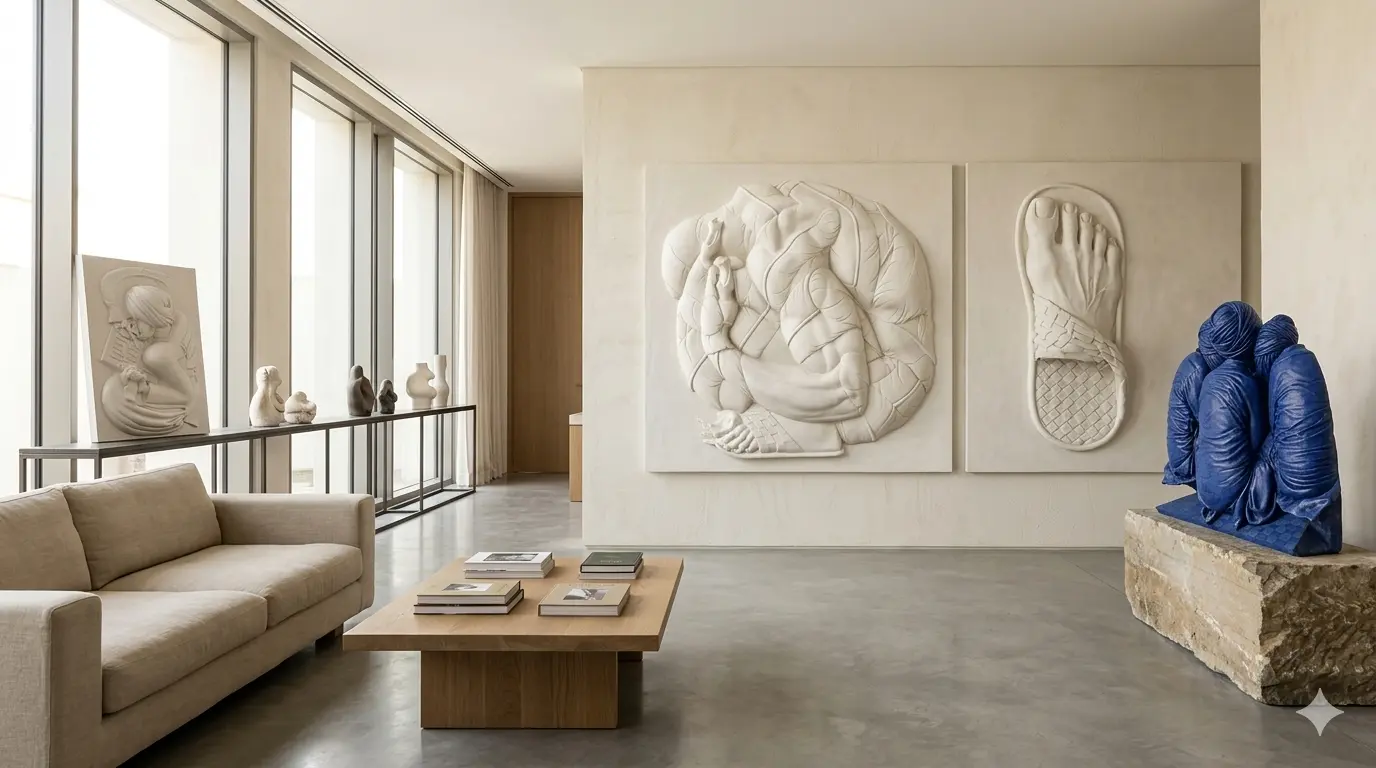

Sculpture art has a unique power that flat wall art simply can’t match. It has real space and real shadows and real attention. The missing piece to make your living room feel finished or add personality to your decor is a carefully selected sculpture. This blog explores how three-dimensional art enhances contemporary interiors, from large statement pieces to small shelf accents. Sculpture adds depth, character and meaning to every corner of your space, if you live in a cozy apartment or a large home.
What Is Sculpture Art and Why Does It Matter Today
Sculpture art is one of oldest art forms in history. It is basically the art of forming materials into three-dimensional shapes that communicate ideas, feelings and stories. Sculpture, on the other hand, exists in physical space with the viewer as opposed to a painting or print. They invite touch, encourage movement around them, and change appearance depending on light and angle.
Today, sculpture in interior design is more important than ever. Many modern homes are built with a focus on flat surfaces, clean lines and minimal decoration. In a sculpture, environment is given volume and texture. It breaks the visual monotony and adds a layer of artistic sophistication that is difficult to get anywhere else.
From Ancient Craft to Contemporary Expression
The evolution of sculpture has been a long journey. Ancient civilizations used it to honor the gods, recognize kings and tell stories of their civilization. The Greeks carved perfect in marble. The powerful Mughal rulers around the 16th century started hard stone and metal art that redefined South Asian mode of art and design.
Contemporary art sculpture is something else again. It’s about abstraction, mixed media and it’s about personal narrative. Today sculptors create in metal, resin, wood, concrete and even discarded objects. The result is a huge and exciting range of styles that can fit just about any interior from traditional to modern.
The Role of Art Sculptures in Interior Design
Art sculptures are not just objects for decoration placed to fill the empty corners. They are also key design elements that affect the feel and function of a space. A single sculpture can anchor a room, set a mood, or become a conversation piece that draws guests in.
The interior designer has made sculpture a structural tool. It is used to define areas in open spaces, to contrast smooth surfaces or to introduce organic or geometric forms that complement the architecture of a room. Art sculptures work with furniture, lighting and colour to create a complete and intentional environment.
How Sculptures Create Depth and Dimension in a Room
Fine art sculpture gives you something that no wall art can give you: real three-dimensional presence. A painting lies flat against a wall. A sculpture extends into the room. It adds depth with shadows that change during the day with the natural light.
This depth changes the visual experience of a space. A room with a central fine art sculpture feels more layered and energetic. The eye roams about the work, not on the work. Sculptures are natural focal points, too. They draw people’s attention to a specific area and give the room a sense of being put together carefully.
Choosing the Right Sculpture for Your Living Space
Choosing modern art sculptures for your home is more than just picking something that looks good on its own. the piece has to work in your particular space. Some practical considerations are as follows:
- Scale and proportion: A large open room can support a bold, tall sculpture. A compact space benefits from something smaller and refined.
- Compatible style: Abstract and geometric modern art sculptures can be a good fit for modern interiors. In traditional or varied spaces, figurative or organic shapes are good.
- Material and finish: A matte texture adds warmth. Polished metal or resin for a sleek modern touch.
- Colour coordination: Sculptures do not need to match your palette exactly, but they should feel connected to the tones in the room.
- Placement logic: Before making a final decision, check if the piece will rest on a surface, hang on a wall or stand on the floor.
Sculpture Wall Art as a Statement Piece
Sculpture wall art is one of the fastest growing trends in interior design. Wall sculptures add a three dimensional quality to vertical spaces, and are a departure from traditional framed art. They give texture, shadow and movement to walls that might otherwise seem flat and uninspired.
There are various materials in this category. Wall art sculptures are in metal, carved wood, woven fibers, ceramic and mixed media. The materials create different moods. A raw metal wall piece gives an industrial and bold feel. A carved wood panel brings in warmth and character. An elegant and artistic refinement is provided by a ceramic wall sculpture.
How to Style Sculpture Wall Art in Modern Homes
Styling sculpture wall art requires thoughtful placement and an eye for balance. Here are some approaches that work well in modern homes:
- Solo statement: Hang one large sculpture wall art on a blank feature wall. Let it be itself, with nothing else around it.
- Grouped arrangement: Make a cluster of three to five smaller wall sculptures. Combine shapes and depths for visual interest.
- Mixed media wall: Combine a wall sculpture with framed prints or a mirror for a layered gallery display
- Height and eye level: Hang wall sculptures at eye level or slightly above. Avoid placing them too high or too low.
- Lighting support: Install a wall light or spotlight nearby to improve the shadows and texture the sculpture creates.
Exploring Sculpture Artwork Styles for Every Aesthetic
Sculpture artwork has many and varied visual styles. These styles can help you to select things that really suit your home, and not just fill places with stuff.
Non-figurative abstract sculptures represent emotion and energy, using form without representing anything specific. These work well in minimalist and contemporary internal design. Geometric sculpture is characterized by edges, straight lines and a mathematical approach. These work well in modern and industrial interiors. Figurative sculptures represent the human form or other more easily recognizable object. They add a classic refining quality to both traditional and modern interiors. Organic sculpture artwork draws from natural shapes including flowing curves, botanical forms, and fluid lines. These add softness to sharp, angular spaces.
What Are the 7 Elements of Art Sculpture?
Sculpture artwork as a discipline is built on seven core artistic elements. These elements guide how a sculpture is created and how it is experienced:
- Form: The three-dimensional shape and volume of the sculpture.
- Space: The place that the sculpture occupies and the space created around it.
- Texture: The texture of the material, smooth, rough, carved, cast etc.
- Line: The visual direction and movement created by edges and contours.
- Shape: The two-dimensional edge or outline that defines the overall visual form of the piece.
- Value: The light and dark contrast of a surface to create depth and contrast.
- Colour: The natural tone of the material or applied colour that affects the mood of the piece.
Miniature Art Sculpture for Compact and Modern Living
Not every home can fit a large sculptural installation. This is one of the reasons for the popularity of miniature art sculpture. These smaller pieces have artistic impact without taking up a lot of physical space. They look nice on shelves, side tables, window sills and display cabinets.
Miniature art sculpture is especially relevant in urban Pakistan where the rise in apartment living is felt. The most interesting object in a room may be a small bronze figure, a soft shape in ceramic, a polished stone.
Big Impact in Small Forms: Why Miniature Sculptures Work
Miniature art sculpture is just as powerful a piece if it is small or large. Given what it is, how it is made and where it is placed (and the surroundings), it can be just as in your face if it’s a small piece of art on a tidy shelf with simulated natural light.
Small miniature art sculptures attract closer engagement, too. The viewers get closer to see the fine detail and appreciate the skill of making something expressive at such a reduced scale. Sometimes there’s a connection that larger works miss.
Sculpture Art in Pakistan: A Growing Design Movement
The art of sculpture has been much appreciated in Pakistan during the last decade. Interior designers and homeowners in Pakistan are now not only filling their homes with paint and wallpaper but also trying to give their interior an artistic style. And sculpture is an important part of that conversation.
This trend is part of a larger cultural movement to invest in original and fine art as part of home design. In cities like Karachi, Lahore and Islamabad, more and more galleries, design studios and collectors are considering sculpture art in Pakistan as a serious interior element, not a luxury meant for museums.
Where to Find Fine Art Sculpture in Pakistan
The choices for Pakistani readers who are seeking fine sculpture art has improved a lot in Pakistan. Sculptures by local artists and international artists are now being displayed in local galleries and specialist framing studios. One such destination is Expert Framing Art Gallery that offers fine art sculpture as well as professional framing services that help present artwork at its best.
When buying a sculpture of fine art sculpture locally, look for galleries that provide authentic sculpture, a broad selection of materials and styles and knowledgeable staff to advise you on choosing the right sculpture for your space and decor.
What Is the Meaning of Sculpture Art in a Modern Home?
Sculpture art is also meaningful and expressive. In a modern home a carefully selected sculpture artwork tells something about the people who live there. It’s a question of taste and values, cultural connection, personal history.” A home with sculpture feels intentional and lived in, not generic and staged.
Sculpture has symbolic value, too. A contemporary art sculpture inspired by Pakistani craft traditions connects to its cultural heritage. An abstract form may represent a personal belief or emotional experience. An organic sculpture might express a love of nature and natural beauty.
This is what separates sculpture art from ordinary decor. It does not just fill a space. It speaks within it.
Frequently Asked Questions About Sculpture Art
Q: What Is Sculpture in Art?
Sculpture art is a three-dimensional art form made by shaping, carving, casting or assembling materials. It has a physical presence, and can be looked at from different perspectives. Sculpture is a three-dimensional art. It has real volume, and relates to the environment around it in terms of form, texture, and shadow.
Q: What Is the Meaning of Sculpture Art?
Sculpture speaks to us with an aesthetic message of communication. It is a physical form that expresses ideas, emotion, cultural values and personal stories. At home it reflects the owner’s taste and point of view. Each piece visually speaks to something that gives intention and contributes to the space it occupies.
Q: What Are the 7 Elements of Art Sculpture?
There are seven elements of sculpture artwork, which are form, space, texture, line, shape, value, and colour. These combine to give the look, the feel, and the statement of a sculpture. All sculpture, in any style or of any material, is based on the interplay of these seven basic artistic principles.
Q: What Types of Sculpture Art Work Best in Modern Homes?
Abstract, geometric, and minimalist modern art sculptures look best in contemporary interiors. These styles work well with clean lines, neutral colour schemes and open spaces. Organic, figurative art sculptures also work well in spaces with a warmer or more unique design character.
Q: What Materials Are Commonly Used in Fine Art Sculpture?
Fine art sculpture is most often made of bronze, marble, wood, resin, ceramic and welded metal. Each material provides a different visual and tactile experience. Bronze and marble are traditional and heavy. Resin provides detailed and lightweight shapes. Wood adds a warmth. Metal adds an industrial feel to contemporary spaces.
Q: How Do I Choose the Right Sculpture Artwork for My Space?
Begin with the size of your room and the style of your existing furniture. Choosing sculpture artwork that blends in or reflects the style of your decor; not that competes. Remember the material finish, colour tone and placement surface. Everything should work together.
Q: Can Miniature Art Sculpture Make a Strong Visual Impact?
Sure. Carefully placed miniature art sculpture makes a powerful visual statement. A small, finely crafted piece on a clean shelf or styled surface will naturally draw the eye. The effect is heightened by the focused lighting. And size is no barrier to artistic presence, if placement and quality are properly attended to.
Q: What Is the Difference Between Contemporary and Modern Art Sculptures?
Modern art sculptures are works created between the 1860s and 1970s and are characterized by experimentation and abstraction. Contemporary art sculpture is work made from the 1970s onward, often more conceptual and culturally engaged. In practical terms, Contemporary art sculpture is generally more experimental with materials and ideas.
Q: Is Sculpture Wall Art Suitable for All Interior Styles?
Yes. Sculpture wall art easily blends into minimalist, traditional, industrial and unique interior spaces. The trick is to choose the right material and form for the surrounding style. A carved wood panel fits in a warm traditional interior. A smooth metallic sculpture wall art piece suits a sleek modern space. This makes it very flexible and it comes in various options.
Q: Where Can I Find Quality Sculpture Art in Pakistan?
Quality sculpture art in Pakistan is available through curated galleries and specialist art spaces in major cities. Expert Framing Art Gallery is a trusted destination for those seeking fine art sculpture alongside professional framing. It offers a considered selection suitable for both new collectors and experienced art buyers.
Final Thoughts
Sculpture art is an example of art with the ability to change the way a space feels more so than most others. It adds dimension, emotion, and artistic intention to something that might otherwise be dull, flat, or unmemorable. Whether you choose a large floor sculpture for your living room, a miniature art sculpture for your shelf, or a textured sculpture wall art piece for the hallway, the perfect sculpture changes the way in which you experience a living space.Fine art sculpture has never been more accessible to Pakistani’s. Design culture is changing and more people are seeing the value in investing in original sculpture artwork. A beautifully crafted art sculpture is not just a purchase. It is a long-term presence in your home that grows more meaningful over time. Choose with care, place with intention, and let sculpture art do what it does best: bring life to the spaces around you.