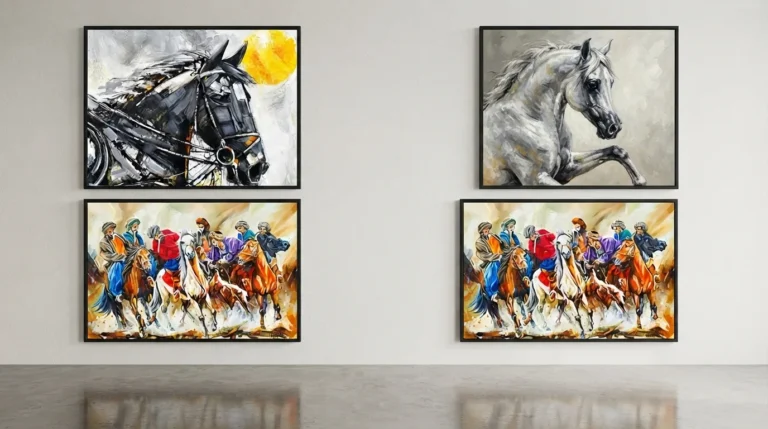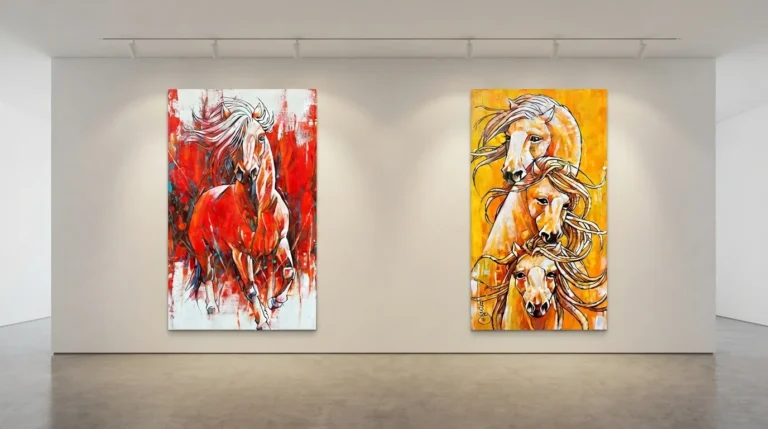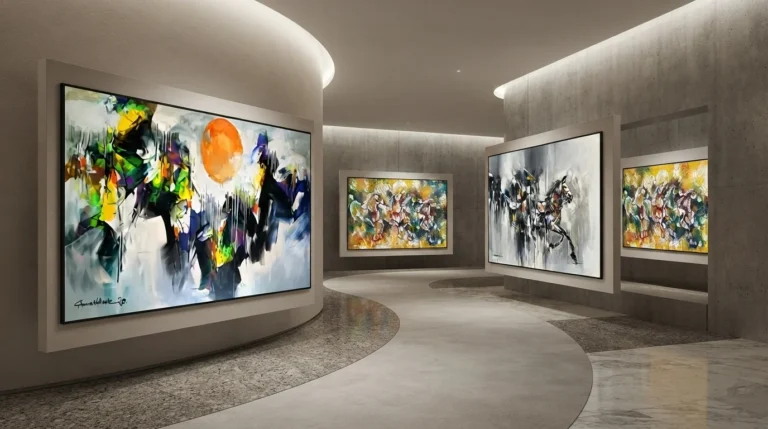
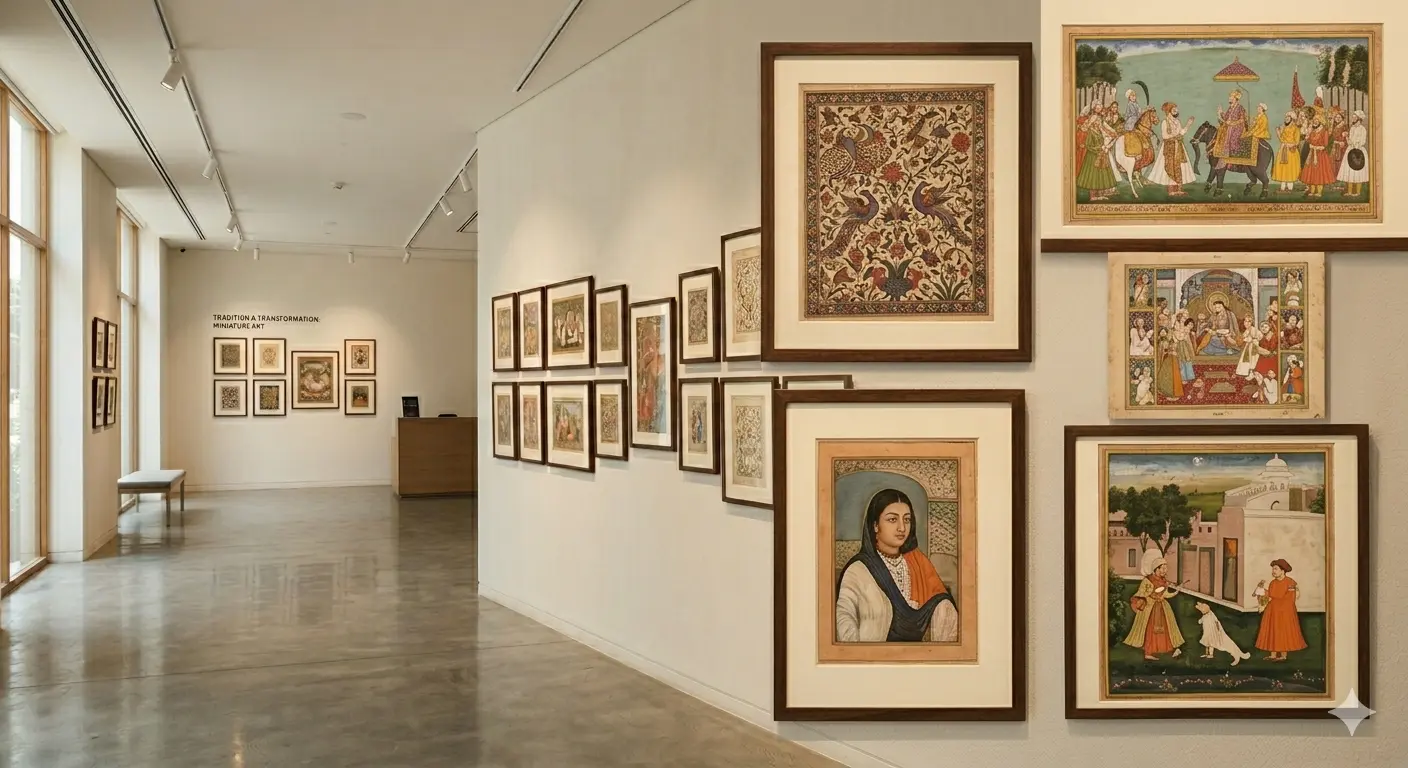

Some of the most powerful artwork in history fits in the palm of your hand. That is the quiet miracle of miniature art.
These tiny paintings carry extraordinary detail, rich storytelling, and centuries of tradition within a space smaller than a notebook page. Miniature art has fascinated collectors, historians, and everyday art lovers for hundreds of years and continues to do so today.
This blog covers what miniature art means, its history, different styles, techniques, and why it remains deeply relevant for Pakistani homes and collectors right now.
Miniature Art Meaning: More Than Just Small Paintings
When most people hear the word miniature, they think small. But miniature art meaning goes far beyond size.
Miniature art refers to a specific tradition of painting that combines extreme detail, precision, and storytelling within a compact format. A small painting with little detail is just a small painting. A true miniature carries an entire world within it.
The difference lies in the level of craft involved. Every line, every shadow, and every color choice in a genuine miniature is intentional and very precise.
What Qualifies as a Miniature Art Painting
A miniature art painting is defined by several specific characteristics:
- Size: Traditional pieces are typically 3 to 6 inches in their largest dimension
- Detail level: The amount of detail relative to the size is what sets it apart from regular painting
- Technique: Fine brushwork, often using single-hair brushes, applied in thin careful layers
- Surface: Traditionally painted on ivory, wasli paper, vellum, or fine board
- Narrative density: A great deal of visual information compressed into a very small space
Miniature Art History: How This Tradition Traveled the World
Miniature art history starts in Persia, where artists used tiny illustrations to light up manuscripts. These works decorated the pages of sacred texts and royal poetry collections with a level of beauty and precision that was considered a form of devotion.
From Persia the tradition spread east through trade routes and royal connections. Mughal emperors invited the Persian artists who came to their South Asian courts and this action caused big growth in a miniature art history which is considered as one of finest periods known.
There was also another kind of similar custom appeared in Europe through illustrations in the medieval manuscripts then continued with portrait miniatures, small painted portraits which were usually given among the nobility and royal people all over Europe.
Mughal Miniature Paintings and Their Place in South Asian Heritage
Mughal miniature paintings represent a pinnacle of South Asian artistic achievement. Emperor Humayun started the tradition by bringing Persian master painters to his court. His son Akbar greatly expanded the royal studio, and hundreds of artists worked together to make beautiful illustrated manuscripts.
Mughal miniature paintings showed scenes from epic literature, battles, wildlife, court life, and portraits. Artists like Ustad Mansur became legendary for their ability to paint animals with scientific accuracy at tiny scale. Bishan Das was celebrated for his portraits that were so true to life that the people in them couldn’t deny how much they looked like them.
This is not old foreign history for Pakistani readers. This tradition is part of the shared cultural heritage of the subcontinent and its influence is visible in Pakistani art institutions and artists working today.
How Miniature Painting Traditions Evolved into Modern Practice
The traditional miniature painting practice survived colonial periods and changing art movements through the strength of dedicated institutions. In Pakistan, the National College of Arts in Lahore played a central role in keeping this tradition alive and then pushing it forward.
Modern miniature painting looks very different from Mughal miniature painting, but it still uses the same basic techniques. Contemporary Pakistani artists work on traditional surfaces with traditional tools but explore themes of identity, politics, gender, and contemporary life. The miniature format has become a vehicle for very modern conversations.
The Different Styles of Miniature Paintings You Should Know
Miniature paintings is not one single style. It is a rich family of related traditions from different cultures:
- Mughal: Rich color, fine detail, blend of Persian and Indian visual culture. Court scenes, wildlife, and portraiture are most common.
- Rajput: Like Mughal, but with more Indian folk art in it. More stylized human figures and bolder colors.
- Persian: Very intricate, with detailed borders, gold accents, and scenes from classical poetry. A lot of the time, they take place in perfect garden settings.
- European portrait miniature: Small oval portraits painted on vellum or ivory. Given as personal gifts between royalty and the upper class.
- Contemporary Pakistani: Old methods used on new topics. Often involved in politics and society, but with a strong visual connection to the miniature tradition.
Miniature Landscape Paintings: Capturing an Entire World in Small Scale
Miniature landscape paintings are among the most technically challenging works within the tradition. Capturing mountains, rivers, trees, and sky with convincing depth and atmosphere in a space of just a few inches requires extraordinary skill and patience.
In Mughal and Persian traditions, landscape appeared as background settings for court scenes and narrative compositions. Contemporary Pakistani artists have elevated miniature landscape paintings into standalone works where the natural world itself becomes the subject.
These pieces usually have layered atmospheric perspective, fine details of plants, and a sense of light and mood that seems impossible given how small they are.
Miniature Oil Painting vs Miniature Watercolor Paintings: Key Differences
Here is a clear comparison to help you choose between the two mediums:
Miniature oil painting:
- Richer and deeper color quality
- More time needed for each layer to dry
- Lasts longer and is more durable over time
- Better for formal and detailed portraits or emotional subjects
Miniature watercolor paintings:
- Soft transparent quality of color
- Faster layering process
- Lighter and more soft visual result
- Better suited to landscape, floral, and atmospheric subjects
Both mediums produce extraordinary results in skilled hands. Your choice should depend on the subject matter and the mood you want the piece to carry in your space.
The Technique Behind Miniature Artworks: How It Is Actually Done
Miniature artworks take far longer to complete than their size suggests. It takes a lot of time and effort, and you need to be very patient and have stable hands.
Artists use brushes so fine that some contain only a single hair. Magnifying glasses are used throughout the painting process to work at a level of detail invisible to the naked eye. Natural pigments ground from minerals and plants are mixed carefully and applied in thin transparent layers that build up gradually over days or weeks.
The surfaces used in miniature painting are also specific. Wasli paper, a specially prepared layered handmade paper, is the most common surface in the Pakistani tradition. Ivory was historically used in European portrait miniatures. Modern artists also work on fine illustration board and primed canvas.
What Are the Main Features of Miniature Painting That Set It Apart
Here are the defining features of miniature artworks that every collector and art lover should know:
- Fine single-hair brushwork: Lines so thin they are measured in fractions of a millimeter
- Color like a jewel: Pigments made from minerals give miniature painting a bright quality
- Gold leaf detail: Used for decorative borders, architectural elements, and divine light
- Intricate borders: Decorative frames inside the work itself that are often as detailed as the main image
- Narrative density: Multiple scenes or story elements compressed into a tiny space
- Layered technique: Paint built up in transparent layers over multiple sittings
Miniature Art in Pakistan: A Living Tradition With a Modern Voice
Miniature art in Pakistan is not a museum piece. It is a living and growing creative tradition with a strong contemporary voice.
The National College of Arts in Lahore has trained generations of miniature painters who have taken the form into international galleries. Artists like Imran Qureshi and Aisha Khalid have shown miniature art at the Venice Biennale and in major galleries across Europe and North America. They brought the Mughal tradition into conversation with contemporary global art without losing its roots.
People all over the world and in Pakistan are buying more and more modern miniature paintings by Pakistani artists. Interior designers in Pakistan are also using these works as sophisticated statement pieces in drawing rooms, studies, and private offices.
How to Display Miniature Artworks in a Pakistani Home
Because miniature art is so small, how you show it off is very important. One small figure lost on a big wall won’t make any difference at all.
Here are practical tips for displaying miniature art in Pakistani homes:
- Group multiple pieces together on one wall to create visual weight and a gallery feel
- Use frames that are set deeply to protect the soft surface and make small works look bigger
- Light the pieces properly with directed picture lighting so the detail is visible
- Pick small, private rooms like a study, bedroom, or entrance hallway instead of big, open areas.
- Keep surrounding decor minimal so the detail in the paintings is not competed with
Expert Framing Art Gallery specializes in framing miniature artworks with the care and precision these gentle pieces demand. The right frame protects the work and presents it in a way that does justice to the extraordinary craft involved.
Frequently Asked Questions About Miniature Art
Q: What is miniature art?
Miniature art is a tradition of highly detailed small-scale painting rooted in Persian, Mughal, and European history. It is defined by precision and storytelling, not just small size. The ratio of detail to size is what makes it so special.
Q: What is miniature painting?
Miniature painting is the specific practice of creating small detailed works using fine brushes, natural pigments, and prepared surfaces like wasli paper or ivory. It requires extreme patience and builds up in thin careful layers over multiple sessions.
Q: What is Mughal miniature painting?
Mughal miniature painting is a style of painting that was developed in the courts of Mughal emperors. It combines Persian and Indian visual styles. It showed court scenes, animals, and portraits in great detail, and it is thought to be a cultural treasure of South Asia.
Q: What is the origin of miniature art?
Miniature art started in Persian manuscript lighting and then the royal support made it come to an India, mainly through a Mughal palace and spread around the Europe from medieval manuscript customs. For more than a thousand years people kept doing this art form without stopping.
Q: What size is miniature art?
Traditional miniature art pieces are typically 3 to 6 inches in their largest dimension. Modern works can be slightly larger but are still defined by their exceptional detail relative to their size.
Q: What are the main features of miniature painting?
The main features of miniature painting are the fine brushwork with single hairs, the jewel-like mineral pigments, the gold leaf details, the complicated decorative borders, the storytelling through pictures, and the layered technique that is built up over several sittings.
Q: How is miniature painting done?
The artist prepares the surface, sketches lightly in pencil, then builds up natural pigment in thin transparent layers using fine brushes. A magnifying glass is used throughout. Gold detail and border work are added last.
Q: What are miniature paintings known for?
Miniature paintings are famous for their amazing detail, bright colors, ability to tell stories about culture, history of royal support, and high value as collectibles. They reward close looking in a way that few other art forms can match.
Q: Are miniature paintings popular today?
Yes. Pakistani artists, like Imran Qureshi, have shown small paintings at the Venice Biennale. There is a growing market for collectors in Pakistan, and interior designers are using these works more and more as stylish statement pieces.
Q: What is the difference between miniature oil painting and miniature watercolor paintings?
Miniature oil painting has more depth and lasts longer. Miniature watercolor paintings have soft, transparent colors and a lighter feel. Oil paints are good for dramatic subjects, while watercolors are good for landscapes and flowers.
Q: Where can I buy original miniature art in Pakistan?
Expert Framing Art Gallery in Karachi offers original miniature paintings in traditional and contemporary styles with professional framing suited to small-scale works and delivery across Pakistan.
Discover Original Miniature Art at Expert Framing Art Gallery
If you are looking for original miniature art that is genuinely crafted and properly presented, Expert Framing Art Gallery is the right place to start.
Their curated collection includes traditional Mughal-inspired miniature paintings, contemporary Pakistani miniature artworks, and pieces across a range of styles and price points. Framing small-scale works requires specific expertise and Expert Framing Art Gallery brings that knowledge to every piece they handle.Browse the collection today or visit the Karachi gallery to find the miniature art your space deserves.