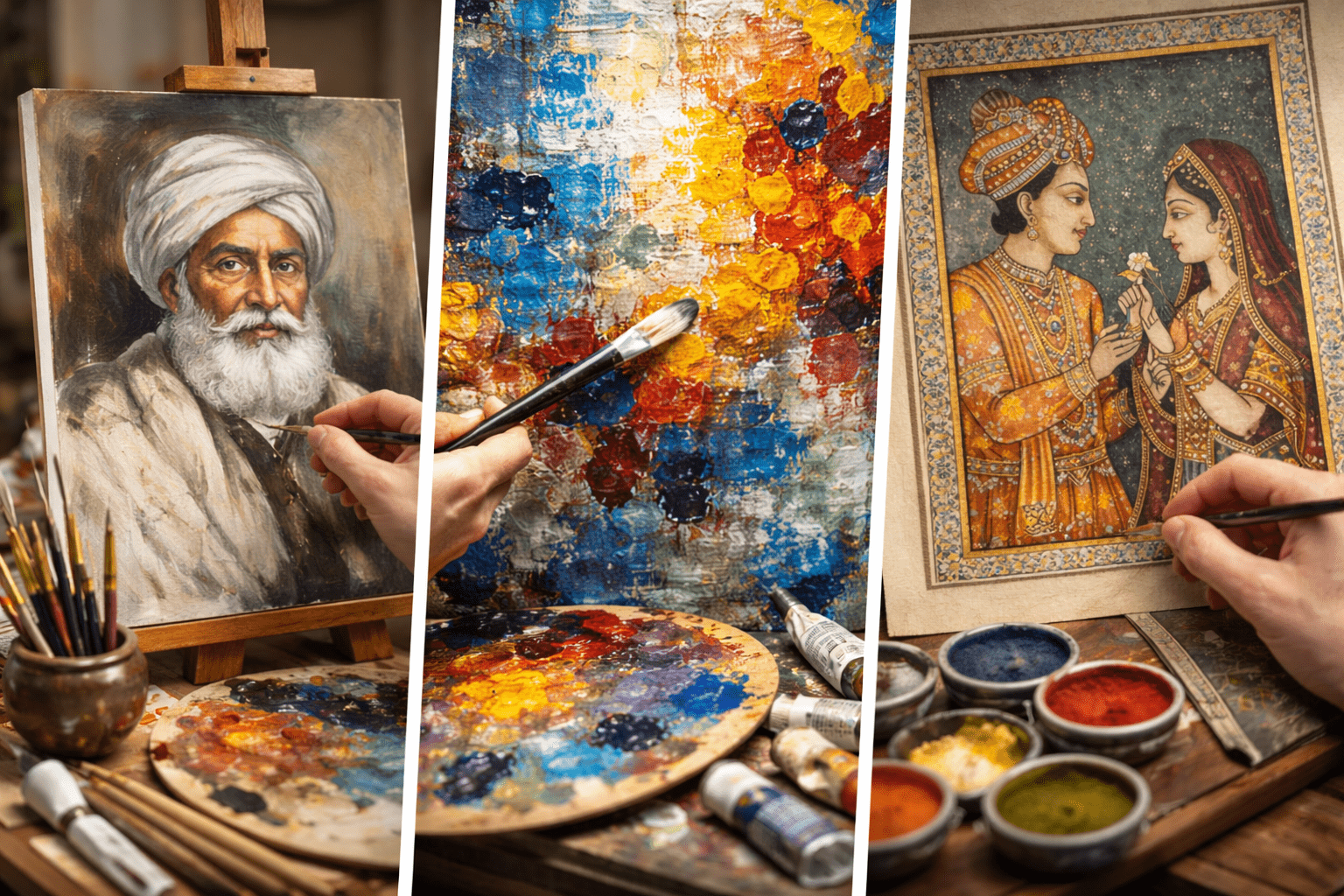

A simple guide for art lovers, collectors, and beginners — exploring the world of Art Gallery styles from classical traditions to modern and digital art.
Painting styles are the foundation of all visual art. Every painting you see — whether hanging in a gallery, printed on a wall, or displayed online, belongs to a style. Understanding different styles of art painting helps you appreciate what you are looking at, make better choices when buying art, and connect more deeply with artists and their work. This guide covers the most important painting styles in simple, clear words.
What Are Painting Styles in Art?
Definition of Painting Styles
A painting style is the overall approach an artist uses to create their work. It includes the techniques, colors, brushwork, subjects, and emotional tone of the painting. Just like people have different ways of speaking or writing, artists have different ways of painting — and these differences create distinct styles.
Why Painting Styles Matter in Art History
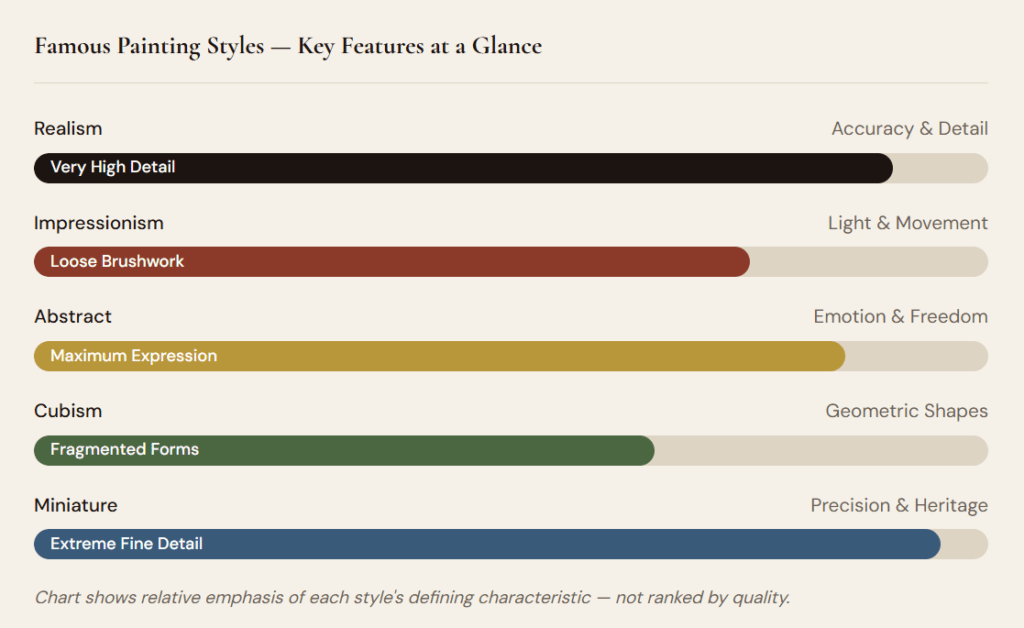
Every great painting belongs to a style that tells us something about the time and place it was made. Famous painting styles like Realism, Impressionism, and Cubism were not just artistic choices — they were responses to the world around the artists. Knowing the style helps you understand the story behind the work.
How Painting Styles Reflect Culture and Time
In South Asia and Pakistan, painting styles like miniature art carry hundreds of years of history. In the Western world, styles like Baroque and Impressionism reflected major social changes. Art is always a mirror of the society it comes from — and the style of a painting is the clearest window into that world.
Major Styles of Art Painting Explained
Evolution of Painting Styles Over Time
Painting styles did not appear overnight. Each one built on what came before — sometimes by following traditions, sometimes by breaking them completely. Here is a simple timeline of how the major styles of art painting developed through history:
Renaissance & Classical Art – Realistic human figures, religious subjects, perfect proportions. Artists studied nature closely.
Baroque Style – Drama, deep shadows, and strong light contrasts. Very emotional and theatrical paintings.
Realism & Impressionism – Realism showed everyday life honestly. Impressionism captured light and movement with loose brushwork.
Cubism & Expressionism – Objects broken into shapes. Emotions shown through distorted forms and bold colors.
Abstract & Modern Art – No real objects. Pure expression through color, shape, and texture. Art became about ideas and feelings.
Digital & Mixed Media – Art created with software, tablets, and new technology. Digital painting styles are growing fast worldwide.
Realism Painting Style – Art That Mirrors Reality
What Is Realism in Painting?
Realism is one of the most straightforward painting styles to understand. It shows the world exactly as it looks — real people, real places, real objects. There is no exaggeration, no fantasy, and no distortion. What you see is what it is.
Key Characteristics of Realism Art
- Accurate proportions and lifelike figures
- Detailed textures — skin, fabric, wood, water all look real
- Natural lighting that mirrors how light falls in real life
- Everyday subjects — ordinary people, landscapes, still life
- Neutral and natural color palettes
Realism vs Abstract — Side by Side
| Feature | Realism Painting Style | Abstract Painting Style |
|---|---|---|
| Subject Matter | Real objects, people, places | Shapes, colors, feelings — no real objects |
| Technique | Precise, detailed brushwork | Free, expressive brushwork |
| Purpose | Show truth and accuracy | Express emotions and ideas |
| Colors Used | Natural, lifelike colors | Any colors — emotional or symbolic |
| Viewer Response | Easy to understand immediately | Requires personal interpretation |
| Best For Home | Portraits, landscapes, still life | Modern, minimalist, contemporary spaces |
Abstract Painting Styles – Expression Beyond Reality
Understanding Abstract Art
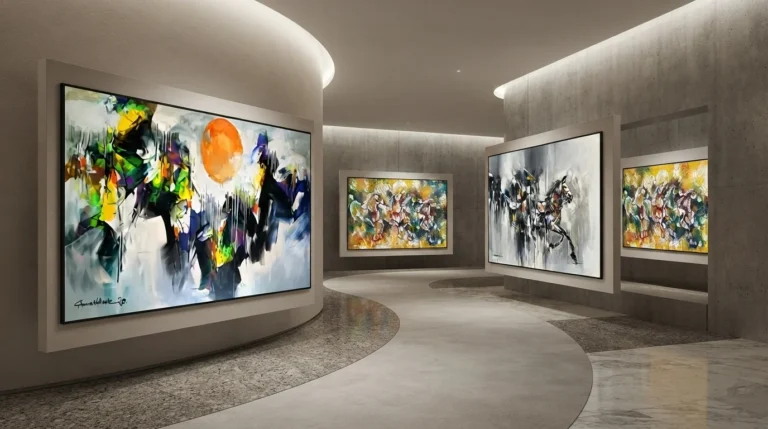
Abstract painting styles do not show real things. Instead, they use shapes, lines, colors, and textures to express emotions, ideas, or energy. When you look at an abstract painting, your own feelings and thoughts become part of the experience. Two people can look at the same abstract painting and see completely different things — and both are right.
Use of Color, Shape, and Emotion
In abstract art, colors carry meaning. Blue can mean calm or sadness. Red can show passion or anger. Shapes — circles, sharp angles, flowing curves — all communicate something different. The artist is not painting a picture of the world. They are painting a feeling about it.
Why Abstract Art Appeals to Modern Collectors
Abstract art is very popular with modern collectors and interior designers because it works with almost any space. It adds energy and visual interest without competing with furniture or architecture. It is personal — and that is exactly why people love it.
Geometric Abstract
Clean shapes, sharp lines, and precise patterns. Very modern and architectural.
Lyrical Abstract
Soft, flowing forms. Feels musical and emotional. Often uses gentle color blends.
Expressionist Abstract
Bold, energetic marks. Strong emotion. Often uses thick layers of paint (impasto).
Color Field
Large areas of flat, solid color. Simple but powerful. Very calming or very intense.
Miniature Painting Style – A Timeless Tradition
History of Miniature Painting
Miniature painting is one of the oldest and most respected painting styles in South Asian art history. It originated in the Mughal courts of the 16th century and was used to illustrate manuscripts, record royal events, and tell stories. These paintings are small in size but enormous in detail — every tiny stroke carries meaning.
Techniques and Materials Used
Traditional miniature painters use very fine brushes — sometimes made from just a few hairs — and natural pigments on paper or ivory. The level of detail in a miniature painting is extraordinary. Artists may spend weeks on a piece that fits in the palm of your hand.
Miniature Art in Pakistani Culture
In Pakistan, miniature painting is a living tradition. The National College of Arts (NCA) in Lahore is globally recognized for training contemporary miniature artists who blend the ancient style with modern themes. Pakistani miniature art is now collected internationally and represents a powerful link between tradition and the modern art world.
Did You Know? Pakistani miniature artists like Imran Qureshi and Shahzia Sikander have shown their work in major international museums and galleries, bringing global attention to this centuries-old painting style.
Famous Painting Styles That Shaped Art History
From Impressionism to Cubism
Some famous painting styles changed the entire direction of art. Impressionism — started in France in the 1870s — broke the rule that paintings must look photographic. Artists like Monet painted light and movement with loose, quick brushstrokes. Cubism, developed by Picasso, broke objects into geometric shapes viewed from multiple angles at once. These were not just new styles — they were revolutions.
Famous Artist Painting Styles and Their Influence
How Artists Develop a Unique Style
No artist wakes up with a fully formed style. It develops slowly through years of learning, failure, experimentation, and observation. Famous artist painting styles often combine multiple influences — a painter might study classical realism but gradually move toward abstraction as their ideas evolve. Style is always personal and always growing.
Signature Techniques of Renowned Artists
Van Gogh used swirling, thick brushstrokes with bold yellows and blues. Rembrandt mastered dramatic light and shadow in portrait painting. Frida Kahlo mixed personal symbolism with folk art traditions. Each of these artists had a style so recognizable that you can identify their work in seconds — even without reading the name on the label.
Identifying an Artist’s Style
When looking at a painting, ask yourself: How is the paint applied — smooth or textured? Is the subject realistic or distorted? What colors are used and why? Does it feel calm or intense? These questions help you understand the artist’s style and what they were trying to communicate.
Modern Painting Styles in Today’s Art World
What Defines Modern Painting Styles?
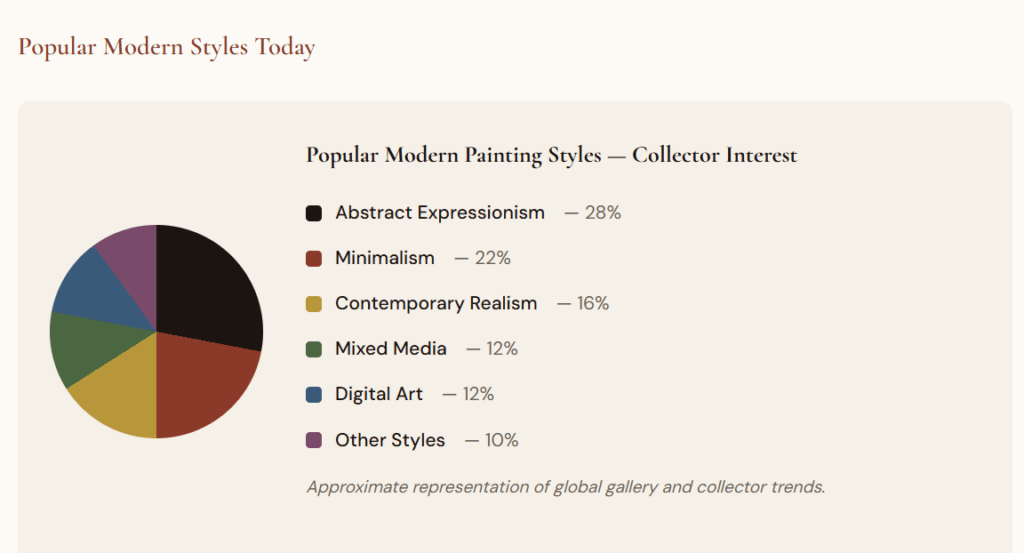
Modern painting styles are less about what you paint and more about why and how. Modern art questions tradition. It experiments with materials, ideas, and meanings. A modern painting might be a single color on a large canvas — and that is entirely intentional. The idea is as important as the image.
Popular Modern Styles Today
Modern Paintings for Homes and Galleries
Modern paintings have become very popular for home interiors in Pakistan. Abstract canvases, minimalist landscapes, and mixed media pieces work beautifully in both traditional and contemporary homes. They add depth, personality, and a sense of sophistication to any room.
Digital Painting Styles – The Future of Art
What Is Digital Painting?
Digital painting styles are created using software like Photoshop, Procreate, or Clip Studio Paint instead of physical paint and canvas. The artist uses a digital pen or stylus on a tablet, and the result can look just like a traditional painting — or completely different. Digital art has opened the door for an entirely new generation of artists worldwide.
Popular Digital Art Styles
Digital painting styles range from hyper-realistic portraits that are almost indistinguishable from photographs, to stylized illustrations, concept art for films and games, and pixel art. The variety is enormous — and growing every year as technology improves.
Digital Paintings in Galleries
Many galleries now display and sell digital art as high-quality prints on canvas or as NFTs (non-fungible tokens). Digital painting is no longer considered less serious than traditional art — it is a fully accepted and celebrated part of the modern art world.
Comparing Traditional and Modern Painting Styles
| Feature | Traditional | Modern | Digital |
|---|---|---|---|
| Tools Used | Oil, watercolor, canvas | Acrylics, mixed media | Tablet, stylus, software |
| Subject Matter | People, landscapes, religion | Ideas, abstraction, concept | Any — highly flexible |
| Time to Create | Weeks to months | Days to weeks | Hours to days |
| Physical Original | Always yes | Usually yes | No — printed or displayed |
| Collector Market | Very strong | Strong and growing | Growing fast |
| Good for Home? | Yes — timeless appeal | Yes — flexible style | Yes — affordable prints |
How to Choose the Right Painting Style for Your Space
Painting Styles for Different Rooms
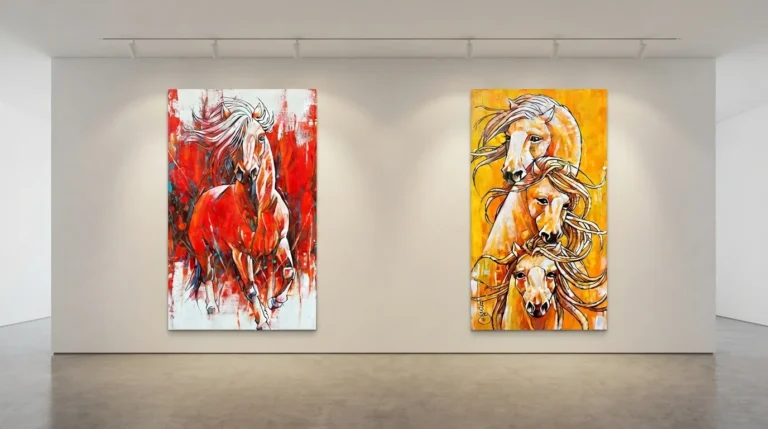
Choosing a painting for your home or office is easier when you understand the style. For living rooms, abstract paintings in warm colors add energy and conversation. For bedrooms, realism landscapes or soft impressionist-style paintings create calm. For offices, minimalist modern styles look professional and focused.
Choosing Art Based on Interior Design
Classic or traditional interiors work well with realism, miniature art, and landscape paintings. Modern or minimalist spaces suit abstract, geometric, and digital art. When in doubt, choose a painting whose colors match your room’s palette — the style will feel right naturally.
Framing Considerations for Different Styles
The right frame can completely change how a painting looks. Traditional realism and miniature paintings often look best in ornate, carved frames. Abstract and modern paintings usually look best in simple, clean frames — or no frame at all (gallery wrap). Getting the framing right is just as important as choosing the painting itself.
The frame is the painting’s handshake with the room. It should introduce the artwork, not compete with it.
Painting Styles You Will Find in Art Galleries
Popular Styles Displayed in Galleries
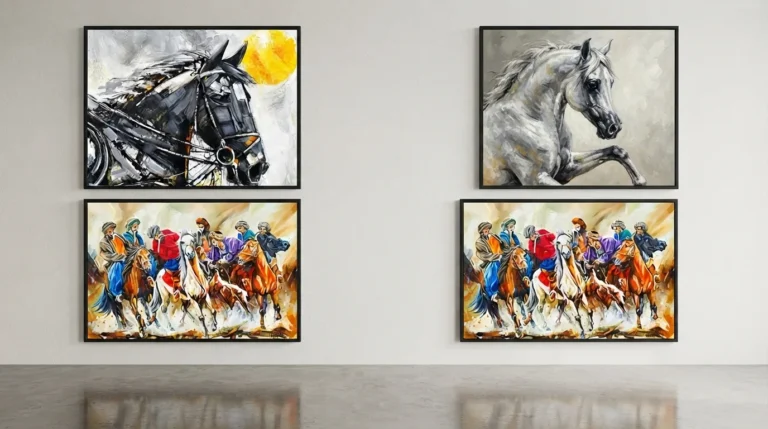
Most galleries today display a mix of painting styles to appeal to different tastes. You will typically find realism portraits, abstract canvases, contemporary mixed media, and sometimes digital art prints. Good galleries curate their collections so that different styles speak to each other rather than clash.
Emerging Painting Styles
New styles are always emerging. Today, artists are mixing traditional techniques with digital tools, combining miniature painting with abstract elements, or creating art that responds to social and environmental issues. Art never stops evolving — and galleries that stay current keep these new voices visible.
Curated Collections and Art Exhibitions
When you visit an art gallery or exhibition, you are experiencing someone’s vision of how different styles and works relate to each other. A well-curated exhibition teaches you about painting styles simply by placing them in conversation. The more galleries you visit, the better your eye becomes.
Frequently Asked Questions About Painting Styles
What are painting styles in art?
Painting styles are the different ways artists create and express their work. Each style has its own rules, techniques, colors, and purpose. Major styles include realism, abstract, miniature, impressionism, and modern art.
Which painting styles are most popular today?
The most popular painting styles today include abstract art, modern minimalism, digital painting, and mixed media. Realism also remains very popular among collectors and gallery visitors worldwide.
What is the difference between realism and abstract painting?
Realism shows real objects, people, and places exactly as they look. Abstract painting uses shapes, colors, and lines to express feelings and ideas instead of showing real things. Both are equally valid art forms.
What are famous painting styles in art history?
Famous painting styles in art history include Realism, Impressionism, Expressionism, Cubism, Surrealism, and Baroque. Each came from a different time period and reflects the culture and ideas of that era.
How do artists develop their own painting style?
Artists develop their style through years of practice, studying other artists, experimenting with techniques, and expressing personal experiences. Every unique style is the result of a long creative journey.
What are modern painting styles used in galleries?
Modern painting styles in galleries include abstract expressionism, minimalism, conceptual art, mixed media, and digital art. These styles focus on ideas and emotions rather than traditional representation.
What are digital painting styles?
Digital painting styles are created using software and digital tools. Popular digital art styles include digital realism, concept art, digital illustration, and pixel art. They are growing fast in galleries and online exhibitions.
How do I choose the right painting style for my home?
Match the style to your room’s mood. Abstract art works well in modern spaces. Realism suits classic interiors. Miniature paintings look beautiful in traditional rooms. Always consider the colors already in your space when choosing.
Final Thoughts – Appreciating the Diversity of Painting Styles
Art is one of the most personal things in the world. Whether you are drawn to the precise detail of realism, the free expression of abstract art, the ancient tradition of miniature painting, or the energy of modern and digital styles — there is no wrong choice. Every painting style has its own beauty, its own history, and its own way of speaking to you.
Understanding famous painting styles and what makes each one unique helps you look at art with new eyes. It gives you the language to describe what you feel when you stand in front of a painting you love. And it helps you make confident choices — whether you are decorating a home, starting a collection, or simply learning to appreciate the art around you.
- Realism shows the world as it is — detailed, honest, and beautiful
- Abstract painting expresses what words cannot — pure emotion and energy
- Miniature art connects us to centuries of South Asian artistic heritage
- Modern and digital styles keep pushing the boundaries of what art can be
Explore these styles of art painting in person at Expert Framing Art Gallery — where every painting has a story, and every visitor finds something that speaks to them.