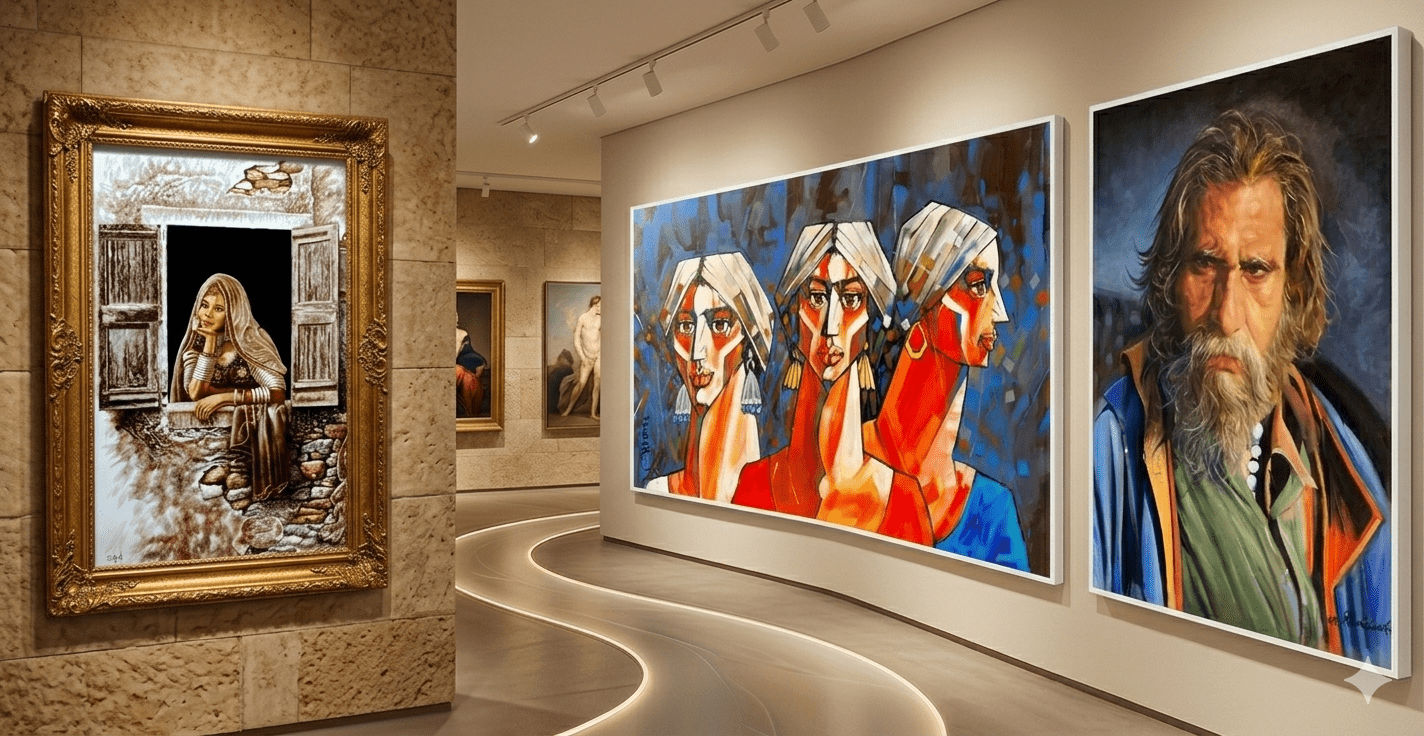

Art has always found its way back to the human form. No matter how styles change or movements come and go, people keep painting people.
Figurative art is any artwork that draws from the real world. People, objects, places, anything you can actually see and recognize. It has been part of human creative expression since the very beginning and it remains one of the most powerful and emotionally direct art forms alive today.
This blog takes you through the full journey of figurative art, from ancient walls to modern canvases, and helps you understand how to bring it into your own space.
What Is Figurative Art? A Closer Look at Its Meaning
Figurative art shows things that exist in the real world. A person, a face, a body, a street, a bowl of fruit. If you can look at a painting and recognize what it is showing you, it is most likely figurative.
Figurative paintings are different from abstract art in one key way. Abstract art moves away from recognizable subjects. Figurative art stays connected to them. That connection to the real world is what makes figurative work so immediately accessible and emotionally engaging for most viewers.
The Core Elements That Define a Figurative Painting
A figurative painting is based on something that can be seen in the real world. Most often that subject is the human form, though it can also include animals, interiors, landscapes, and everyday objects.
What makes a figurative painting work is how the artist uses composition, light, and technique to bring that subject to life. The goal is not just to copy what something looks like but to capture how it feels to look at it. That balance between accuracy and emotion is at the heart of everything great figurative painting does.
From Ancient Caves to Modern Canvases: A Brief History
Figurative art is the oldest form of human creativity we know of. Cave paintings created thousands of years ago already show animals and human figures in motion. People have always wanted to paint the world around them.
Ancient Egyptian art used the human figure to tell stories of gods, rulers, and daily life. Greek and Roman sculpture pushed the representation of the human body to extraordinary levels of detail and realism. Every major civilization found its own way to make figurative art painting central to how it understood and recorded the world.
How the Renaissance Shaped Figure Painting Forever
The Renaissance was the turning point that defined figure painting as we know it today. Artists like Leonardo da Vinci and Raphael studied human anatomy with a depth and seriousness that had never been applied to art before.
They understood muscles, bone structure, proportion, and how light falls across a body in motion or at rest. This scientific approach gave Renaissance figure painting a realism and dignity that set the standard for centuries of artists who came after them. The techniques they developed are still taught and used by figurative painters working today.
When Abstraction Met the Human Form: Abstract Figurative Art
Not all figurative artists stayed close to realistic representation. In the twentieth century, artists began pushing the human form into new territory.
Abstract figurative art keeps a connection to recognizable human subjects but distorts, fragments, or reinterprets them. Picasso broke the human face into multiple viewpoints at once. Francis Bacon twisted and compressed the human body into emotionally raw and deeply disturbing compositions.
The result was abstract figure painting that felt more emotionally honest than realistic painting often could. By breaking the rules of how a body is supposed to look, these artists got closer to how it actually feels to be human.
Reading an Abstract Figure Painting: What to Look For
If you are new to abstract figure painting, it can feel confusing at first. Here is how to approach it.
Start with the overall mood before you try to identify specific forms. What does the color make you feel? What is the energy of the composition, calm, tense, joyful, or unsettled? Then look for the human form within the abstraction. Often a suggestion of a head, a gesture, or a posture is enough to anchor the entire piece. The distortion is intentional. It is the artist showing you something about the emotional truth of the subject rather than just its physical appearance.
Contemporary Figurative Painting in Today’s Art World
Contemporary figurative painting is having a major moment right now across the global art world. For centuries, serious art talks were mostly about abstract art. Now, artists and collectors are once again interested in the human figure.
Today’s figurative painters are not simply copying the past. They are using the human form to explore identity, culture, social issues, and personal experience in ways that feel urgent and deeply relevant to the world we live in now.
Why Pakistani Artists Are Embracing Figurative Art Today
Over the past twenty years, the figurative art scene in Pakistan has grown a lot. Artists working in Karachi and Lahore are using the human figure to tell stories rooted in Pakistani culture, history, and contemporary life.
Women artists in particular have used figurative work to explore identity, autonomy, and the experience of being female in Pakistani society. These are paintings that carry real weight and real meaning. Expert Framing Art Gallery works closely with Pakistani artists creating exactly this kind of powerful and culturally rooted figurative work.
Themes That Drive Modern Figurative Paintings
Figurative paintings today explore a wide range of deeply human themes. Some of the most common and interesting ones are:
- Identity: Who we are, where we come from, and how we present ourselves to the world.
- Solitude: The experience of being alone, whether peaceful or painful.
- Heritage and culture: Using the human figure to explore traditions, history, and cultural memory.
- Feminism and gender: Challenging conventional representations of the female body and experience.
- Spirituality: The search for meaning, faith, and connection to something larger than the self.
These themes give modern figurative paintings a depth and relevance that makes them genuinely meaningful to live with rather than just look at occasionally.
How to Choose a Figurative Art Painting for Your Space
Buying a figurative art painting is a personal decision. Here are the key things to think about before you choose.
The first question is emotional. Does the painting make you feel something? Figurative art painting works best when there is a genuine personal connection between the viewer and the subject. If a piece stops you and makes you want to keep looking, that is usually the right sign.
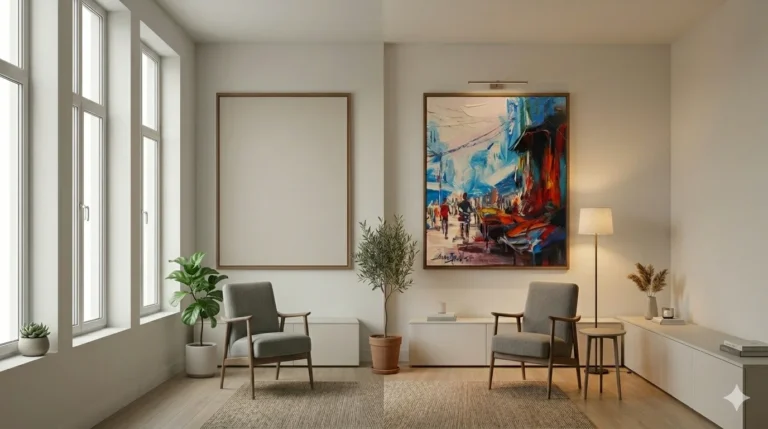
After the emotional connection, think practically. Does the size suit your wall? Does the color palette work with your existing room? Is the framing appropriate for your interior style? Expert Framing Art Gallery can help you think through all of these decisions with guidance from people who genuinely understand both art and interior design.
Framing Your Figurative Painting: Tips from the Experts
The right frame can completely transform how a figurative painting looks on your wall. Here are some simple guidelines.
For a classic or traditional figurative work, a wider wooden frame in a warm tone adds the weight and formality the piece deserves. For a contemporary or abstract figurative piece, a thin metal frame or a simple gallery wrap canvas keeps the focus on the artwork itself.
Mat color matters too. A white or off-white mat gives the painting and frame some space and makes the colours stand out. Expert Framing Art Gallery offers custom framing options designed specifically to suit each piece and each client’s interior style.
Frequently Asked Questions About Figurative Art
Q: What is figurative art in simple words?
Figurative art is any artwork that shows something from the real world, most often people, that you can recognize when you look at it.
Q: What is the difference between figurative and abstract art?
Figurative art shows recognizable subjects from real life. Abstract art moves away from recognizable forms and focuses on color, shape, and emotion instead.
Q: Who are some famous figurative artists?
Internationally, Leonardo da Vinci, Rembrandt, Lucian Freud, and Francis Bacon are among the most celebrated. In Pakistan, figurative painters like Jamil Naqsh and Salima Hashmi have made important contributions to figurative paintings.
Q: Is figurative art the same as realism?
Not exactly. Realism is one style within figurative art that aims for precise accuracy. Figurative art is a broader category that includes realism, expressionism, and even semi-abstract approaches.
Q: What makes contemporary figurative painting different from classical figure painting?
Contemporary figurative painting focuses on personal identity, social themes, and emotional experience. Classical figure painting focused more on technical perfection, religious subjects, and ideal beauty.
Q: How do I know if a figurative painting is right for my home?
Choose a figurative art painting that you feel a genuine connection to. Then check that the size suits your wall and the colors work with your existing room decor.
Q: What is abstract figure painting and how is it made?
An artist starts with a real human subject and then distorts, simplifies, or fragments the form to express an emotional truth. Abstract figure painting keeps a connection to the human body while moving away from literal representation.
Q: Are figurative paintings a good investment in Pakistan?
Yes. The Pakistani art market has grown gradually and original figurative paintings by established local artists have shown consistent appreciation in value over time.
Q: What is the best way to frame a figurative art painting?
Match the frame style to the painting’s tone. Classic works suit wider wooden frames. Contemporary pieces suit thin clean frames. Expert Framing Art Gallery offers custom framing guidance for every style of figurative painting.
Q: Where can I buy original figurative paintings in Pakistan?
Expert Framing Art Gallery in Karachi offers a curated collection of original figurative art by Pakistani artists. You can explore their collection online or visit in person to find the right piece for your space.
Explore Figurative Art at Expert Framing Art Gallery
If you are looking for original figurative art that is meaningful, well crafted, and suited to Pakistani homes and offices, Expert Framing Art Gallery is the right place to start.
Their curated collection brings together work by talented Pakistani artists exploring the human form across a range of styles from classical to contemporary. Every piece is available with professional framing to suit your space perfectly.Browse the collection today and find the figurative art your walls deserve.