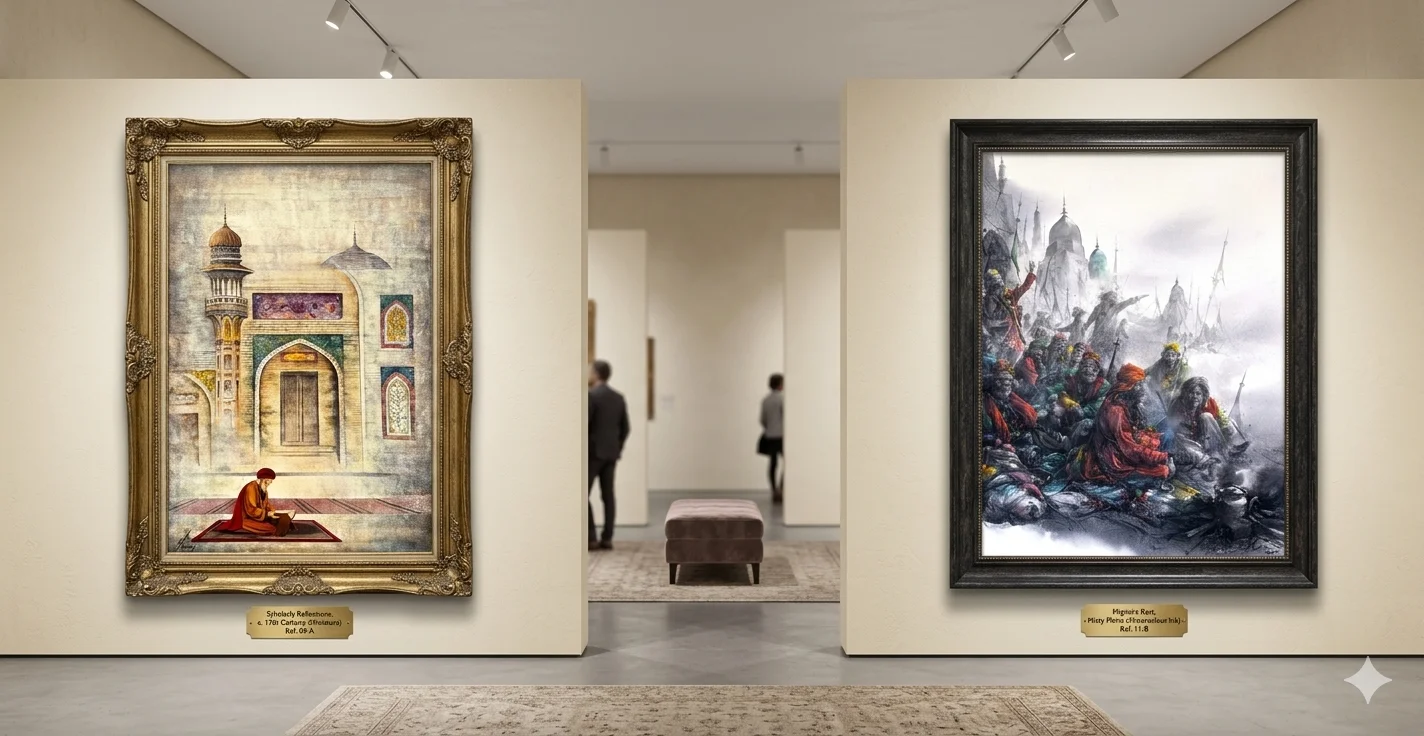

Some art stops you completely. Not because it is loud or dramatic, but because it touches something deep inside you before you even understand why.
Sufism art does exactly that. It is not made to simply decorate a wall. It is made to speak to the part of you that thinks about faith, love, and what it means to be truly alive.
This blog takes you through the meaning behind sufism art, the powerful figure of the Darwaish, sufi calligraphy, and how to choose the right piece for your home or office in Pakistan.
Understanding Sufism Art and the Spiritual World It Comes From
Sufism art grows from one of the most profound spiritual traditions in the world. Sufism is the inner, mystical side of Islam. It focuses on love, closeness to God, and the journey of the soul.
Sufi art is the visual expression of that journey. Every painting, every calligraphic piece, every portrait of a wandering dervish carries a meaning that goes far beyond decoration. It is a language of devotion painted in color and form.
What Sufism Teaches and How It Shaped an Entire Art Form
Sufism teaches that the purpose of life is to move closer to the divine. This journey involves letting go of ego, embracing love, and finding God not just in prayer but in every moment of existence.
These ideas shaped sufi art directly. The themes of longing, surrender, joy, and spiritual travel appear again and again across centuries of sufism art. Artists painted these ideas not as abstract concepts but as human figures, landscapes, and symbols that people could feel in their hearts.
Sufism Art in the Context of Pakistan and South Asian Culture
Pakistan has one of the richest sufi traditions in the world. From the shrines of Data Ganj Bakhsh in Lahore to the dargah of Shah Abdul Latif Bhittai in Sindh, Sufism runs through Pakistani culture at every level.
Sufi art painting in Pakistan draws from this living tradition. The music of qawwali, the poetry of Bulleh Shah, and the rituals of sufi shrines have all shaped how Pakistani artists approach spiritual life on canvas. This is why Pakistani people connect so deeply with Sufism art. It is a part of everyday spiritual and cultural life here.
Darwaish Art: The Figure That Became a Symbol
The Darwaish is one of the most powerful figures in sufi visual tradition. A Darwaish is a spiritual seeker who travels around and leaves behind material things and their ego in order to get closer to God.
Darwaish art captures this figure with a beauty and depth that is hard to find anywhere else. The Darwaish is not a wealthy or powerful subject. He is someone who has chosen a different kind of richness. That choice is exactly what makes Darwaish painting so compelling.
What Makes a Darwaish Painting Spiritually and Visually Powerful
Every element in a good Darwaish painting carries meaning. The figure’s posture, when sitting in meditation or dancing in the whirling dhikr, shows how the soul is doing spiritually.
The clothing is simple. Often a rough robe that signals the rejection of worldly comfort. The setting is frequently open, a desert, a riverbank, or a forest, places where the distance between the human and the divine feels smaller.
The expression on the face of the Darwaish is the most powerful element. It is not the expression of someone who has nothing. It is the expression of someone who has found everything. A good artist captures that difference, which is what makes Darwaish art so powerful.
Darwaish Art in Pakistani Homes: A Growing Appreciation
More Pakistani buyers are choosing Darwaish art for their homes every year. These paintings offer something most wall art cannot. They carry spiritual meaning, cultural identity, and genuine visual impact all in one frame.
A Darwaish painting on a living room feature wall creates an atmosphere that guests notice and remember. This kind of Sufi wall art is great for entryways and any other place where you want the mood to be more meaningful than just stylish.
The Visual Language of Sufi Art Painting
Sufi art painting uses symbols and themes that appear consistently across the tradition. Here are the key symbols found in sufism painting and what each one means:
- The flame or candle: Represents divine love and the soul’s longing for God.
- The reed flute: Represents the soul separated from its divine origin and crying to return.
- The wine and cup: Spiritual imagery where wine represents divine love and the cup represents the heart that receives it.
- The rose: Represents the beauty of the divine. The rose and nightingale together represent the soul in love with God.
- The whirling figure: Represents the soul surrendering itself in devotion around the divine center.
- Open landscapes: Desert and open sky settings represent the journey away from worldly distraction toward inner clarity.
Sufism Painting Across Different Artistic Traditions
Sufism painting has taken different forms across cultures and time periods. Persian miniature painting added a touch of elegance to Sufi themes. Mughal court art made sufi figures look rich and grand.
Modern South Asian Sufi art painting combines old symbols with new methods. Abstract views use color and texture to make people feel like they are in spiritual states. Sufism art is a living tradition that continues to grow while staying true to its spiritual core.
Sufi Calligraphy Art: Where the Written Word Becomes Sacred Art
Sufi calligraphy art takes the words of Sufi poets and turns them into works of art that are both beautiful and meaningful.
There is a big difference between regular Islamic calligraphy and sufi calligraphy art. Regular Islamic calligraphy most often uses Quranic verses. Sufi calligraphy draws from the poetry of Rumi, Bulleh Shah, and Shah Abdul Latif Bhittai. The tone is more personal and poetic, speaking to both the heart and the mind.
Popular Sufi Verses Used in Calligraphy Art in Pakistan
Pakistani buyers have strong preferences when it comes to sufi calligraphy art. Bulleh Shah’s verses about self-knowledge are among the most beloved. Rumi’s lines about love and longing translate into visual calligraphy that feels both beautiful and deeply true.
The verses from Shah Abdul Latif Bhittai’s Risalo are the heart of the Sindhi Sufi tradition and speak to people in different parts of Pakistan and in different languages. These words become sufi wall art that people genuinely live with rather than simply hang up and forget.
Sufi Wall Art: Choosing Pieces That Transform a Space
Sufi wall art changes the atmosphere of a room in a way that is difficult to explain until you experience it. Walk into a space with a powerful Darwaish art piece on the wall and you feel a shift in the energy of the room. It is quieter, more grounded, and more intentional.
This quality makes sufism art particularly valuable in spaces where you want to feel calm and connected to something larger than everyday life. Living rooms, home offices, reading corners, and entrance halls in Pakistani homes all benefit from well-chosen sufi wall art.
How to Choose Sufism Art That Genuinely Fits Your Space
Here are five key things to think about before you buy:
- Personal connection: Choose a subject or verse that means something to you personally. A Darwaish painting or sufi calligraphy art piece that connects to your own spiritual life will always feel more meaningful.
- Size: Your painting should cover around two thirds of the wall width it hangs on. For a living room feature wall, go large and let the piece command attention.
- Style: Realistic sufi art painting suits traditional and formal interiors. Abstract interpretations work better in modern minimalist spaces.
- Color palette: Warm gold and brown tones suit traditional Pakistani interiors. Cooler or muted palettes suit contemporary spaces.
- Framing: A dark wooden frame suits traditional interiors. A thin metal frame suits more contemporary settings.
Frequently Asked Questions About Sufism Art and Darwaish Paintings
Q. What is the connection between Sufism and visual art?
Sufism is all about love, devotion, and getting closer to God. Sufism art came out of this naturally because artists wanted to paint what they were feeling spiritually, not just what they could see with their eyes.
Q. Why does a Darwaish wear simple clothing in paintings?
Simple clothing shows that the Darwaish does not care about money, status, or showing off. In a Darwaish painting, what the figure wears tells you everything about what he has chosen to leave behind.
Q. What is the spiritual meaning of the whirling figure in sufi art?
The spinning movement represents the soul giving itself completely to God. In sufi art painting, this whirling figure shows a state of deep devotion where the person has let go of everything except their connection to the divine.
Q. Is there a difference between a Darwaish and a dervish in art?
They are the same person described in different languages. Darwaish art and dervish paintings both show the same wandering spiritual seeker. Darwaish is the Urdu and Persian word and dervish is how it is written in English.
Q. Why is Bulleh Shah so commonly used in sufi calligraphy art in Pakistan?
Bulleh Shah wrote in simple Punjabi about love and faith in a way that touched people’s hearts directly. His words feel honest and real which is why sufi calligraphy art based on his poetry connects so deeply with Pakistani audiences.
Q. Can a non-religious person appreciate sufism art?
Yes, completely. Sufism art talks about love, longing, inner peace, and finding meaning in life. These are feelings every human being understands regardless of their personal beliefs or background.
Q. What makes sufism painting different from regular portrait painting?
A regular portrait shows you what someone looks like. Sufism painting tries to show you what someone feels on the inside. The whole point is to paint the spiritual state of the soul, not just the physical appearance of the person.
Q. How do Pakistani artists approach Darwaish art differently from Persian or Turkish artists?
Pakistani artists bring their own sufi poets, shrine culture, and local color traditions into Darwaish art. The work feels connected to Pakistani spiritual life rather than being a copy of classical Persian or Ottoman styles.
Q. Why do sufi paintings often show open natural settings like deserts and rivers?
In sufism art, open natural spaces represent freedom from worldly distraction. Away from the noise of everyday life, a desert or riverbank becomes the place where the soul can finally hear something deeper.
Q. Does the color palette in sufi art carry meaning?
Yes. Artists choose colors with intention in sufi art painting. Deep green often represents spiritual growth, gold represents divine light, and earthy browns represent humility. The colors are not just decorative, they are part of the message.
Q. Is sufism art only made by Muslim artists?
Sufism art comes from Islamic culture but its themes of love, longing, and spiritual searching are universal. Artists from different backgrounds have been drawn to these ideas because they speak to something deeply human.
Q. Why should I buy sufism art from Expert Framing Art Gallery?
Expert Framing Art Gallery offers original sufism art and Darwaish paintings made by artists who genuinely understand the tradition behind the work, with quality canvas, custom framing, and reliable service across Pakistan.
Expert Framing Art Gallery and the Sufism Art That Speaks to Your Soul
When Pakistani buyers look for sufism art that is original and spiritually resonant, Expert Framing Art Gallery is where they find it.
Their collection covers the full range of sufi visual tradition. Darwaish art pieces with genuine emotional depth, sufi calligraphy art based on the words of Bulleh Shah and Rumi, and contemporary sufism painting in both realistic and abstract styles. Every piece is made on quality canvas with professional framing options available.Browse the Expert Framing Art Gallery collection and find the sufism art that speaks directly to you.