
There is something about the ocean that quiets the mind. A stretch of open water, a soft horizon, light breaking across waves: these are images that people have always found deeply calming. Seascape paintings bring that feeling inside, creating a sense of space and stillness few other art subjects can create. Thickly painted in oil or softly created in watercolor, ocean art changes a room’s ambiance the moment it hits the wall. In this blog we will explore what seascape painting is, its history, the different styles and mediums, and how to bring this genre into your home beautifully.
What Is Seascape Painting and Why Do People Love It
Seascape painting focuses on the ocean, the coast, and everything connected to that world: water in motion, sky and cloud, shoreline, and the play of light across a moving surface. People love seascape art because it is so open, so expansive even in the most enclosed interior space.
Seascape painting provides great visual variety to collectors and interior decorators. Yet both are seascapes, and they conjure very different moods: a stormy sea and a still cove. This is what makes this genre so flexible and so consistently popular.
What Is a Seascape in Art?
A seascape in art is a work where the primary subject is the sea or a coastal environment. It sits within the broader category of landscape painting but focuses specifically on water, horizon, and the sky above the ocean. In a pure landscape land rules. In a seascape water is the centerpiece and everything is built around it.
What Does a Seascape Painting Include?
A typical seascape painting includes several visual elements working together:
- Moving or still water, with a focus on colour, reflection and surface texture
- Sky and clouds that set the mood and light conditions of the entire composition
- Horizon line that creates depth and a sense of infinite space
- Coastline or shore that grounds the composition and provides scale
- Light falling across water or sky, which is often the emotional heart of the work
The History of Seascape Paintings Through the Ages
Commerce and seafaring were at the heart of the national identity in Holland in the 17th century, and seascape art became an established genre. The Dutch Golden Age artists made the sea a worthy subject for art, and created works that clearly showed a storm, calm, and all in between.
By the 19th century, the Romantic movement brought new emotional intensity to ocean subjects, treating the sea as a symbol of sublime power. Impressionism then shifted focus to light and atmosphere, and in the 20th century abstract approaches gave artists entirely new ways to understand the ocean.
Who Is the Artist Famous for Painting Seascapes?
J.M.W. Turner is widely considered the greatest seascape painter in Western art history. His works captured ocean light and atmospheric drama with extraordinary freedom. Winslow Homer is famous for his strong paintings of the American coast. Ivan Aivazovsky made thousands of beautiful sea paintings that show his great skill and feelings, and he is known as the most productive artist in this kind of art.
What Defines a Seascape Painting
What truly defines a seascape painting is not just the presence of water. It’s about how the artist uses light, the sky, the horizon, and movement to make you feel a certain emotion. A good seascape makes you imagine the wide, moving ocean. These feelings come from how the artist arranges everything in the picture, not just what they paint.
The horizon is one of the most powerful elements in a seascape composition. Whether sky or water exists, and thus the mood of the whole, depends on where it is located on the canvas. Light is equally important. The same stretch of ocean looks completely different at dawn, midday, and dusk, and skilled seascape artists understand how to use that difference.
What Are the Different Types of Seascape Paintings?
Seascape art covers a wide range of styles and approaches:
- Realistic seascapes that aim for accurate representation of water, sky, and coastal geography
- Impressionist seascapes focusing on light, atmosphere and the sense of a moment
- Stormy sea compositions in dark tones with powerful waves for emotional power
- Calm water seascapes with still reflections and a meditative quality
- Abstract ocean paintings that bring the sea to life with colour, texture and form
Seascape Oil Painting and the Art of Capturing Water
Seascape oil painting is the format most associated with the great tradition of maritime art. Oil paint is particularly suited to capturing water, as it allows for slow layering, deep mixing of colour and a surface quality that conveys both the transparency and the weight of the ocean.
The depth that oil paint creates in a seascape is difficult to achieve with any other medium. The way light seems to glow from within an oil painting, the texture of thick paint for wave crests or thin paint for distant water: these qualities give seascape oil painting a presence on the wall that collectors immediately recognize and respond to.
Why Seascape Oil Paintings Feel So Alive and Timeless
The visual quality of a seascape oil painting is enhanced by the layered nature of the oil paint. Each layer changes the layer below it, creating a depth that shifts slightly as the viewer moves or as the light in the room changes throughout the day. In the morning light a good seascape oil painting looks different than in the evening, and that gives it a strange sense of life. This quality is a large part of why oil seascapes remain so highly valued among serious collectors.
Seascape Watercolor Painting and Its Soft, Dreamy Appeal
Seascape watercolor painting brings a completely different quality to ocean subjects. Where oil paint is rich and layered, watercolor is transparent and fluid. That transparency makes it naturally suited to water subjects, because the way watercolor behaves on paper mirrors the way light moves through water.
How Watercolor Captures the Mood of the Ocean
Watercolor artists use the natural flow of wet paint on wet paper to suggest mist, reflection, and soft light. The difficulty of seascape watercolor painting is part of its appeal. The medium seems to breathe which gives it a living quality appropriate to the constantly moving nature of the ocean. These works suit collectors and interior spaces that call for a gentle and airy quality rather than visual weight.
Seascape Paintings on Canvas as a Decor Statement
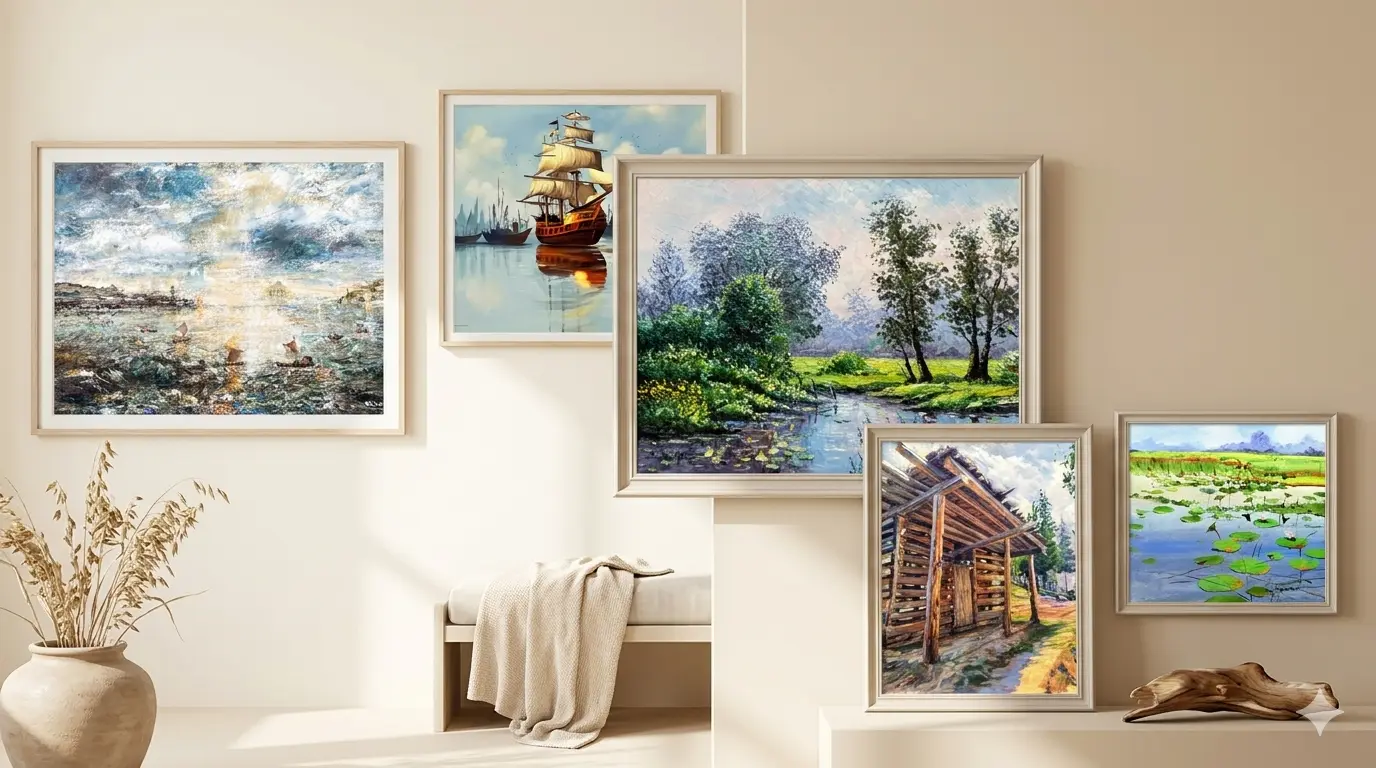
Seascape paintings on canvas are the most popular format for displaying ocean art in homes. Canvas works are available in a wide range of sizes, carry the visual weight to anchor a large wall, and suit almost every framing style from sleek contemporary to warm traditional.
For Pakistani homes where drawing rooms often have generous wall space and neutral color schemes, so a large seascape painting on canvas immediately creates a focal point. The ocean palette of blues, greens and warm sand tones goes naturally with the whites, creams and warm neutrals common to local interiors.
How to Style Ocean Canvas Painting in Your Living Space
Styling an ocean canvas painting well comes down to a few simple decisions. Hang the work at eye level so the horizon in the painting sits at a natural viewing height. Choose a canvas size that fills at least half the width of the wall it occupies. In a bedroom, a calm water seascape creates a relaxing atmosphere. In a drawing room, a more detailed ocean canvas painting makes people look at it longer and talk to each other about it.
Abstract Ocean Painting and the Modern Take on Seascapes
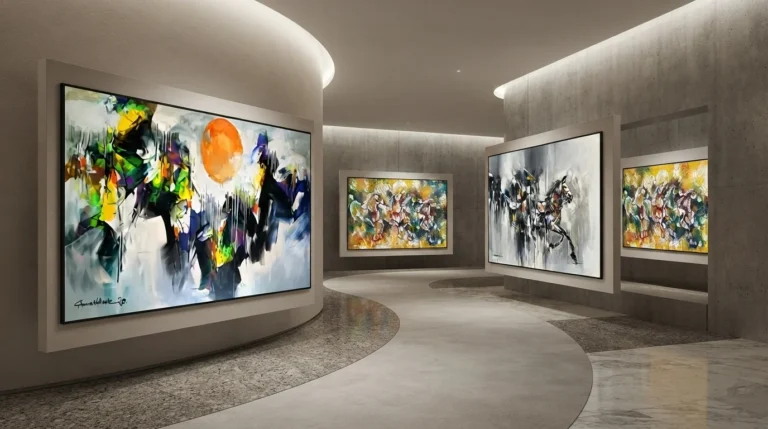
Abstract ocean painting use colors, textures, and shapes to make you feel like you’re at the sea, but they don’t show the sea exactly. These paintings can be very calming, just like real pictures of the ocean, and sometimes they are even more soothing because they focus on making you feel emotions instead of showing a real place.
Why Abstract Ocean Art Works in Contemporary Interiors
Abstract ocean paintings are especially suited to modern and minimalist interiors. It brings the emotional connection of ocean subject matter into a room without adding actual visuals that could feel too specific for a contemporary design scheme. Deep blues, soft turquoise and creamy white colors of ocean abstraction naturally blend with the neutral palettes that contemporary Pakistani homes often favor.
Ocean Wall Painting and Bringing the Sea Indoors
Ocean wall painting transforms an interior space by creating a sense of depth and distance that makes a room feel larger and more open. It introduces a calming color palette and a connection to nature that changes the atmosphere of a space in a very direct way.
If you choose an ocean wall painting, consider the size of the wall first. Room lighting. Oil works well with lower light but watercolors do better with natural daylight. Consider the mood you want; a stormy seascape creates energy and drama, a calm horizon creates peace and rest. Expert Framing Art Gallery in Karachi offers a curated range of ocean and seascape works to help collectors find the right piece for their space.
Some of the Most Famous Seascape Paintings Ever Created
Seascape artwork has produced some of the most celebrated works in art history. The genre has attracted masters across every major period, and the works they left behind continue to define how we understand the ocean as a subject.
What Is the Most Famous Seascape Painting?
The Great Wave off Kanagawa by Hokusai is the most recognized ocean image in the history of art. Created around 1831, it shows a massive wave threatening boats near Mount Fuji. Though a woodblock print rather than a painting, it is the single most iconic seascape image ever made and has influenced ocean art across every generation since.
What Are Some Famous Seascape Paintings Worth Knowing?
Several seascape paintings stand as landmarks of the genre:
- The Fighting Temeraire by J.M.W. Turner, combining seascape with historical narrative in a sunset composition of extraordinary beauty
- The Ninth Wave by Ivan Aivazovsky, a work of huge emotional power showing survivors after a storm
- Northeaster by Winslow Homer, capturing the raw force of Atlantic waves against a rocky coast
- Impression, Sunrise by Claude Monet, the painting that gave Impressionism its name and showed how light on water could be the entire subject
Frequently Asked Questions About Seascape Paintings
Q: What Is Seascape Painting?
Seascape painting is a genre of fine art focused on the ocean, sea, and coastal environments as the primary subject. It has been a major category in art history since the 17th century Dutch Golden Age and continues to be one of the most collected and displayed genres in contemporary fine art and interior decor.
Q: What Defines a Seascape Painting?
A seascape painting is defined by its use of ocean or coastal subject matter as the compositional focus. Key defining elements include the treatment of water, sky, horizon, and light. The emotional tone and the way the artist handles movement and atmosphere are what separate a compelling seascape from a generic ocean image.
Q: What Is the History of Seascape Painting?
Seascape painting developed as a formal genre in 17th century Holland, expanded through the Romantic period, evolved into Impressionism, and continued through modernism into contemporary abstract ocean art. Each period had its own technical approaches and emotional thoughts of the ocean as an object of serious painting.
Q: What Is a Seascape in Art?
A seascape in art is a work where the sea or ocean environment is the central subject. It sits within the broad landscape tradition but differentiates itself through its focus on water, horizon, and coastal atmosphere. Seascape art can be realistic, impressionistic, or fully abstract depending on the artist’s approach.
Q: What Are the Different Types of Seascape Paintings?
The main types of seascape paintings include realistic ocean scenes, impressionistic light studies, stormy sea compositions, calm water seascapes, coastal and harbor scenes, and abstract ocean painting that awaken the sea through color and texture rather than direct representation.
Q: What Does a Seascape Painting Include?
A seascape painting usually contains the ocean water as the main element. A sky to establish the light and mood. A horizon line to create depth. Often a coastline, rocks or boats to give scale and context. Light is the cohesive element which binds all components into a composition which is emotionally successful.
Q: Who Is the Artist Famous for Painting Seascapes?
J.M.W. Turner is the most celebrated seascape painter in Western art history. Ivan Aivazovsky produced over 6000 seascape works and is considered the master of the genre in Russian art. Winslow Homer is the most iconic American seascape painter, known for his honest and powerful coastal compositions.
Q: What Are Some Famous Seascape Paintings?
Some celebrated seascape paintings include The Fighting Temeraire by Turner, The Ninth Wave by Aivazovsky, Northeaster by Winslow Homer, and Impression, Sunrise by Monet. Each represents a different approach to ocean subject matter and has had lasting influence on how artists and collectors understand seascape art.
Q: What Is the Most Famous Seascape Painting?
The Great Wave off Kanagawa by Hokusai is the most widely recognized ocean image in art history. Among Western oil paintings, Turner’s The Fighting Temeraire and Monet’s Impression, Sunrise are among the most celebrated seascape paintings ever created and remain defining works within the genre.
Final Thoughts
Seascape paintings hold a permanent place in both fine art history and the world of interior decor because they connect us to something that feels both vast and deeply personal. The ocean has always been a source of calm and wonder and the best seascape art brings that feeling indoors. If you are attracted to the richness of a seascape oil painting, the softness of a seascape watercolor painting or the boldness of an abstract ocean painting, then there is a version of this genre for your wall. A great seascape changes not just how a wall looks but how a room feels, and that is what the finest art has always done. Expert Framing Art Gallery has a unique collection of seascape and ocean art for collectors from all over Pakistan with professional framing to make sure that each piece is displayed as it should.